
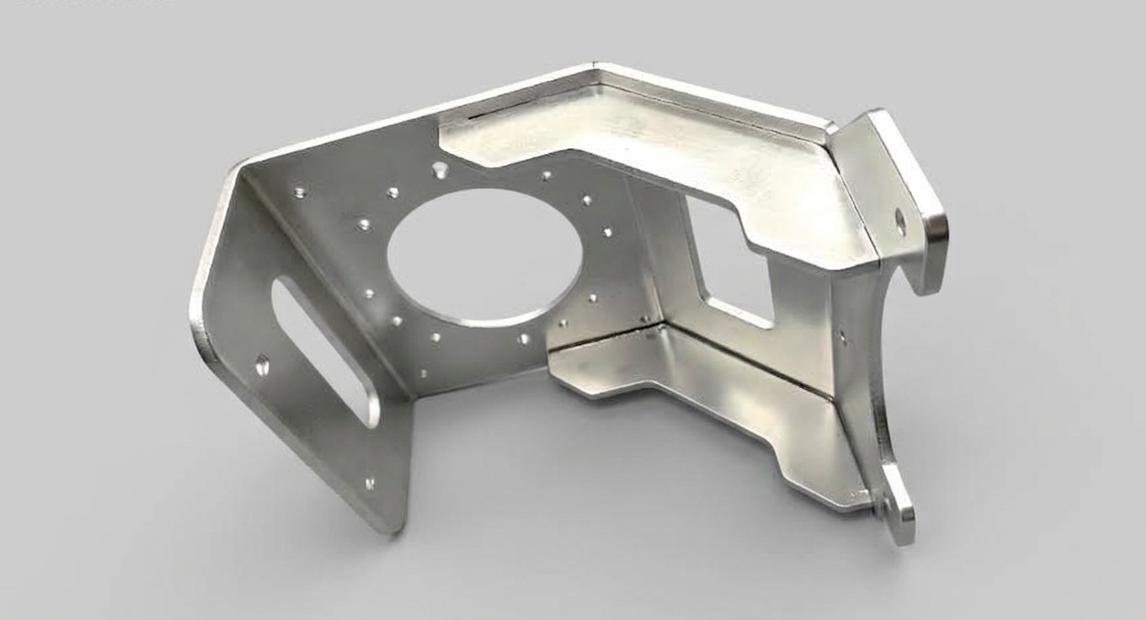
Aluminum Box-Type Bracket
- Material: AL 6061-T6
- Size: 300*200*150
- Process: Laser Cutting + Bending + Welding
- Surface treatment: None
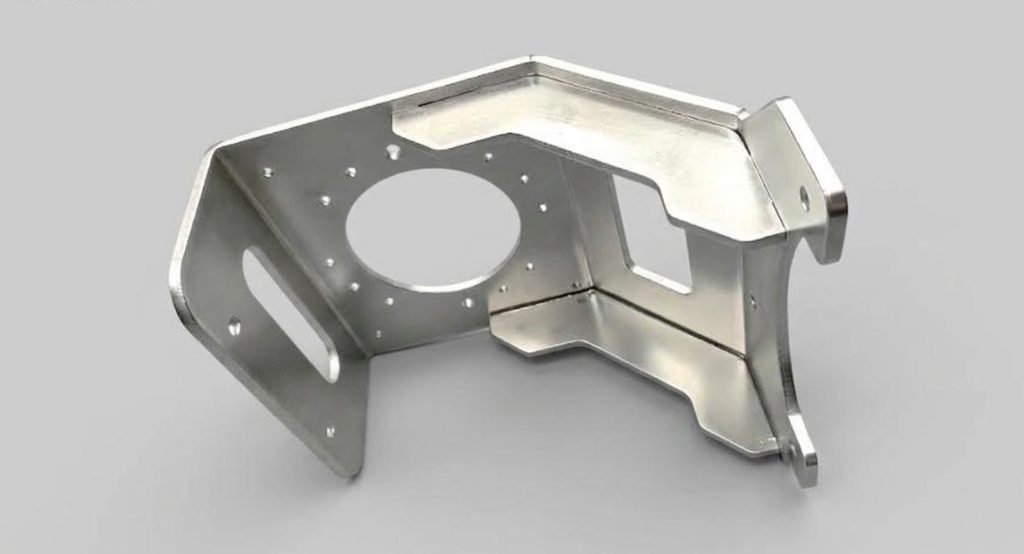
This aluminum box-type bracket is formed by laser cutting and press brake bending. The flat aluminium sheet is first laser cut to produce all outer profiles, hole patterns, and internal cutouts in a single operation. Multiple sequential press brake bends then form the three-dimensional box structure, followed by deburring.
Machining Challenges
Multiple bends across multiple faces lead to accumulated springback error. This 300X200X150 mm box requires bending in several directions with multiple bend lines. Each bend carries its own springback, and on a part of this size, those individual errors add up in a way that matters — even a small angular deviation per bend translates into a measurable positional offset by the time you reach the far end of a 150 mm side wall.
Holes on different folded faces shift after bending. The box faces carry holes of various sizes, some of which are cut before bending takes place. Local material stretching during forming displaces those holes from their nominal positions, which feeds directly into assembly fit and alignment accuracy for whatever mounts to this bracket.
Sharp corner zones prone to tearing. At inside corner transitions during bending, tensile stress concentrates in the material. On aluminium sheet, that concentration can initiate micro-cracking or even tearing at tight corner radii, compromising the structural integrity of the finished box.
How It’s Managed
| Stage | Approach |
| Cutting sequence | All holes and outer profiles laser cut in a single pass before any bending begins — initial hole positions are locked in on the flat sheet, with no subsequent forming step able to shift them |
| Springback compensation | Each bend’s springback value pre-programmed into the bending sequence; dedicated positioning tooling ensures the actual formed angle matches the intended geometry at every step |
| Corner relief cuts | Process relief notches added at sharp bend corners to redistribute stress concentration and prevent tearing |
| Bending feed control | Bend speed and pressure controlled throughout to maintain dimensional consistency; full deburring pass completed after all forming is done |