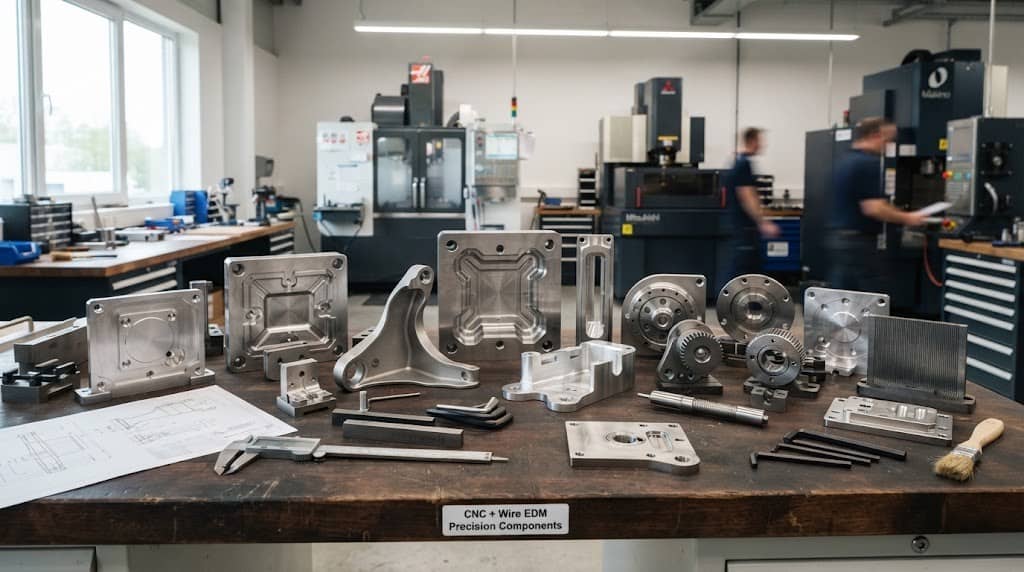


Choosing between 304 vs. 316 stainless steel for CNC machining depends on more than material price or corrosion resistance. The right grade must match the component’s operating environment, chemical exposure, mechanical requirements, surface finish, and expected service life.
304 stainless steel is often suitable for general-purpose CNC machined parts, while 316 stainless steel is generally preferred when greater resistance to chloride-related corrosion is required. However, 316 is not immune to corrosion, and its higher material cost does not automatically make it the better choice.
This guide compares 304 and 316 stainless steel for CNC machined components, helping engineers, OEM buyers, and product designers select the right material for their applications.
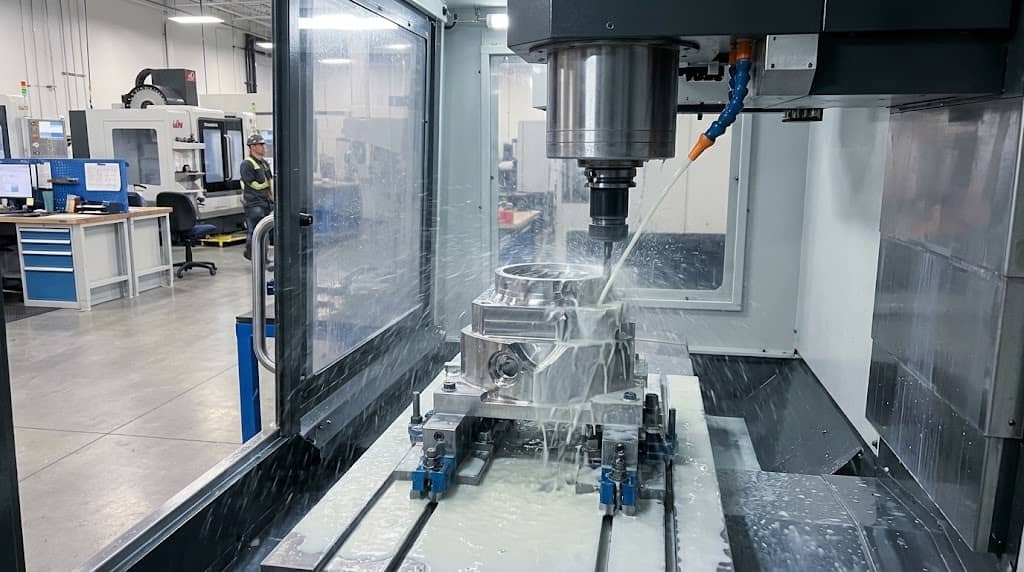
304 vs. 316 Stainless Steel: Key Differences for CNC Machining
Both 304 and 316 are austenitic stainless steels widely used for precision-machined industrial components. The main compositional difference is that 316 contains molybdenum, which generally improves resistance to pitting and crevice corrosion in chloride-containing environments.
| Selection Factor | 304 Stainless Steel | 316 Stainless Steel |
| Alloy composition | Typically contains 18% chromium and 8% nickel | Typically contains 16–18% chromium, 10–14% nickel, and 2–3% molybdenum |
| General corrosion resistance | Good in many indoor and mild environments | Good, with improved resistance to many chloride-related corrosion conditions |
| Chloride exposure | More susceptible to pitting and crevice corrosion | Generally offers better resistance, but is not immune |
| CNC machining | Can work-harden during cutting | Also work-hardens; machining depends on material condition and cutting strategy |
| Relative material cost | Usually lower | Usually higher |
| Typical applications | General industrial parts, brackets, housings | Marine-exposed components, chemical equipment, demanding fluid-handling parts |
These figures are typical composition ranges, not substitutes for the applicable material specification or mill certificate. The primary selection factor is the service environment. If 304 meets the corrosion, mechanical, and dimensional requirements, upgrading to 316 may not provide enough additional value to justify the cost.
When Should You Choose 304 Stainless Steel for CNC Machined Parts?
304 stainless steel is a practical choice when general corrosion resistance, mechanical performance, and cost must be balanced. It is commonly used for CNC machined parts operating without sustained exposure to aggressive chemicals or high chloride concentrations.
Typical applications include:
- Industrial machinery: Mounting brackets, structural fittings, equipment covers, and general-purpose components.
- Automation equipment: Fixtures, supports, and precision-machined housings used in controlled indoor environments.
- Food-processing equipment: Components exposed to compatible food products and cleaning procedures, subject to applicable hygiene requirements.
- Cost-sensitive OEM components: Parts for which 304 meets the specified mechanical and environmental requirements.
For example, stainless steel brackets CNC-machined into an indoor automation system that has normal atmospheric exposure. If chlorided contamination is not a potential concern and the mechanical properties of 304 can be tolerated, it may be the more cost-effective material.
However, application labels alone do not determine suitability. Food-processing components must be evaluated against cleaning chemicals, temperatures, hygiene requirements, and applicable regulations. Before specifying 316, confirm whether the component’s actual operating conditions require its additional corrosion resistance.
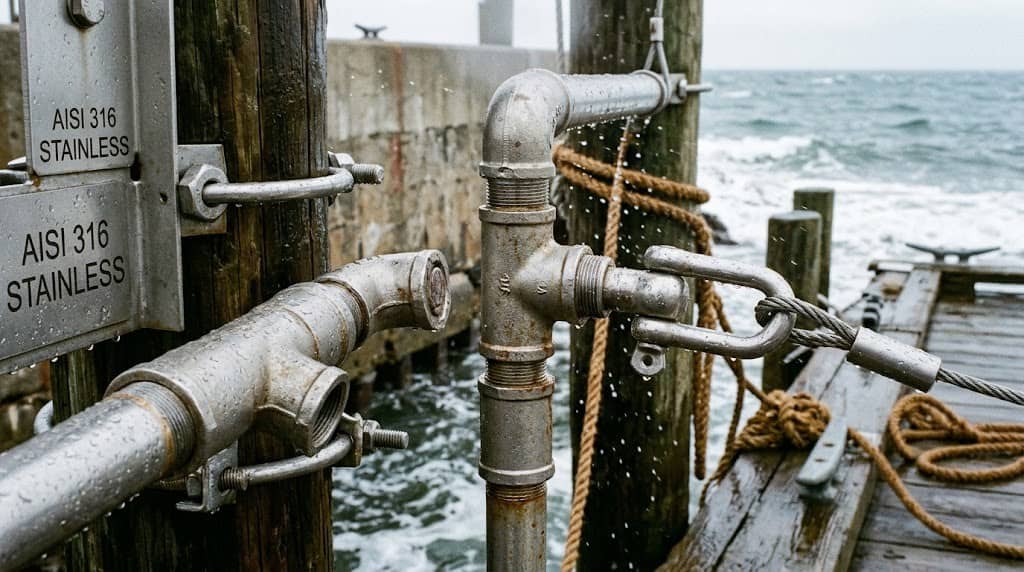
When Is 316 Stainless Steel Worth the Extra Cost?
316 stainless steel is frequently a good choice where localized corrosion won’t permit component life and would mean increased maintenance or equipment downtime.
1. Marine & coastal applications
Chlorides from salt spray, seawater splashes, and deposits can result in pitting and crevice corrosion. 316 is superior to 304 in many chloride environments, but in permanent seawater immersion, metal selections are a more delicate subject.
2. Chemical-processing components
Aggressive chemicals may be encountered in CNC machined fittings, valve components, and equipment parts. You’ll need to verify material compatibility with the particular chemical, its concentration, the temperature, and the duration of exposure. There are no chemicals that both 304 and 316 are compatible with.
3. Washdown and cleaning-intensive equipment
Frequent cleaning causes parts to be subjected to disinfectants and chlorides in the presence of moisture residues. Depending on the composition of the cleaning agent, the temperature, and the rinsing and drying, the material may be suboptimal.
4. Expensive replacement parts
Where parts are located in inaccessible places or in critical equipment, the cost of corrosion failure may be the cost of significant maintenance labor plus the cost of being unable to run the equipment during the maintenance outage. In these applications you’ll pay a premium for 316, but the premium may be worth it if service conditions require that the risk of corrosion be dramatically reduced.
Note: 316 is more resistant to many types of chloride-based corrosion, but it can still occur at high chloride levels, elevated temperatures, still fluids, and in crevices where the liquid is trapped.
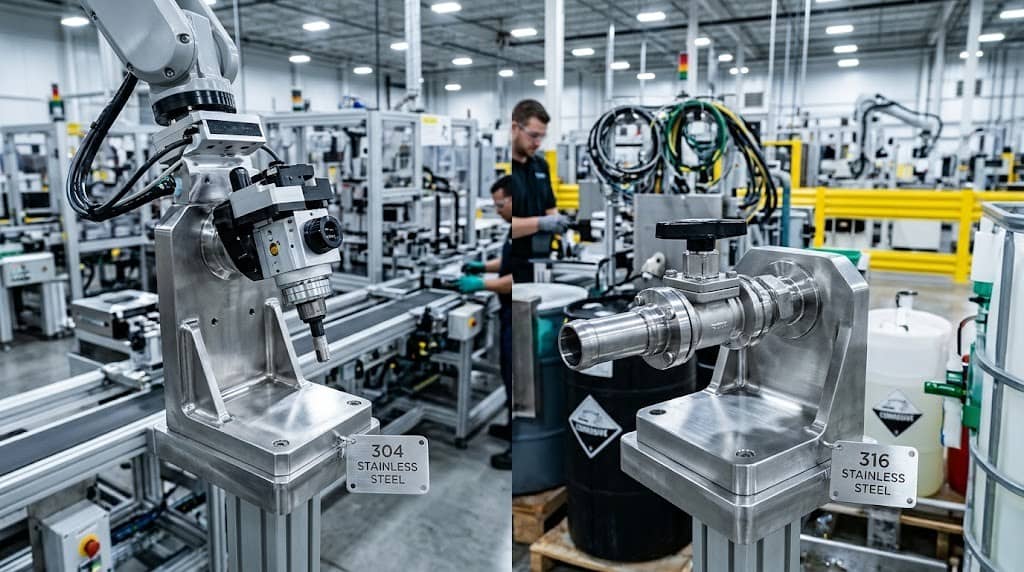
How Part Design and Operating Conditions Affect Corrosion Resistance
Selecting the correct stainless steel grade is only part of designing a durable CNC machined component. Part geometry, surface condition, and operating conditions can influence corrosion performance as much as the material choice itself.
- Crevices and trapped moisture: Gaps around fasteners, seals, and overlapping surfaces can retain corrosive liquids and increase localized corrosion risk.
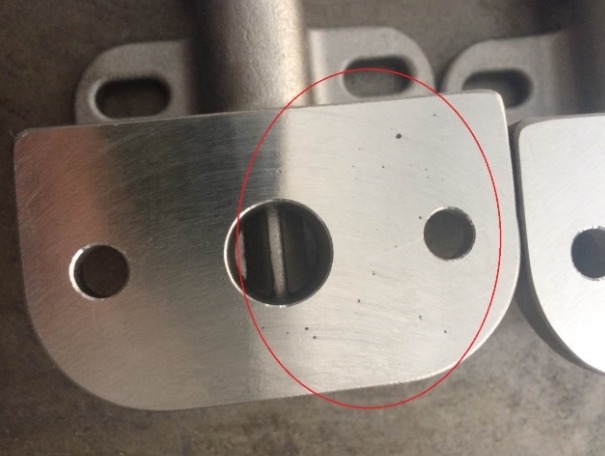
- Surface finish and contamination: Rough surfaces, machining residues, and embedded iron particles can compromise corrosion performance. Appropriate cleaning and finishing should be considered.
- Dissimilar-metal contact: Electrically connected metals in a conductive environment may experience galvanic corrosion. The entire assembly should be evaluated.
- Temperature and chemical concentration: A grade that performs well during occasional splashing may not be suitable for continuous immersion or elevated-temperature exposure.
- Component function: Shafts, fittings, housings, and brackets have different mechanical, dimensional, and surface requirements.
For parts with demanding dimensional requirements, review JTR’s guide to CNC machining wall thickness. Design decisions should support both manufacturability and the component’s intended operating conditions.
How to Compare the Total Cost of 304 and 316 CNC Machined Parts
The cost difference between 304 and 316 should not be assessed by raw material price alone. A more useful comparison considers the full manufacturing and ownership costs.
| Cost Factor | Questions to Ask |
| Material | What is the quoted price for the required grade, size, and material condition? |
| Machining | How do geometry, cutting conditions, and material availability affect processing? |
| Finishing | Are additional cleaning, polishing, or surface treatments required? |
| Inspection | What dimensional checks, material certificates, or inspection records are necessary? |
| Maintenance | Could corrosion increase replacement frequency or downtime? |
For example, 304 may be suitable for general indoor use and avoid the extra material cost of 316. But for a chloride-exposed fitting in an expensive piece of equipment that’s difficult to replace, 316 could be the better long-term economic choice if the corrosion resistance is the correct gauge of the actual environment.
Neither conclusion should be assumed without evaluating the application. When comparing manufacturing quotations, ensure that both suppliers have priced the same material grade, component dimensions, surface finish, inspection scope, and delivery requirements. For dimensional planning, see JTR’s guide to CNC machining tolerance control.
A Practical Checklist for Selecting 304 or 316 Stainless Steel
Before requesting a quotation for CNC machined stainless steel parts, confirm the following:
- Operating environment: Identify chemicals, fluids, chloride exposure, and contaminants.
- Service conditions: Define operating temperature, exposure duration, cleaning methods, and moisture retention.
- Part geometry: Review crevices, joints, seals, and contact with dissimilar metals.
- Mechanical requirements: Specify loads, critical dimensions, tolerances, and surface-finish requirements.
- Lifecycle cost: Compare material, machining, finishing, maintenance, and potential downtime.
- Material verification: Confirm the required grade, material specification, traceability, and inspection documentation.
As a general rule, choose 304 when it satisfies the component’s functional and environmental requirements; consider 316 when the additional resistance to chloride-related corrosion is important to service performance.
For highly aggressive chemical environments or continuous seawater exposure, consult appropriate material compatibility data rather than relying on grade comparisons alone.
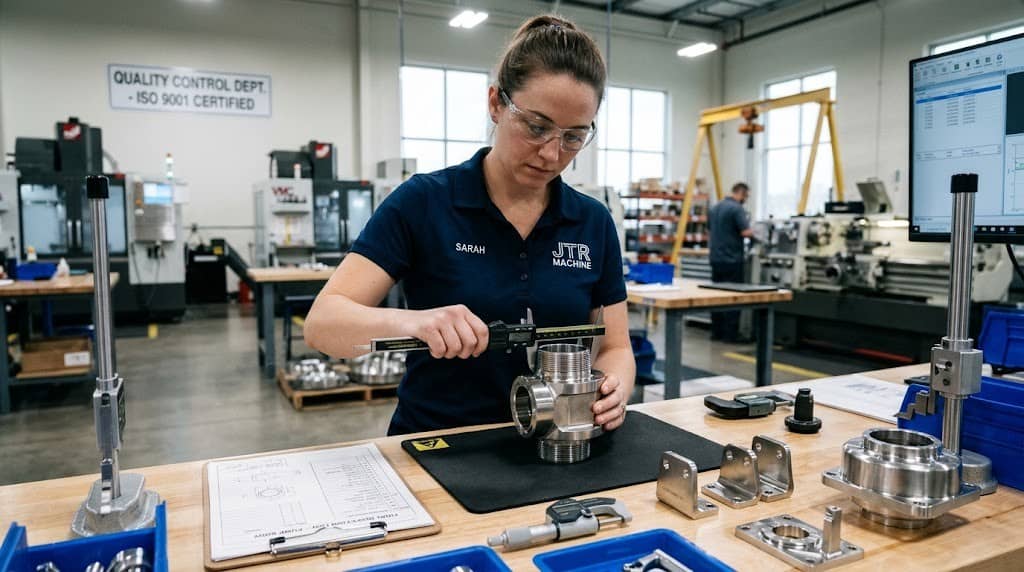
Custom CNC Machining for Stainless Steel Components
Choosing between 304 and 316 is most effective when material selection is evaluated alongside component geometry, manufacturing requirements, and inspection needs.
JTR Machine provides custom CNC machining services for precision metal components. Depending on the part design, production requirements, and feature geometry, CNC milling and turning services can help manufacture complex components while reducing unnecessary setups.
When requesting a quotation, provide the part drawing, required stainless steel grade, operating environment, critical tolerances, surface-finish requirements, and expected order quantity. A clear material specification helps your CNC machining supplier assess manufacturability, prepare an accurate quotation, and produce components suited to their intended application.
Frequently Asked Questions
Q1: Is 316 stainless steel always better than 304 for CNC machining?
No. Grade 316 generally provides better resistance to chloride-related corrosion, but 304 may be more economical when its performance meets the application’s requirements.
Q2: Is 304 or 316 better for marine CNC machined parts?
316 is often preferred for chloride exposure, but continuous seawater immersion and severe marine conditions require additional material evaluation.
Q3: Is 316 stainless steel harder to machine than 304?
Both grades can work-harden during cutting. Actual machinability depends on material condition, tooling, cutting parameters, and part geometry.
Q4: Can 304 stainless steel be used for food-processing equipment?
Yes, in many applications. Suitability depends on food contact, cleaning chemicals, temperature, hygiene requirements, and applicable regulations.