
Gravity Casting (Metal Mold Gravity Casting)
Medium Volume, High Density Parts? Gravity Casting is More Economical.
Lower tooling costs than die casting, higher dimensional accuracy than sand casting.
Aluminum alloys, copper alloys, magnesium alloys… Ideal for parts requiring air-tightness and mechanical properties.
IATF 16949 · ISO 9001 · Lower Tooling Costs · Ideal for Medium Runs
Send us your drawing to see if it’s feasible. Gravity Casting vs. Die Casting: Which suits you best?
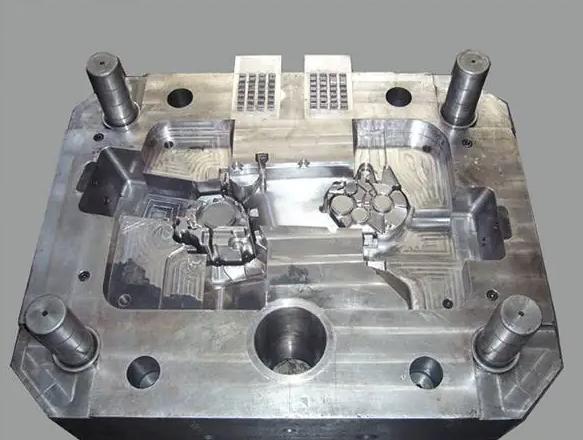
What Issues Can Gravity Casting Solve?
Lower Tooling Costs than Die Casting
Gravity casting molds have a simpler structure without complex high-pressure injection systems. Tooling costs are typically 30%~60% of die casting molds.
Better Internal Quality, Fewer Porosity Issues
No air entrapment caused by high-speed injection. Parts can undergo heat treatment (e.g., T6 treatment) for superior mechanical properties.
Ideal for Medium Volume & Large Parts
Die casting is limited by clamping force and struggles with large parts. Gravity casting can produce aluminum and copper alloy castings weighing over 100kg.
Wide Material Range · Heat Treatable · Weldable
Gravity Casting vs. Die Casting
Gravity casting and die casting follow completely different philosophies. Let us break down the comparison for you.
| Comparison Item | Gravity Casting (Metal Mold) | Die Casting |
| Tooling Cost | Low (simple structure) | High (complex, high pressure resistant) |
| Equipment Cost | Low (gravity/tilting machine) | High (high pressure die casting machine) |
| Minimum Volume | From hundreds of pcs | From thousands of pcs |
| Max Part Weight | 100kg+ | Usually ≤ 30kg |
| Wall Thickness | ≥3mm | Starting from 0.8mm |
| Surface Roughness | Ra 6.3-12.5 μm | Ra 1.6-3.2 μm (smoother) |
| Internal Porosity Risk | Low (no air entrapment) | Higher (high-speed injection) |
| Heat Treatable | Yes (T5/T6) | No (not recommended-blistering risk) |
| Weldable | Yes | Difficult (high porosity) |
| Dimensional Accuracy | CT6-CT9 | CT4-CT6 (higher) |
| Typical Materials | Aluminum, Copper, Magnesium Alloys | Aluminum, Zinc, Magnesium Alloys |
Choose Gravity Casting if: Medium volume, large parts, requirements for air-tightness/mechanical properties, needs heat treatment.
Choose Die Casting if:High volume, small parts, thin walls, extremely high surface finish requirements.
Gravity Casting Capabilities
The following are general reference ranges. Specifics depend on DFM analysis of your drawing.
| Process | Precision Grade | Surface Roughness | Min. Wall Thickness | Weight Range | Common Materials |
| Gravity Casting | CT6-CT9 | Ra 6.3-12.5 μm | 3-5 mm | 0.1kg-100kg+ | Aluminum, copper, magnesium alloys |
How is Quality Guaranteed? Six steps, each with records kept.
- DFM Analysis→ Know which dimensions are achievable before ordering.
- Material Inspection→ Spectrometer verification of composition.
- Process Monitoring→ Pouring temp, mold temp, cooling time recorded.
- First Article Inspection (FAIR)→ Full CMM measurement.
- In-process Sampling→ SPC control.
- Outgoing QC→ Material certs + inspection report included.
Our Testing capabilities
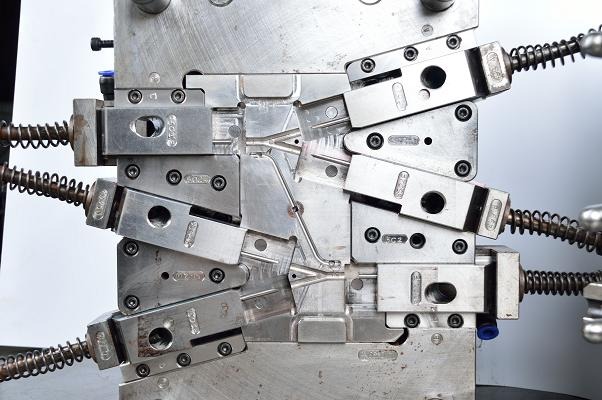
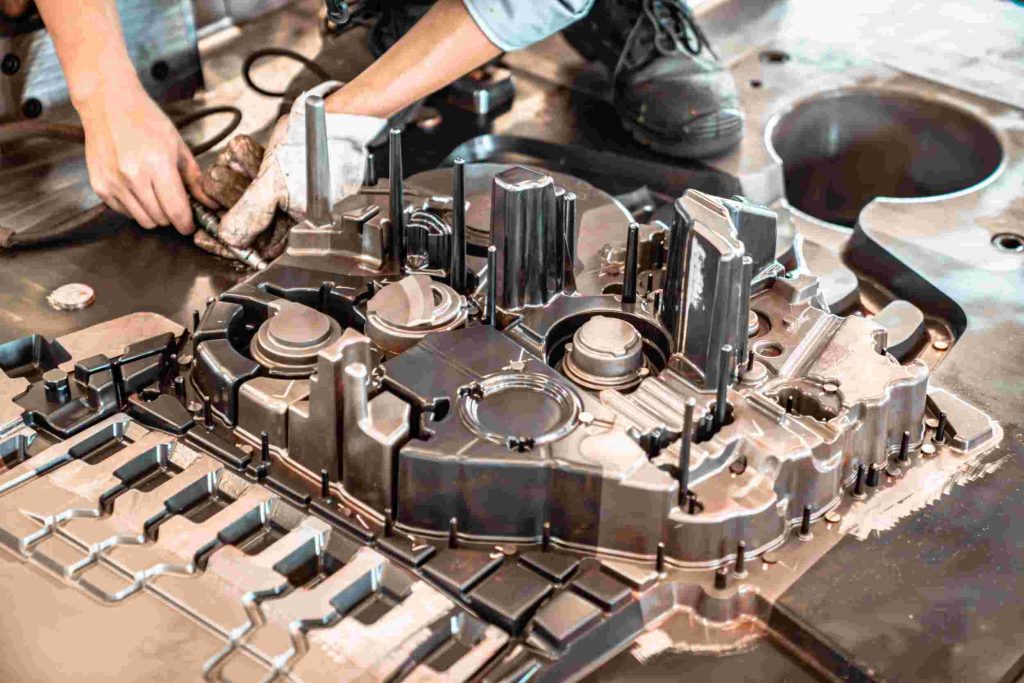
Complete Gravity Casting and CNC Machining Services
Gravity casting already reduces your machining allowance. For critical fits or sealing surfaces, we provide precision CNC machining.
What Does This Mean For You?
- No need to find another machining factory, we can handle everything in one stop.
- Reduce machining allowance for raw materials and reduce material waste.
- One-piece casting + localized precision machining = balancing cost and precision
Surface Treatments:
Sandblasting · Polishing · Heat treatment · Surface hardening · Passivation · Electroplating / Electroless plating
| Treatment | Application | Effect Description |
| Sandblasting | Remove oxide scale, improve cleanliness | Uniform matte surface, Ra 3.2-6.3µm |
| Polishing | Decorative or non-mating surfaces | Smooth surface, Ra 0.8-1.6µm |
| Heat treatment | Improve mechanical properties | Solution, aging, annealing, normalizing, quenching + tempering, etc. |
| Surface hardening | Wear-resistant areas | Carburizing, nitriding, induction hardening |
| Passivation | Stainless steel parts | Improve corrosion resistance |
| Electroplating / electroless plating | Decorative or anti-corrosion requirements | Zinc, chrome, nickel plating, etc. |
Is Your Part Suitable for Gravity Casting?
Best Application Scenarios
| Ideal for Gravity Casting | Ideal for Die Casting |
| Medium volume (hundreds ~ thousands of pcs) | High volume (thousands ~ hundreds of thousands) |
| Large parts (>5kg / 11 lbs) | Small parts (<3kg / 6.6 lbs) |
| High gas tightness requirements | High cosmetic & thin-wall requirements |
| Requires heat treatment (T6) | No heat treatment needed |
| Surface finish Ra > 6.3 acceptable | Surface finish Ra < 3.2 required |
| Copper alloys, large aluminum parts | Zinc alloys, small aluminum parts |
Not sure which process fits your part?
Send us your drawings for a free manufacturability assessment.
What are the structural requirements for gravity casting?
Reasonable design is half the success of gravity casting. Here are the Structural Design Guidelines:
Wall Thickness Design
Keep wall thickness as uniform as possible and avoid abrupt changes.
• Minimum wall thickness ≥ 3 mm.
Fillet Design
Apply fillets to both internal and external corners; avoid sharp edges.
• Typical fillet radius: R2-R5 mm.
Avoid Unfavorable Structures
Avoid large flat surfaces (prone to deformation).
• Add draft angles of 1° ~ 3°.
Hole Design
• Minimum cast hole diameter ≥ 4-5 mm.
• Depth-to-diameter ratio ≤ 3:1.
Does your part geometry require adjustments?
Submit your drawings for our manufacturability analysis.
FAQs
Send Drawings, Get Answers in Three Steps
✅Free Assessment | ✅Fast Response | ✅Honest Feedback
Supported formats: STEP, IGES, STP, X_T, PDF. Strict confidentiality guaranteed.
Is gravity casting suitable? Or is die casting a better fit?
Quotation, lead time, and achievable tolerances.