
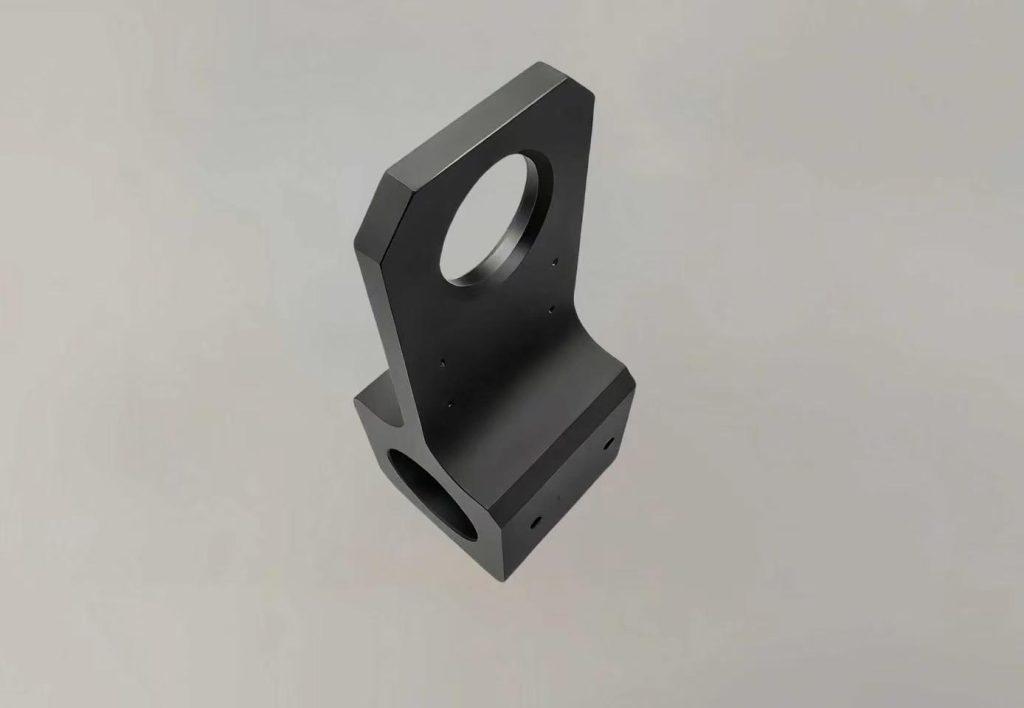
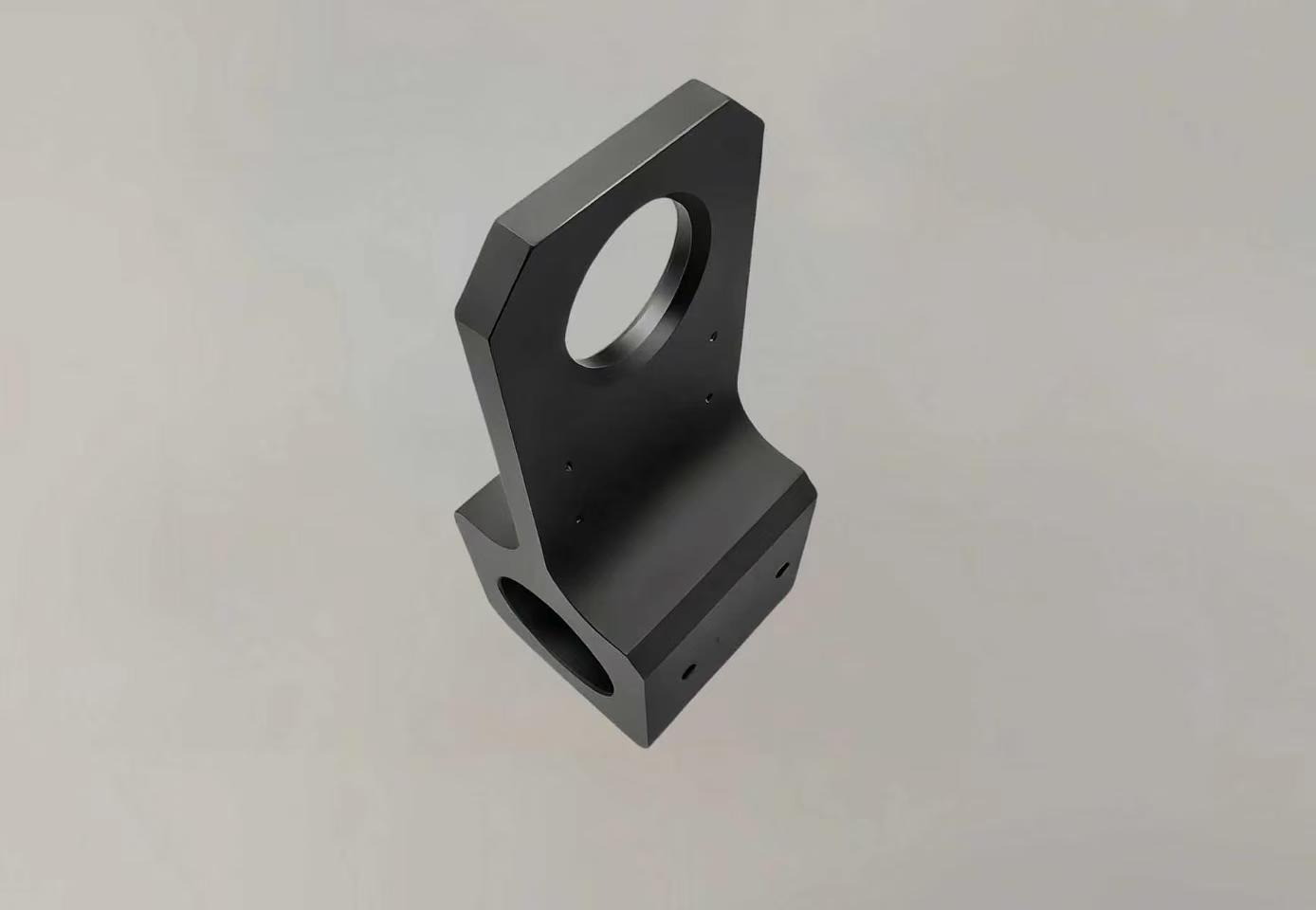
CNC Machined Alloy Steel Wire-Cut Bracket with Black Oxide
- Material: 42CrMo
- Size: 191X76.2X75 mm
- Process: 3-Axis CNC Machining and Wire EDM
- Surface treatment: Black oxide finish
CNC Machining + Wire EDM: Why Both
42CrMo is a chromium-molybdenum alloy steel with a strong track record in industrial and mechanical applications. Its alloy content (roughly 1% chromium and 0.2% molybdenum) improves hardenability, toughness, and fatigue resistance in ways that plain carbon steel can’t match.
Gears, axles, shafts, connecting rods, and structural components that live under repeated or heavy loading are common uses.
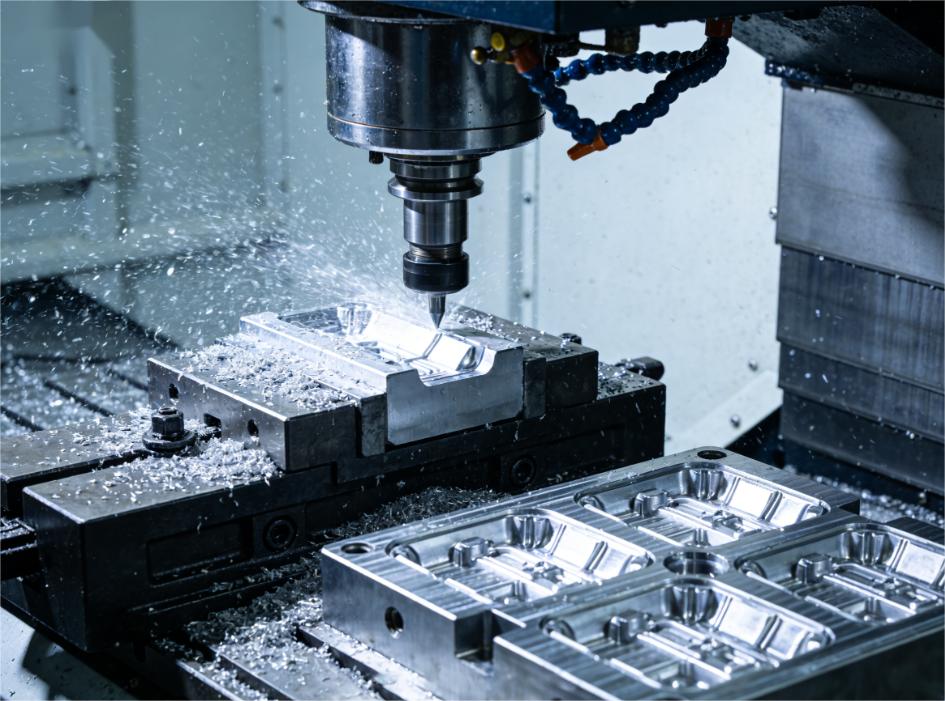
This part uses 3-axis CNC machining and wire EDM together, which is a practical approach when the geometry includes features that conventional cutting tools struggle to reach cleanly.
Wire EDM erodes material with a moving wire electrode, and no cutting forces are involved. This makes it well-suited to hard materials and to situations where tool deflection or tool radius would otherwise compromise accuracy. Combining both processes on a single part opens up a wider range of achievable geometries than either method could deliver alone.

Black Oxide: What It Is and What It Does
Black oxide is a chemical conversion coating. It reacts with the iron in the steel surface to form a thin layer of magnetite (black iron oxide). And it’s done in a hot alkaline salt bath and adds virtually no thickness to the part.
| Property | Benefit |
| Dimensional impact | Near-zero — precision features remain unaffected |
| Corrosion resistance | Moderate, significantly improved when oil-sealed after treatment |
| Surface reflectivity | Low — matte black surface absorbs rather than reflects light |
| Adhesion for lubricants | Porous surface holds oils and rust inhibitors well |
For machined steel parts where dimensional control is critical, the negligible thickness addition is a significant advantage over heavier coating processes like plating or powder coating. The matte black finish is also a practical choice in assemblies where glare or visible reflection from a bright surface would be unwanted.