
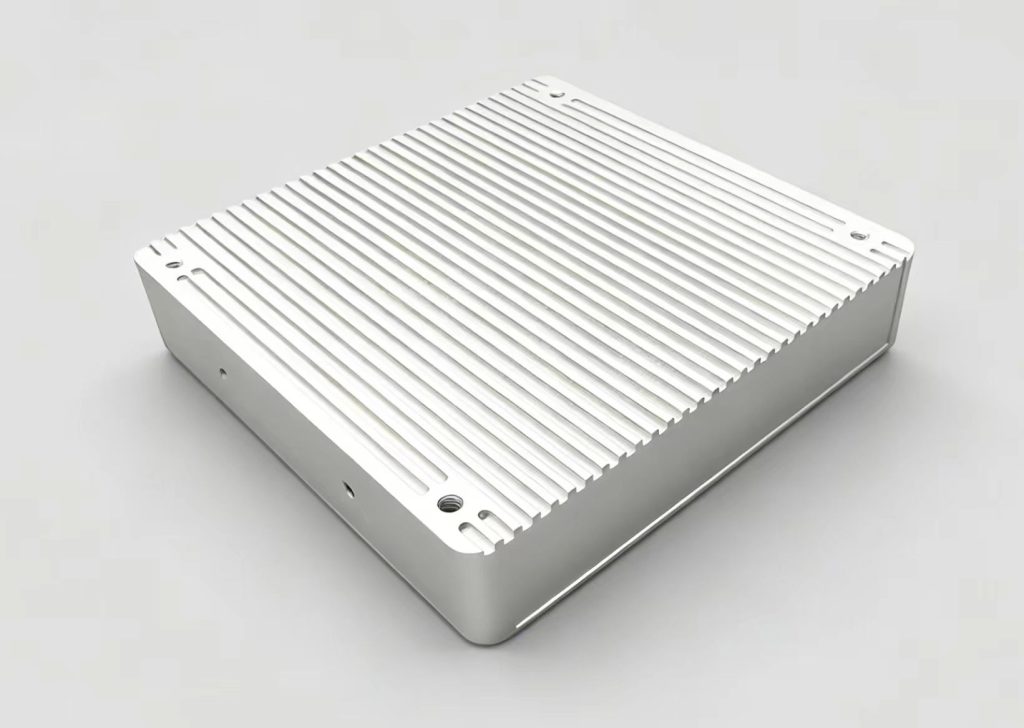
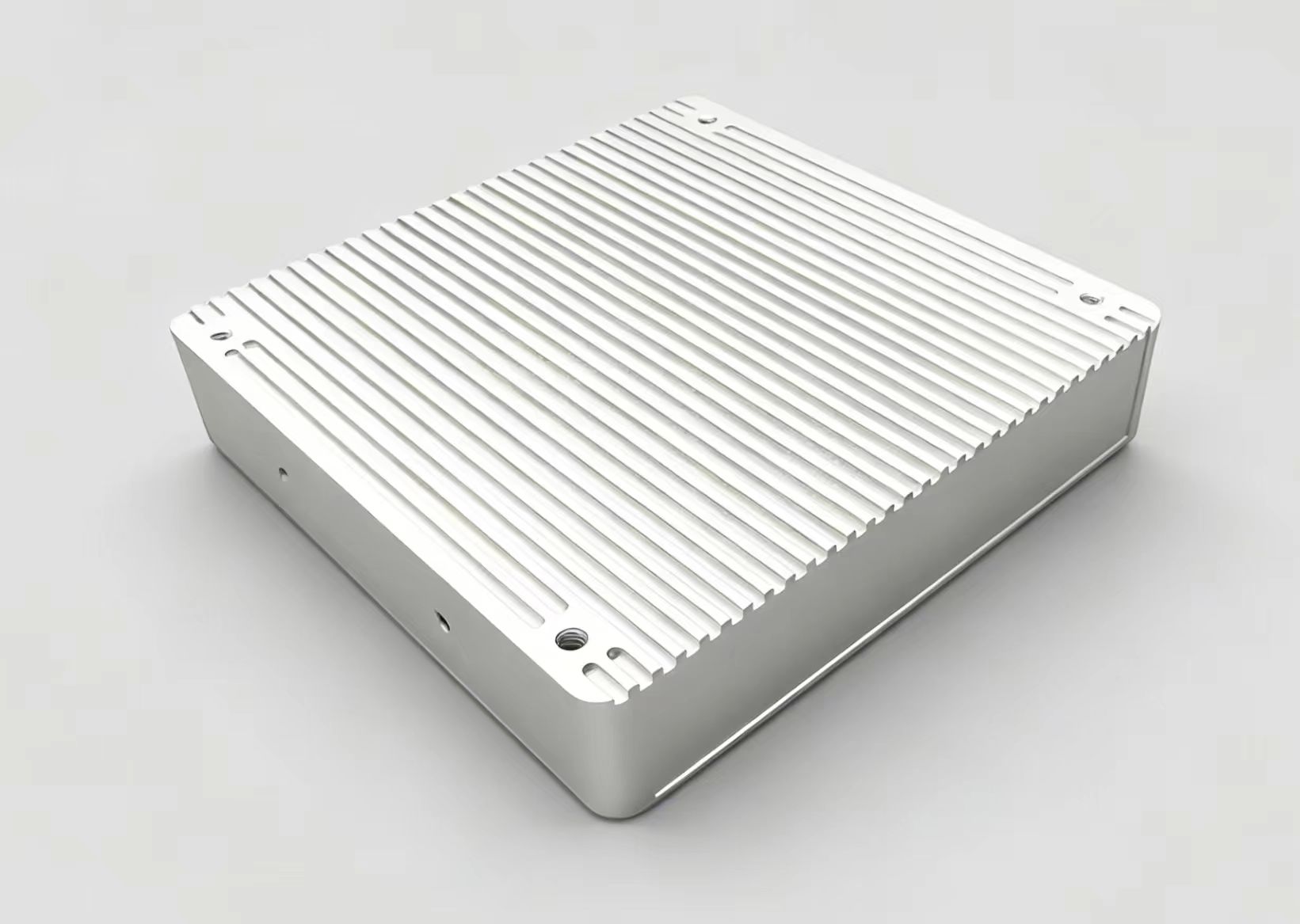
CNC Machined Aluminum Part with Clear Anodizing and Partial Paint
- Material: AL6061-T6
- Size: 125X25X125 mm
- Process: 3-Axis CNC Machining
- Surface treatment: Clear anodizing and partial paint
Appearance as a Quality Requirement
AL6061-T6 is a reliable all-rounder in the aluminum alloy family. Its well-balanced profile like good machinability, solid corrosion resistance, consistent mechanical properties makes it a practical default for parts that need to perform reliably, look clean, and stay within a reasonable cost range.
The T6 temper means it arrives at the machine in a stable, well-characterized state and stays that way during cutting.
For this part, appearance is listed alongside dimensional accuracy as a key quality criterion. That shapes how the machining is approached: surface finish quality depends on cutting parameters, tool condition, and coolant strategy as much as it does on dimensional setup.
Achieving flat, consistent surfaces and smooth profile transitions takes deliberate attention to how the part is cut, not just where.
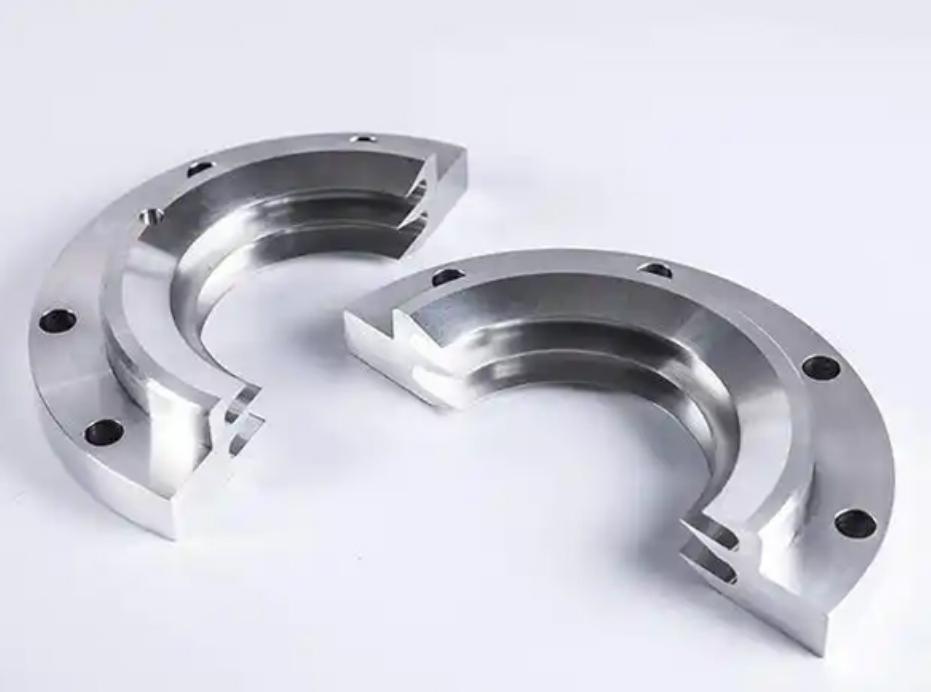
Clear Anodizing: Protection Without Hiding the Material
Clear anodizing, sometimes called natural anodizing, doesn’t add color. Instead, it builds a transparent oxide layer directly on the aluminum surface that:
| Property | Detail |
| Surface hardness | Harder than the base aluminum |
| Corrosion resistance | Resists moisture and mild chemical exposure |
| Appearance | Preserves the natural metallic look of the alloy |
| Adhesion for paint | Provides a consistent base for subsequent coatings |
The result is a clean, slightly satin metallic surface that reads clearly as aluminum. Many designers prefer this when they want the material to be visually evident: no heavy coloring, just a refined version of the natural surface.
Partial Paint: Adding Contrast Where It’s Needed
Selective paint application over the anodized base allows specific areas of the part to stand out from the surrounding aluminum surface.
Whether used to mark a zone, indicate an orientation, or add a design element, the localized color creates clear visual differentiation without covering the whole part.
Achieving clean edges between the painted and anodized areas requires careful masking during finishing, a step that adds time but is essential for a sharp, professional result.
Done well, the two finishes complement each other: the anodized areas provide durable, low-maintenance protection, while the painted sections add the contrast and character the design calls for.