

Engineers constructing aluminium parts for gravity casting will ask a number of questions first off; one of the first is: how thin can the walls really be? It seems like an easy issue, but the answer is more complicated than most people realize, and if you get it wrong at the design stage, it may cost significant time and money down the line.
This guide walks through what the minimum wall thickness for gravity casting actually means in practice, why thin walls create specific challenges, and what you can do at the design stage to make your parts more manufacturable without compromising what they have to perform.
What Is the Minimum Wall Thickness for Gravity Casting
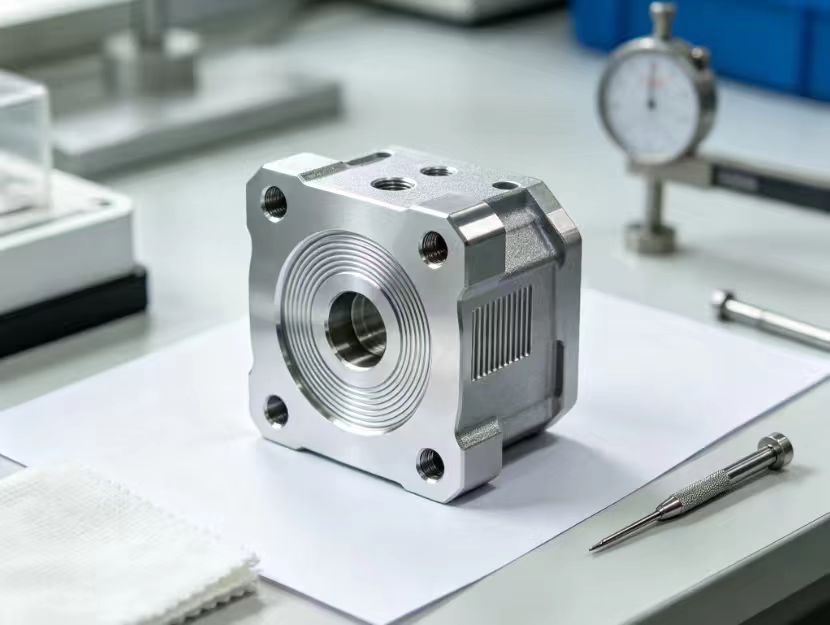
As a general design reference, wall thicknesses around 3 to 5 mm are commonly used for aluminum gravity castings. Under some favourable conditions such as short flow passages, high-fluidity alloys and well-optimized mould temperatures, walls as thin as 2.5 mm may be realized. But this should be viewed as a reference range, not a guaranteed standard for every part.
There is a crucial distinction to be made: the difference between a wall that can theoretically be made and a wall that can be reliably made in bulk. A prototype might fill out a 2.5 mm wall in a controlled trial but getting it to happen consistently in hundreds or thousands of parts is another problem entirely. Repeatability is as important as whether the aluminium casting filled out the first time when considering the wall thickness in a production environment.
Minimum wall thicknesses that can be attained using gravity casting are a function of several parameters including part size and configuration, aluminium alloy, pouring temperature, mould temperature and gating system design. None of these variables work alone.
Why Thin Walls Are Difficult in Gravity Casting
Unlike high-pressure die casting, gravity casting relies primarily on the weight of the molten metal and the pressure created by the metal head to fill the mould, rather than forcing the metal into the cavity at high injection pressure. That basic distinction is exactly why thin wall portions are a big issue.
Thin sections cool quickly. Thinner walls lose heat considerably more quickly than thicker ones. In rare situations, the molten metal begins to solidify before the cavity is fully filled, leading to incomplete fill or misruns. This is especially true for long, narrow, thin-wall spaces.
Longer flow paths increase the challenge. The farther molten aluminum has to travel, the more heat it loses along the way. A 3 mm wall adjacent to the gate may fill cleanly, while the same 3 mm wall at the far end of a long cavity may not.
Thin walls leave less room for process variation. Very thin sections are highly sensitive to small changes in pouring temperature, mold temperature, and fill speed. The difference between “occasionally works” and “consistently produces good parts” often comes down to how much process window you have to work with, and thin walls narrow that window considerably.
What Affects Aluminum Casting Wall Thickness
If you know which elements really impact the wall thickness to be achieved, you can make better selections at the design stage. Here are the most important ones:
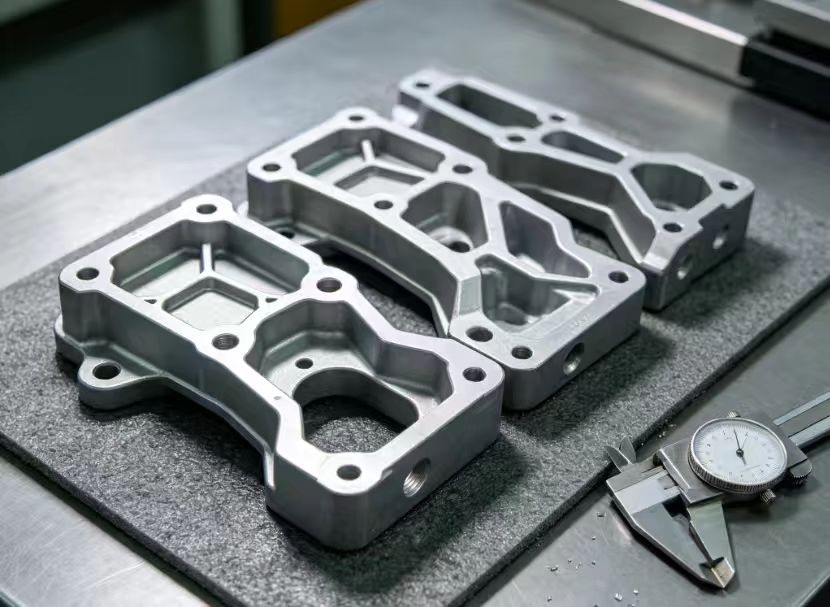
- Part size and geometry: Larger parts, with deeper cavities and longer flow lengths, tend to require thicker walls to fill reliably. The same nominal wall thickness can act quite differently, depending on where it is in the part and how far the metal needs to travel to get there.
- Aluminum alloy and casting conditions: Different aluminum alloys have different fluidity and solidification characteristics. Some alloys, like A356, are widely used in gravity casting partly because of their relatively good flow properties. Pouring temperature and mold temperature both influence how well the metal fills thin sections, and what works for one alloy should not be assumed to work for another.
- Mold and gating design: Where the gate is placed, how the runner system is laid out, and how the cavity vents all affect whether molten metal reaches thin areas with enough energy to fill them properly. Good gating design can sometimes allow thinner walls to be achieved without simply making everything heavier.
- Production requirements: A prototype that fills out successfully does not guarantee consistent results in volume production. The practical minimum wall thickness for a production part needs to account for variation, expected scrap rates, and any CNC machining allowances that need to be built in.
The table below summarizes how common design features affect wall thickness feasibility:
| Feature | What It Means for Wall Thickness |
| Thin, simple sections | Easier to fill and cool consistently |
| Long, thin sections | Higher risk of incomplete filling |
| Thick-to-thin transitions | Can increase shrinkage and porosity risks |
| Large castings | May require thicker walls than smaller parts |
| Complex geometry | May need local adjustments in wall thickness |
How to Design Thin-Wall Aluminum Castings More Reliably
Mostly it is a design difficulty to get closer to the minimum wall thickness without having quality issues. A few principles that always help:
1. Keep wall thickness as uniform as practical
Uneven cooling due to rapid changes in thickness from one portion of a casting to another can cause shrinkage, porosity or warping. Gradual transitions and reasonably consistent section thickness make the process much more stable.
2. Avoid unnecessarily thin sections
Thinning every part of the wall to chase weight reduction is not always the right call. Parts that are non-critical can be decreased, but parts that carry load, interface with other components or require post-machining should be sized with strength and machining requirements in mind not merely material removal.
3. Use ribs instead of simply adding thickness
Where stiffness is needed, well-designed ribs can provide it without adding bulk across the entire wall. That said, ribs themselves need to be proportioned carefully. An overly thick rib can create a local hot spot that leads to shrinkage defects, so there is a balance to strike.
Should You Use Gravity Casting for Very Thin Aluminum Parts
Gravity casting has genuine advantages: lower tooling costs compared to high-pressure die casting, good mechanical properties in many applications, particularly when combined with suitable alloy selection and heat treatment, and suitability for medium-to-large parts with moderate complexity. For parts with walls generally in the 3 mm and above range, it is often a well-matched process.
However, if a part design calls for very thin walls combined with long flow paths or complex geometry, gravity casting may not be the best fit. In those cases, it is worth evaluating other casting processes during the design phase rather than trying to push gravity casting beyond what it does well. The right process choice at the start of a project is almost always easier and cheaper than trying to compensate for a process mismatch later.
Final Thoughts
Wall thickness is one of those design characteristics that looks easy on paper, but has substantial ramifications on how reliably a part can be fabricated. A practical design range is often around 3 to 5 mm for most components in aluminium gravity casting. Actual minimum thickness is a function of geometry, alloy, mould design and production needs all working together.
If you are working through a gravity casting design and want a realistic assessment of what is achievable for your specific part, JTR Machine is happy to take a look and provide feedback early in the process. It usually saves a lot of time to get those conversations going before the design is locked in. Contact us now!