
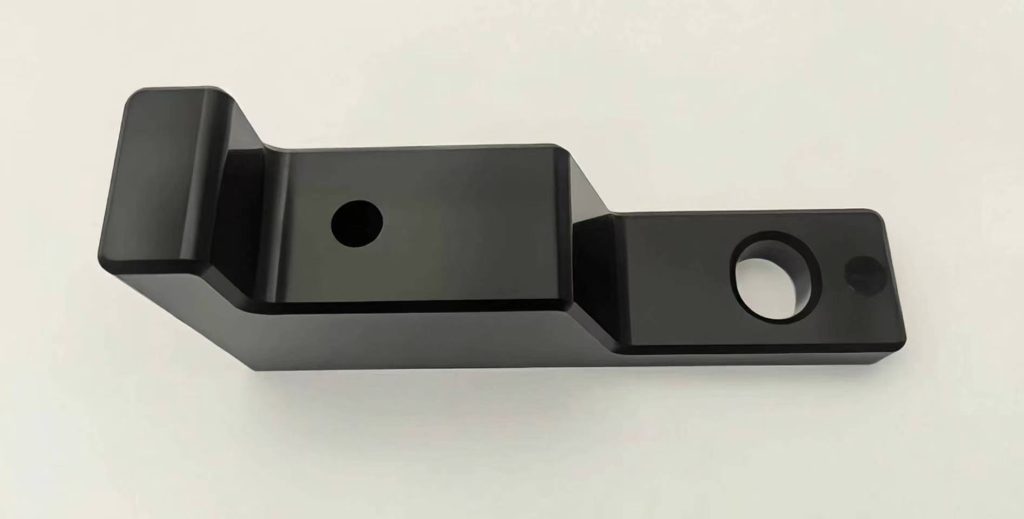
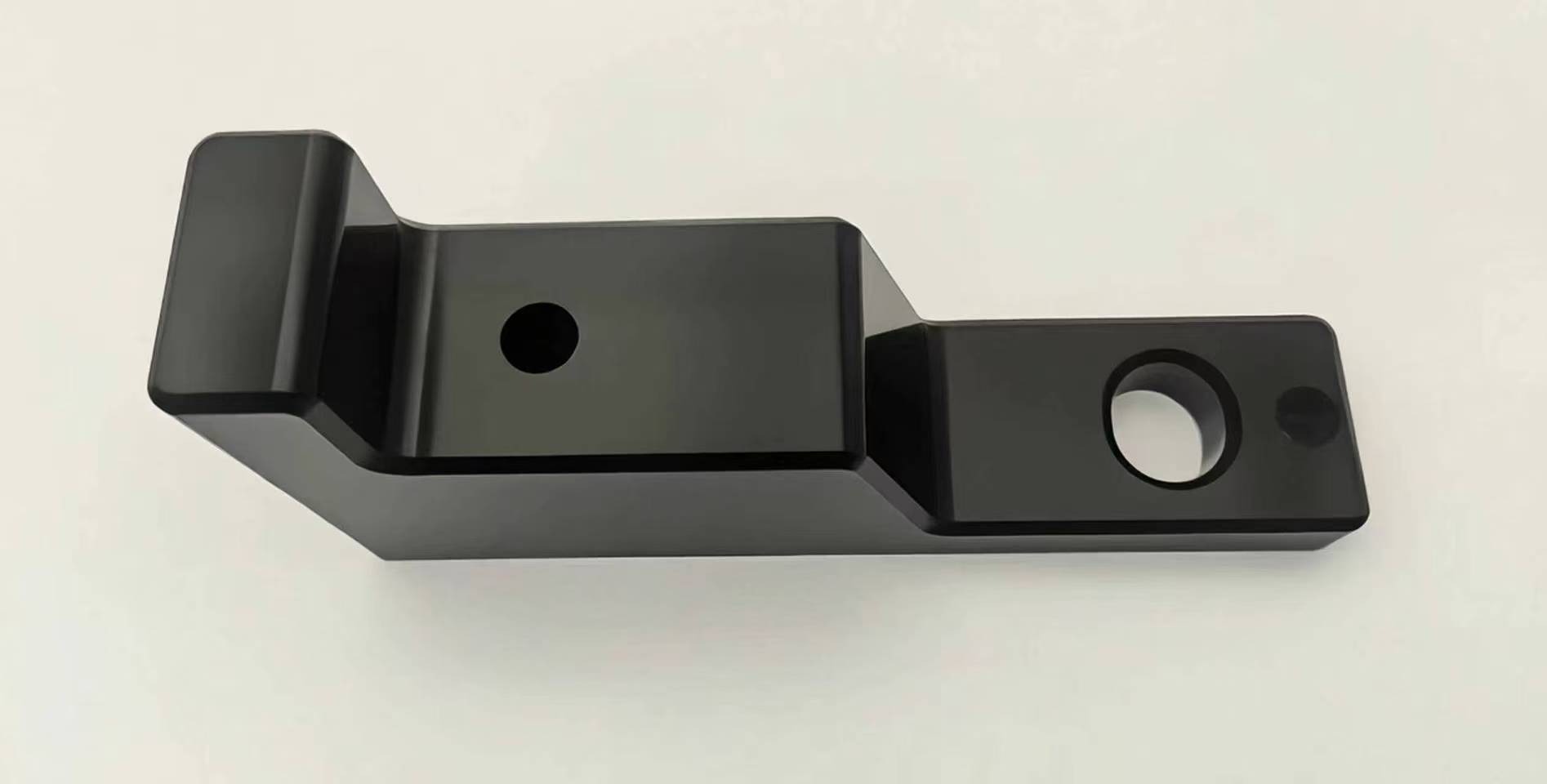
CNC Machined Black POM Plastic Part with Paint Coating
- Material: Black POM
- Size: 564.501X373.399X53.000 mm
- Process: 3-Axis CNC Machining
- Surface treatment: RAL 2011 paint coating
Machining a Large POM Part
POM (polyoxymethylene, also known as Delrin or acetal) is one of the most practical engineering plastics for CNC machining.
It cuts cleanly, holds tolerances well for a plastic material, and has a naturally low-friction surface that makes it useful wherever smooth sliding contact between parts is needed.
At 564X373 mm, this is a large plastic component by any standard. Size introduces challenges that don’t apply to smaller parts:
- Thermal expansion: POM expands and contracts more than metal with temperature changes. Heat generated during cutting can cause dimensional drift if not managed.
- Stress-induced warping: Large flat sections are prone to warping if material is removed unevenly or if clamping forces are too aggressive.
- Vibration: Larger parts can flex slightly during machining if unsupported, affecting surface finish on long flat passes.
The solution involves sharp tooling, controlled feeds and speeds, and sometimes allowing the part to stabilize between heavy roughing and finishing operations.
Painting POM: Adhesion Is Significant
POM has low surface energy, which means coatings don’t bond to it naturally the way they do to metal. Getting a paint layer to stick properly requires preparation:
| Step | Why It Matters |
| Light surface abrasion | Increases mechanical adhesion by creating micro-texture |
| Primer application | Bridges the gap between the plastic surface and the topcoat |
| Topcoat (RAL 2011) | Delivers the final color and surface protection |
When the prep work is done correctly, the paint holds well in service and presents a clean, even finish.
Why RAL 2011 (Deep Orange)
RAL 2011 is a deep, saturated orange used widely in safety-critical and operator-facing applications like machine guards, warning zones, high-visibility components.
The color has clear functional value beyond aesthetics: it stands out in most environments and is immediately recognizable. The orange topcoat over a black POM substrate also creates a strong visual contrast, making the part easy to spot and identify within an assembly.