

Choosing between titanium and aluminum for aerospace CNC parts involves more than comparing material strength or weight. Engineers must consider load requirements, weight targets, operating temperature, corrosion exposure, CNC machinability, part geometry, production volume, and total manufacturing cost.
Both materials are widely used as aerospace CNC machining materials, but they address different engineering requirements. Aluminum is often selected for lightweight structures and components that require efficient machining, while titanium is considered when higher strength, temperature capability, corrosion resistance, or demanding mechanical performance is required.
This guide compares titanium vs aluminum aerospace applications and provides a practical framework for selecting between the two materials for CNC machined aerospace components.
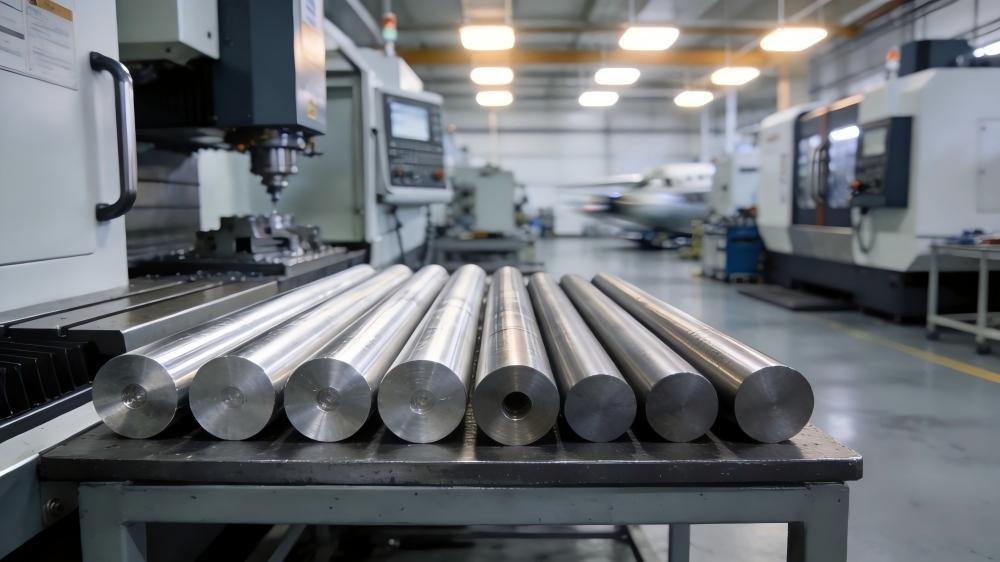
Titanium vs Aluminum for Aerospace CNC Parts: Quick Comparison
The following comparison provides a starting point for titanium vs aluminum for aerospace CNC parts:
| Property | Aerospace Aluminum | Aerospace Titanium |
| Density | Lower | Higher |
| Strength-to-weight performance | High | Very high |
| CNC machinability | Generally easier | More challenging |
| Corrosion resistance | Good | Excellent |
| Temperature capability | Moderate | Higher |
| Raw material cost | Generally lower | Generally higher |
| Machining complexity | Lower | Higher |
| Typical applications | Brackets, housings, structural components | High-load and demanding components |
Neither material is universally better. The correct choice depends on the functional requirements of the aerospace CNC part.
Weight and Strength-to-Weight Performance
Weight reduction is a fundamental consideration in aerospace component design. Aluminum has a lower density than titanium, making aerospace aluminum parts attractive when minimizing component mass is a primary objective.
Titanium is denser, but its higher strength can provide excellent strength-to-weight performance. For highly loaded components, the additional material density may be justified by the mechanical performance available from titanium alloys.
Engineers should therefore evaluate:
- Required mechanical load
- Fatigue requirements
- Component weight target
- Stiffness requirements
- Available design space
- Required safety margins
For housings, brackets, supports, frames, and other components where aluminum provides sufficient mechanical performance, aluminum can offer an effective combination of low weight and machinability.
For highly loaded aerospace components, aerospace titanium parts may be considered when the required strength or durability cannot be efficiently achieved with the selected aluminum alloy.
Strength, Temperature and Corrosion Resistance
Material selection becomes more important when aerospace components operate under demanding mechanical or environmental conditions.
Mechanical Strength
Titanium generally provides higher strength than common aerospace aluminum alloys and can be considered for components subjected to substantial mechanical loading. Aluminum remains suitable for many structural and equipment components when its mechanical properties meet the engineering requirements.
The selection should therefore be based on the required alloy and condition rather than treating “aluminum” or “titanium” as a single material category.
Temperature Capability
Operating temperature is another important consideration in aerospace CNC machining materials selection. Aluminum is widely used for conventional aerospace structures and equipment, but its useful temperature range is more limited than that of titanium. Titanium can therefore become more appropriate for components exposed to higher temperatures or located closer to heat-generating aerospace systems.
Corrosion Resistance
Both aluminum alloys and titanium can provide useful corrosion resistance. However, titanium is particularly valued in demanding environments where long-term corrosion resistance is an important part of the component specification.
For aerospace components exposed to moisture, corrosive environments, or demanding service conditions, corrosion performance should be evaluated alongside strength and weight.
CNC Machinability: Titanium vs Aluminum
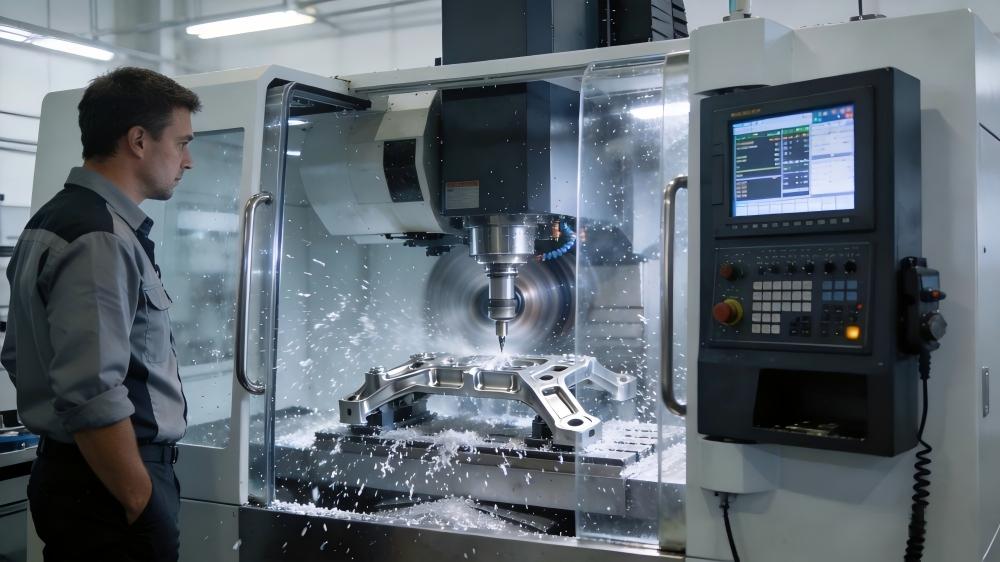
The material decision also affects manufacturing strategy. Aluminum is generally easier to machine than titanium. Its favorable machinability can support efficient material removal, shorter machining cycles, and lower tool wear in many applications.
Titanium CNC machining requires more careful process control. Titanium’s relatively low thermal conductivity can concentrate heat around the cutting zone, while its mechanical properties can increase tool wear and make cutting conditions more demanding. For titanium components, manufacturers may need to pay particular attention to:
- Cutting-tool selection
- Tool rigidity
- Heat management
- Cutting conditions
- Workholding
- Toolpath strategy
- Tool wear monitoring
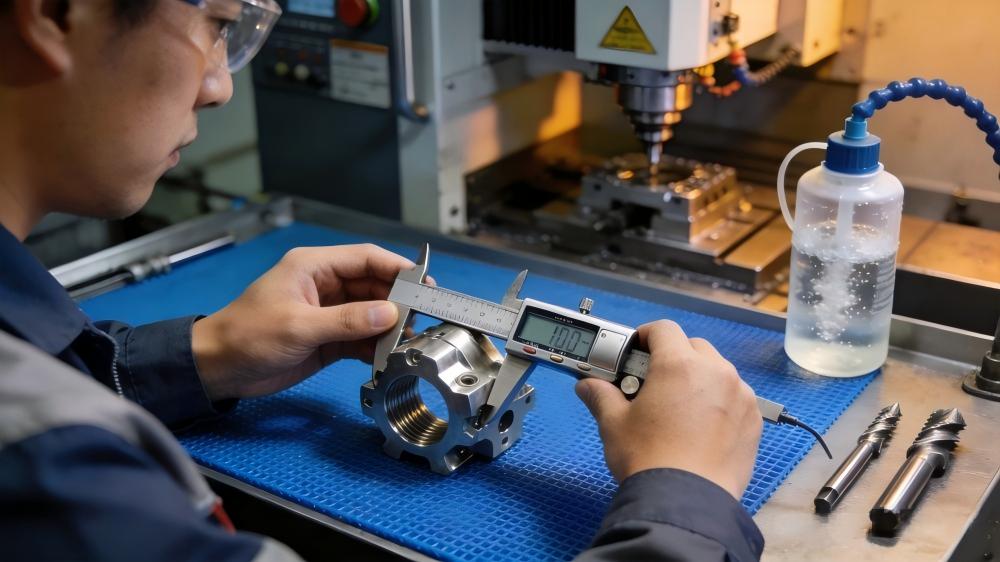
- Dimensional inspection
This does not make titanium unsuitable for precision aerospace machining. Instead, it means material selection should be evaluated together with the planned manufacturing process. For complex aerospace geometries, JTR Machine’s existing CNC machining design guidelines can also be used to review tool accessibility, internal radii, pocket geometry, tolerances, and machining setups before production.
CNC Machining Cost: Titanium vs Aluminum
The material price is only one component of aerospace CNC machining cost. A more complete assessment should include:
| Cost Factor | Aluminum | Titanium |
| Raw material | Generally lower | Generally higher |
| Machining time | Often shorter | Often longer |
| Tool wear | Generally lower | Generally higher |
| Process control | Relatively straightforward | More demanding |
| Tooling requirements | Moderate | More demanding |
| Typical machining cost | Generally lower | Generally higher |
However, a higher titanium material price does not automatically make it an uneconomical choice. If titanium provides the required strength, temperature capability, corrosion resistance, or durability that an aluminum alloy cannot adequately deliver, its higher processing cost may be justified.
Therefore, aerospace procurement teams should compare total part cost against required performance, rather than comparing raw material prices alone.
Which Aerospace CNC Parts Should Use Aluminum?
Aluminum is often considered for aerospace CNC parts when low density, good machinability, and adequate mechanical performance are the primary requirements. Typical aerospace aluminum parts can include:
- Structural brackets
- Equipment housings
- Mounting components
- Frames and supports
- Sensor housings
- Lightweight structural components
Aluminum can also be attractive for aerospace prototypes and production components where machining efficiency and production cost are important considerations.
The specific alloy should still be selected according to strength, corrosion resistance, heat treatment, surface treatment, and functional requirements. For example, 6061 and 7075 can serve different engineering purposes, so the material grade should be specified rather than simply requesting “aluminum.”
Which Aerospace CNC Parts Should Use Titanium?
Titanium becomes a stronger candidate when an aerospace component requires a combination of high strength, demanding environmental performance, and durability. Potential applications for aerospace titanium parts include:
- High-load structural components
- Critical mounting components
- Aerospace fittings
- Engine-adjacent components
- High-strength brackets
- Components requiring high corrosion resistance
Titanium should not be used in place of aluminium just because it is stronger. If the selected aluminium alloy meets the engineering requirements, aluminium’s lower density and easier machinability can provide practical manufacturing benefits. The big question is whether the additional performance added with titanium is necessary for the part’s operating conditions.
Titanium vs Aluminum Aerospace Applications
The following decision matrix can help engineers compare titanium vs aluminum aerospace applications during the early design stage.
| Aerospace Requirement | Material to Consider | Main Reason |
| Minimum component weight | Aluminum | Lower density |
| High strength-to-weight requirement | Titanium | Higher strength capability |
| Lower machining complexity | Aluminum | Easier machinability |
| Higher operating temperature | Titanium | Higher temperature capability |
| High corrosion resistance | Titanium | Excellent corrosion resistance |
| Large lightweight structure | Aluminum | Low density and efficient machining |
| High mechanical loading | Titanium | Higher strength potential |
| Cost-sensitive production | Aluminum | Generally lower material and machining cost |
This table is a material-selection starting point rather than a substitute for aerospace specifications, alloy data, fatigue analysis, or qualification requirements.
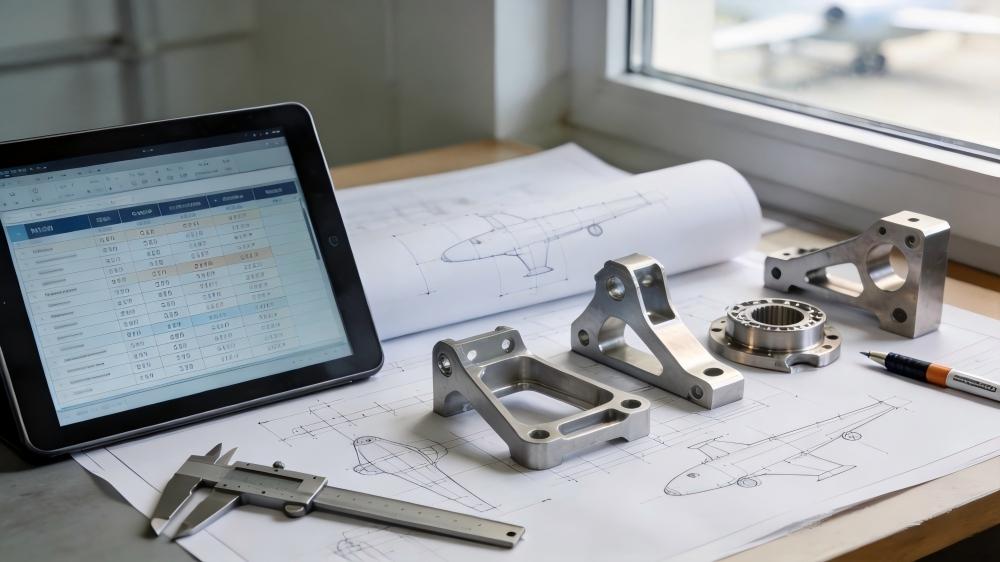
How to Choose Between Titanium and Aluminum for an Aerospace CNC Part
A practical selection process can follow five steps.
Step 1 — Define Mechanical Requirements: Identify load, fatigue, stiffness, impact, and durability requirements before selecting the material.
Step 2 — Establish the Weight Target: Determine whether minimum density or higher strength-to-weight performance is the primary objective.
Step 3 — Evaluate the Operating Environment: Review temperature, moisture, corrosion exposure, chemicals, vibration, and other service conditions.
Step 4 — Review CNC Manufacturability: Evaluate part geometry, tool access, workholding, machining time, tolerances, inspection, and whether multi-axis machining is required.
Step 5 — Compare Total Manufacturing Cost: Consider raw material, machining time, tooling, inspection, surface treatment, production volume, and potential process complexity.
This approach allows engineers to evaluate aerospace CNC machining materials according to actual component requirements rather than selecting a material based on a single property.
Aerospace CNC Design Considerations
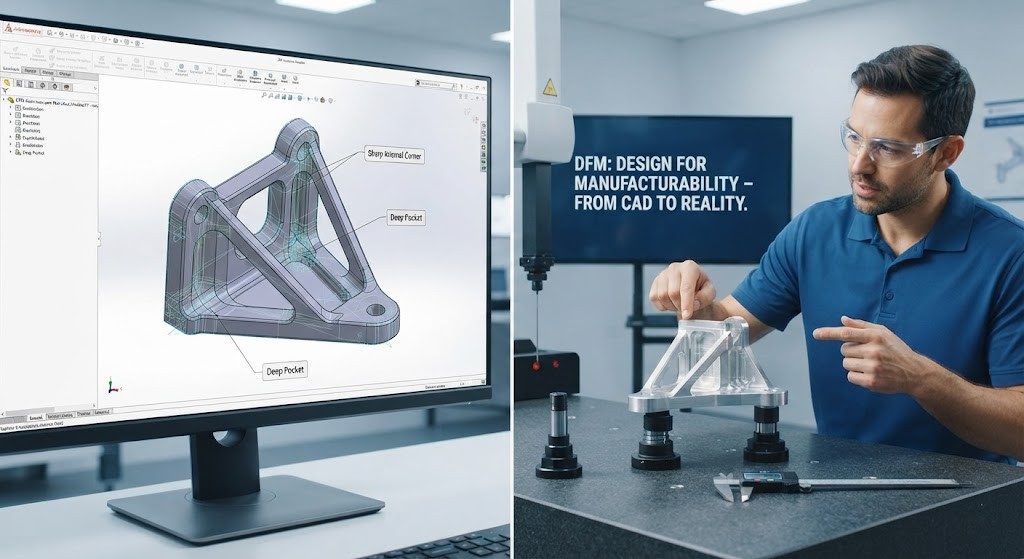
Material selection should be evaluated together with part geometry. Features such as deep pockets, small internal radii, difficult tool access, tight tolerances, and multiple machining orientations can affect manufacturing cost regardless of whether the component is made from aluminum or titanium.
For complex aerospace components, engineers should consider whether 3-axis, 4-axis, 5-axis, turning or turn-mill machining is the best choice. JTR Machine’s DFM guidance covers practical aspects such as internal corner radii, deep pockets, tool accessibility, tolerances, workholding and machining setups. Linking material selection to these design factors helps engineers evaluate the complete manufacturing route rather than considering material in isolation.
Aluminum vs Titanium: A Practical Selection Summary
In general, aluminum can be considered when:
- Low component weight is a primary requirement
- The selected alloy provides sufficient strength
- Efficient CNC machining is important
- Production cost needs to be controlled
- Operating temperature is suitable
Titanium can be considered when:
- Higher strength is required
- Strength-to-weight performance is critical
- Higher temperature capability is required
- Corrosion resistance is particularly important
- Component loads justify additional material and machining costs
For aerospace projects, the final choice should be based on the component’s engineering specification rather than a generic material ranking.
Frequently Asked Questions
Q1: Is titanium stronger than aluminum for aerospace CNC parts?
A1: Generally, titanium offers more strength than common aluminum alloys used in aerospace applications; aluminum has a lower density and is easier to machine. It all depends on the application as to which material is the right choice.
Q2: Is aluminum easier to CNC machine than titanium?
A2: Yes. Aluminum is generally easier to machine and can typically support higher machining efficiency with lower tool wear. Titanium CNC machining requires greater attention to tooling, heat management, cutting conditions, and process stability.
Q3: Is titanium more expensive to CNC machine than aluminum?
A3: Titanium commonly costs more to machine because of higher material cost, lower machining efficiency, and greater tool wear. Actual part cost also depends on geometry, tolerances, quantity, tooling, inspection, and finishing.
Q4: Which is lighter for aerospace components, aluminum or titanium?
A4: Aluminum is lighter by density. Titanium is heavier, but its higher strength can provide a strong strength-to-weight solution for highly loaded aerospace components where aluminum may not provide sufficient performance.
Q5: When should aerospace engineers choose titanium instead of aluminum?
A5: Titanium should be considered when a component requires higher strength, demanding temperature performance, excellent corrosion resistance, or high strength-to-weight performance that cannot be adequately achieved with the selected aluminum alloy.
Q6: Can both aluminum and titanium be used for 5-axis aerospace CNC machining?
A6: Yes. Multi-axis CNC machining can be applied to both materials. The appropriate machine configuration is determined by the material and production goals, as well as by requirements related to geometry, access for the tool, tolerances, and surfaces.