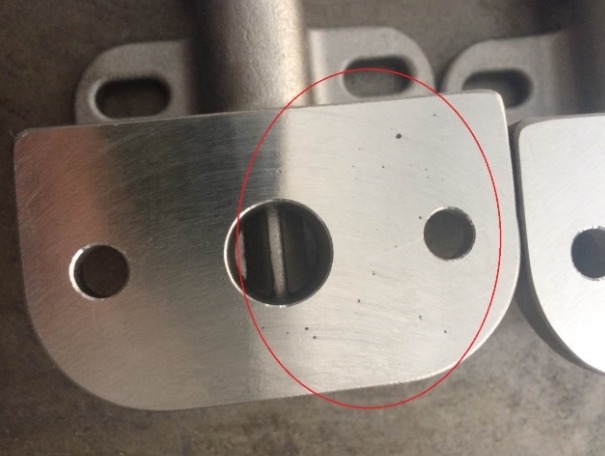


Sometimes a casting looks flawless as it comes out of the mould, but there is a problem inside. Sometimes it shows up later, when a machinist cuts into a boss and finds a tiny cavity, or when a part fails a leak test.
In many cases, casting shrinkage is behind it. This guide discusses what happens to metal as it cools in gravity casting, what causes casting shrinkage, how to distinguish shrinkage porosity from other casting flaws, and what you can do to prevent it.
Why Does Metal Shrink as It Cools
As the metal cools, and turns from liquid to solid, it takes up less space. Gravity casting involves pouring molten metal into a reusable mould and letting it fill the cavity under its own weight (no additional pressure). The metal in contact with the mould wall solidifies first. The thicker sections and the center stay liquid for a longer time.
When those last areas finally solidify, they shrink too. If liquid metal can still flow in from a riser or feeder, it replaces the lost volume. If it can’t, a void forms. Shrinkage defects form when the metal cannot adequately feed areas that are still solidifying, leaving cavities or pores in the casting. These defects often occur in thick sections or other areas that solidify last. Shrinkage porosity may remain inside the casting or connect to its surface.
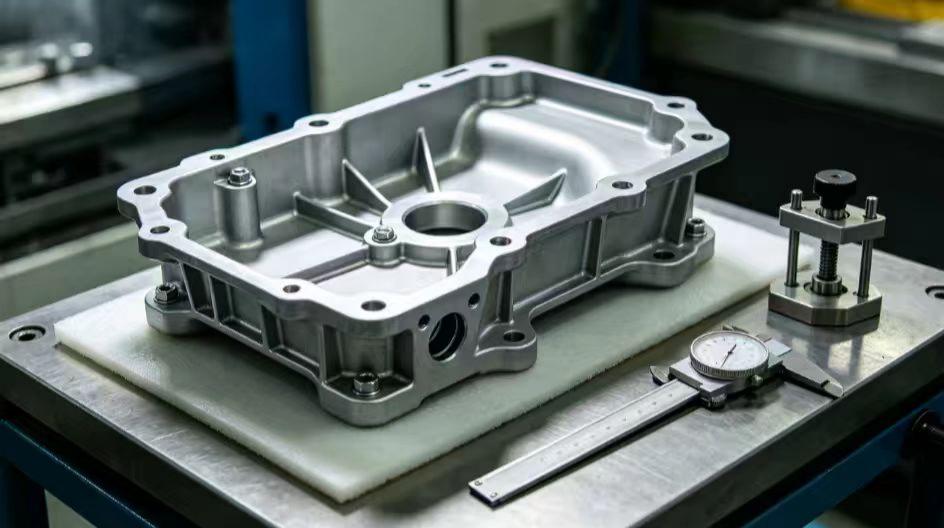
Where Do Shrinkage Defects Come From
At its core, what causes casting shrinkage is a section freezing before liquid metal can reach it. Whether that happens depends on how the part is designed and how the process is set up. A few factors come up again and again:
- Uneven wall thickness: Heavy sections cool slower than thin ones, so they freeze last and are the first to run short of metal.
- Long feeding paths: If a thick area sits far from the feeder, or the feeder freezes too early, liquid metal can’t get there in time.
- Uneven mold temperature: Hot spots in the tool slow local cooling and can shift where the metal solidifies last.
- Alloy choice: Alloys freeze in different ways, so some are more sensitive to shrinkage than others. We cover this in our guide on how different aluminum alloys affect gravity casting quality.
The table below shows the areas we usually check first when reviewing a casting drawing.
| Casting area | Why shrinkage may occur | What to review |
| Thick bosses | Localized heat concentration | Section thickness and feeding |
| Rib-to-wall junctions | Uneven solidification | Geometry and transitions |
| Thick sections far from a feeder | Limited access to liquid metal | Feeding path and feeder position |
| Areas with abrupt thickness changes | Different cooling rates | Wall-thickness consistency |
These are places worth checking closely. Whether a defect actually forms still depends on the overall casting design and solidification conditions.
Is It Shrinkage Porosity or Another Casting Defect
Shrinkage porosity is often mixed up with gas porosity and inclusions. Here is how they usually differ:
- Shrinkage porosity: Often irregular or jagged, and commonly found in thick sections or the last areas to freeze.
- Gas porosity: Usually rounder and smoother, caused by trapped gas, and it can show up in places that aren’t thick at all.
- Inclusions: Foreign material such as oxide or dross trapped in the metal, which can leave irregular pockets or marks.
Be careful with these rules of thumb, though. Location and appearance alone don’t always tell you the cause, and the shapes can overlap. For example, gas porosity may be difficult to differentiate from micro shrinkage as small shrinkage cavities may be gas filled likewise. When the cause is uncertain, use X-ray inspection, sectioning, or another suitable test to confirm the type of defect.
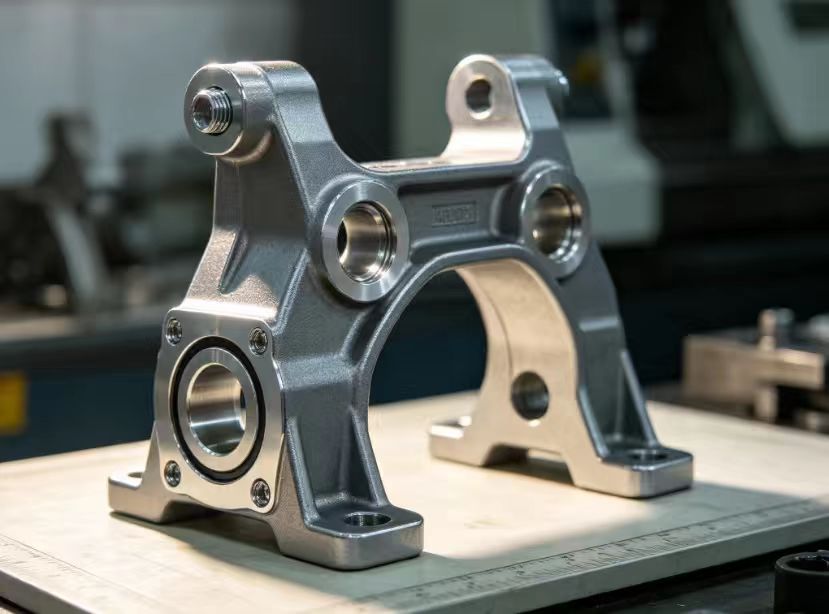
What Helps Prevent Shrinkage in Gravity Casting
Most shrinkage problems are cheaper to fix on paper than in the foundry. Four steps help:
Review wall thickness before tooling. Look for heavy bosses and sudden thickness changes, and see whether they can be cored out or blended with gradual transitions.
Improve feeding design. Place feeders so liquid metal has a clear path to thick areas, and make sure they stay liquid long enough to do their job.
Control cooling conditions. Adjust mold temperature, coatings, or cooling so thick sections don’t lag far behind thin ones.
Validate changes through inspection. After each adjustment, check sample parts with X-ray or sectioning instead of assuming it worked.
Where you can, change one thing at a time. That way you know which adjustment made the difference.
Better Casting Quality Starts with Good Planning
Shrinkage isn’t random. It follows geometry, feeding, and cooling, and most of that can be reviewed before a single part is poured. Catching a thick boss or a weak feeding path early costs far less than finding porosity during machining.
If you have a project in the works and want a second opinion on the design, JTR offers gravity casting with free DFM feedback. Send us your drawing and we’ll point out the areas worth a closer look.