

The correct manner of assembly can be more important than it seems. A bolted joint can be easily dismantled. Adhesive bonding and welding each have their own advantages, but neither is ideal for every assembly. But when you need a joint that is tight under load, resists loosening from vibration, and takes up no more space, press fit assembly is typically worth a second study.
In this guide we’ll discuss what a press fit does, where it’s most often used, typical problems and how to determine if it’s right for your unique design.
How Does a Press Fit Hold Parts Together?
A press fit or interference fit is when you force two parts together, the shaft (or pin) being purposefully larger than the bore it is entering. When the two surfaces are united they are compressed together, and the contact pressure creates the friction that holds the joint together without any fasteners or adhesive.
The distinction from a clearance fit is straightforward. A clearance fit means that the shaft is smaller than the bore and there is leeway for movement or rotation. In a press fit, you have a predetermined amount of interference between the two mating surfaces, so when completed the pieces hold each other very securely.
The amount of interference is usually relatively small, but the required value depends on the part diameter, materials, fit class, and load requirements. The contact pressure generated can be large enough to transmit useful amounts of torque and resist axial pressures under actual operating conditions.
Where Is a Press Fit Commonly Used?
Press fit applications appear across a wide range of industries and part types. This is appreciated as it provides a neat union without fasteners, and can even take mechanical loads, without adding too much complexity to the assembly.
Bearings, bushings, and pins. Bearings are often fitted into housings or onto shafts with a controlled interference fit to prevent unwanted relative movement. Bushings are inserted in bores to offer a replacement wear surface. Pins are pressed into accurately machined holes to locate parts and resist movement under load.
Gears, hubs, and shafts. A gear or hub can be pressed onto a shaft, allowing torque to be transmitted through the interference fit. No keyways or locking hardware are required, thus the design is simplified and fewer parts are required.
Retaining and positioning parts without additional fasteners. In compact assemblies where there is simply no room for screws or clips, press fitting is a practical way to hold parts in place using only controlled interference.
The table below summarizes common press fit applications alongside their primary design considerations:
| Application | Why Press Fit Is Used | Key Design Concern |
| Shaft & bearing seat | Prevent relative movement | Bearing clearance and fit class |
| Bushing & housing | Secure positioning | Housing material and interference level |
| Gear & shaft | Transmit torque | Load requirements and interference level |
| Pin & bore | Accurate location | Hole and shaft tolerance |
| Sleeve & housing | Retention and alignment | Wall thickness and contact pressure |
What Can Go Wrong With a Press Fit?
Press fit design looks simple on paper, but there are three failure types that show up regularly in practice.
1. The fit is too loose.
If there is not enough interference the joint may slip under stress. This often occurs where the tolerances are excessively large or the material compresses more than intended during assembly, which results in a reduction of the effective interference.
2. The fit is too tight.
Excessive interference can cause brittle materials to fracture, thin-walled housings to distort, or the assembly process to become unfeasible. In some cases, the contact surfaces gall during insertion, which affects both the joint integrity and surface quality.
3. The materials do not behave the same way.
When materials are joined together various materials will frequently expand or contract at different rates with temperature changes. This can either relax the joint or increase the internal tension beyond the design intent, depending on the direction.
This is a risk that should be addressed at the design stage rather than be fixed after the fact where joints are dependent on retention, torque transmission, axial load resistance or compact assembly.
What Affects Press Fit Tolerance?
Getting the tolerance right is central to press fit design. The factors below each influence whether the assembled joint will actually perform as intended:
| Design Factor | Why It Matters |
| Shaft and bore tolerance | Determines the actual interference after assembly |
| Material combination | Affects how much each part deforms under contact pressure |
| Diameter and wall thickness | Influences contact pressure and risk of cracking or distortion |
| Engagement length | Affects holding capacity and the force required for assembly |
| Surface condition | Surface condition affects friction, insertion force, and the consistency of the fit |
| Operating temperature | Thermal expansion or contraction can shift the effective fit during service |
Standards such as ISO 286 provide a useful framework for specifying limits and fits. The appropriate fit still needs to be selected based on factors such as load, materials, dimensions, and operating conditions.
How Do You Know if a Press Fit Is Right for Your Part?
Some practical questions can help to establish if press fitting is the right choice in a certain situation:
- Does the joint need to stay securely fixed? If any relative movement between parts is unacceptable, press fitting is a reasonable option to evaluate.
- Can the components tolerate assembly force? Thin walls, brittle materials, or tight dimensional windows can all limit what is achievable without damage during assembly.
- Are the material and tolerance ranges well controlled? Press fit performance depends heavily on manufacturing consistency. If tolerances are difficult to hold, the joint behavior becomes unpredictable.
- Will the joint need to be removed or serviced later? Press fits are generally not designed for repeated disassembly. If maintenance access is a requirement, other assembly methods are likely more practical.
If most answers point toward press fitting, it is usually worth developing further. If maintaining the tolerance window is challenging, the material behavior is ambiguous, or disassembly will likely be necessary, it may be worth revisiting the fit class or exploring alternate options.
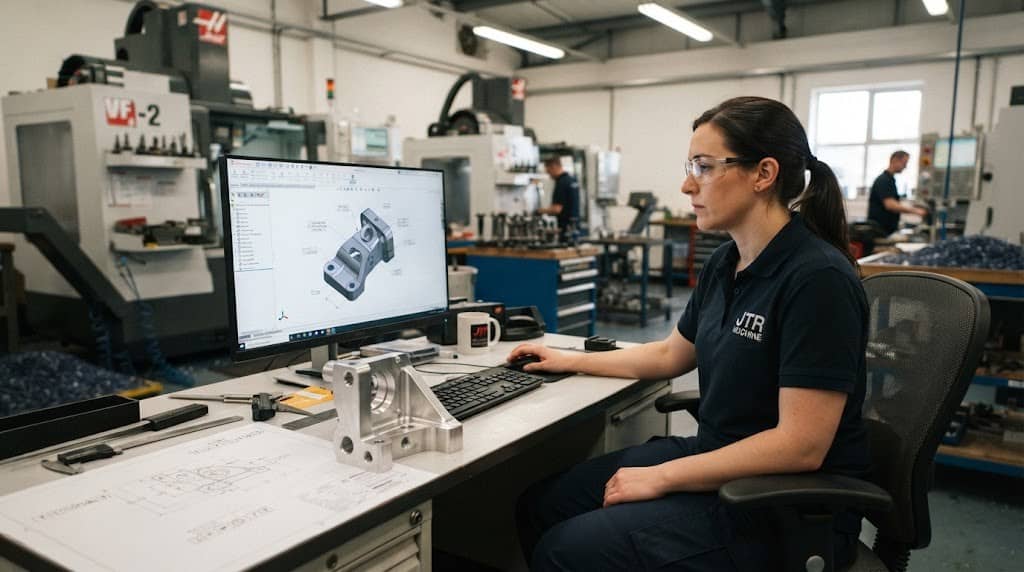
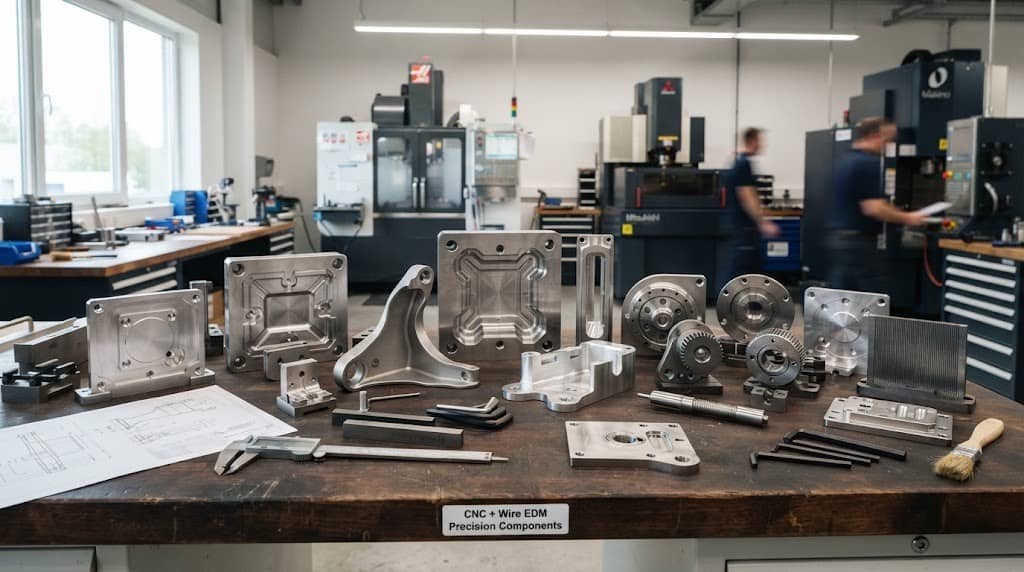
At JTR, we regularly machine parts where dimensional accuracy and surface consistency directly affect how a press fit performs in service. Whether it’s a bearing housing, shaft assembly or a pin and bore application, our CNC machining capabilities are designed to meet the strict tolerances that press fit design requires. If you have a drawing ready, contact us and we will be glad to have a look.