

Surface finish is one of the first things people notice on a cast aluminium product, although it is often treated as an afterthought. You decide the tolerances, you approve the design, you choose the alloy and then somewhere toward the end of the meeting someone says: “So what is the surface actually going to look like?” That question requires a better answer, and sooner or later.
The surface finish obtained in gravity casting is the result of a mixture of processes that occur before, during and after the pour. This guide discusses what these criteria are, why they’re important and what to consider before you make an order.
What Surface Finish Means in Gravity Casting
Before we think about what influences it, it’s helpful to be clear about what we mean.
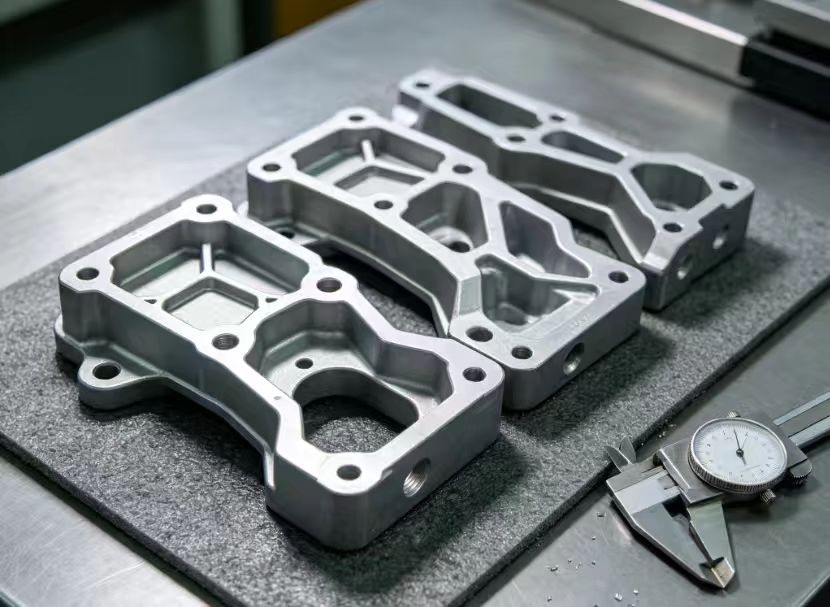
The as-cast surface is the condition of an aluminum part immediately after it is removed from the mold, before any secondary finishing. Its texture is influenced by the mold surface, metal flow, and solidification conditions. Depending on the control of the process, an as-cast surface can be generally smooth to obviously rough with features like as parting lines, flow markings or small surface imperfections.
The final surface finish may be changed through secondary processes such as shot blasting, CNC machining, polishing, anodizing, or coating. All parts do not require these treatments, but if a certain look, roughness or functional surface is desired, the basis is the quality of the as-cast surface. A rough or inconsistent casting surface may require more finishing work, which can add time and cost.
In other words, gravity casting determines much of the starting surface condition, while subsequent finishing processes determine the final result. This is why surface requirements should be considered when the casting process and part design are being developed, rather than left until the end of production.
What Affects the Surface Finish of a Gravity Casting
Casting is a process with several interacting elements. Any one of these may be altered to dramatically change the surface quality of aluminium castings.
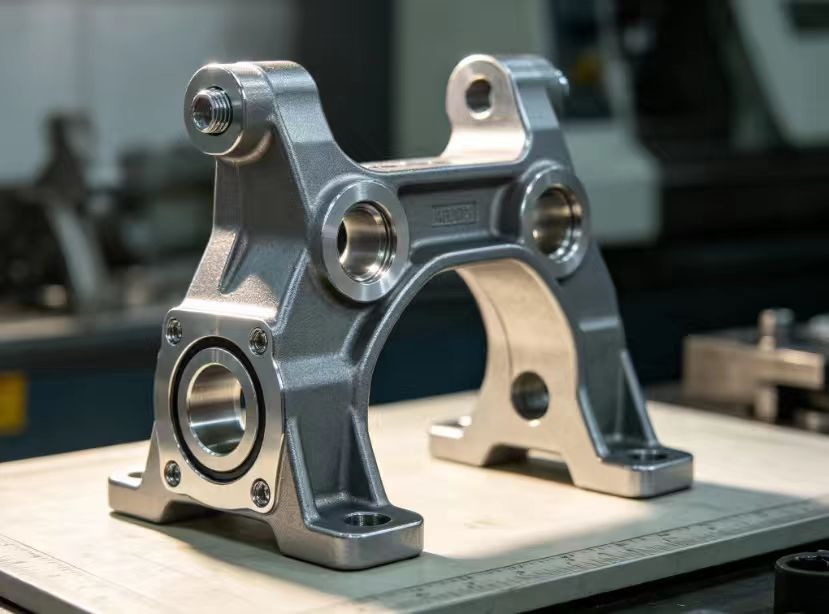
1. Mold Surface and Condition
The mold transfers its texture directly onto the part. The better the polish on the mould the smoother the casting will be; a worn or oxidized mould may create markings. The finish is less important than the ongoing condition of the mold:
- Coating uniformity: Mold release coatings are applied before each pour. Uneven application will give a harsh or sticky finish.
- Wear and damage: Erosion and micro-cracks form on the molds surface with time, which is reflected on the casting surface.
- Cleaning frequency: The buildup left from the preceding shoots determines how well the next portion releases.
Regular mold maintenance is one of the most practical levers for keeping gravity casting surface finish consistent across a production run.
2. Aluminum Alloy and Melt Quality
Variable aluminum alloys have variable fluidity, solidification behavior and finishing qualities. These variances can affect how readily the metal fills the mold and the appearance of the final surface. The specific alloy should therefore be considered together with the casting process and required finish.
The quality of the melt matters, too. Gas porosity in Al castings can originate from dissolved hydrogen. If the porosity is near the surface it can show up as pits or small voids following machining. Proper melt treatment and degassing will help to lessen this risk.
3. Pouring and Metal Flow
If the aluminum is poured too quickly, the metal may not fill all portions of the mold before it starts to solidify. This results in cold shuts, which are seam-like flaws formed when two flow fronts met and did not fuse properly. Flow marks and misruns are related problems.
The way the metal travels through the cavity is influenced by the pouring temperature, pace and gating design. A well-designed runner system delivers metal smoothly and at the proper rate.
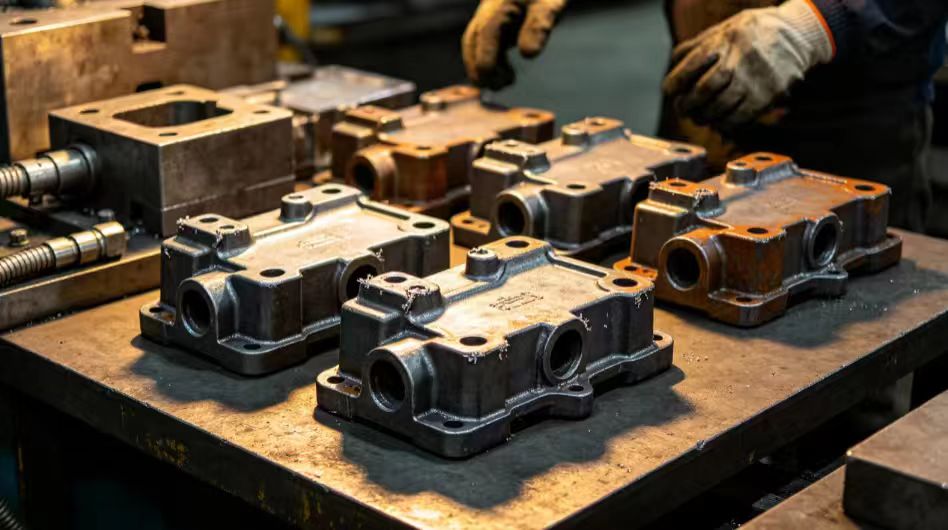
4. Mold Temperature and Solidification
A mold that is too cold or too hot can disturb filling, solidification, and release conditions. Keeping the mold within a controlled temperature range helps maintain more consistent surface quality.
Foundries typically control mold temperature within a defined process range before and during casting. Maintaining a consistent mould temperature leads to more predictable surface quality results, which is why variance from batch to batch often may be traced back to this variable.
5. Part Design and Geometry
Sharp internal corners, abrupt changes in section and deep pockets provide locations where the metal flow slows or becomes more turbulent. These areas are more susceptible to surface defects. Draft angles are important to how neatly the item releases from the mould. If the draft is too small, the mold will pull on the surface during ejection and cause scratches or tears. Also, uniform wall thickness helps to provide more consistent cooling and minimizes the danger of localized shrinkage issues.
The table below summarizes the way each element tends to play out in practice:
| Factor | How It Affects the Surface | Typical Result When Poorly Controlled |
| Mold surface and condition | Transfers texture and defects to the casting | Roughness, marks, inconsistent appearance |
| Aluminum alloy | Affects filling, solidification and finishing response | Uneven texture, difficult polishing |
| Metal temperature and pouring | Influences how completely the cavity fills | Cold shuts, flow marks, surface irregularities |
| Mold temperature | Controls filling and solidification conditions | Inconsistent surface quality |
| Casting design | Changes metal flow and cooling behavior | Local defects, uneven appearance |
Why Surface Results Can Vary from One Batch to Another
The surface polish of aluminium castings can vary from one production run to another, even with a proven method. This is typical in gravity castings and is frequently due to one or more variables falling out of normal range. Mould temperature variation between shifts, coating application variation between operators, alloy batch variation, or ambient temperature variation affecting cool-down rates are all examples.
All of them can cause a surface that may seem different from the last batch, even if the identical drawing and method were utilized.
This often results in a few specific inspections which can find the problem more quickly than a thorough process review:
By working through this checklist systematically you tend to uncover the root reason sooner than by guesswork.
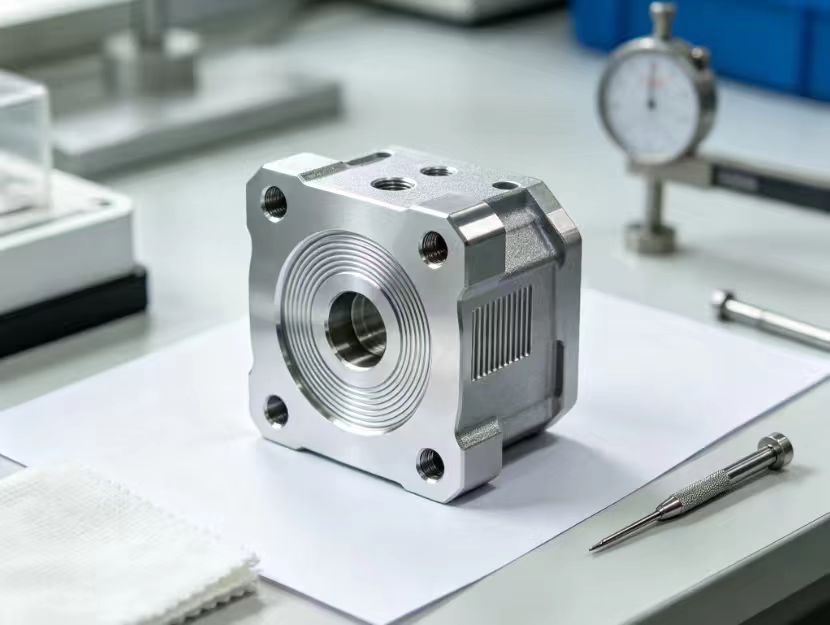
When Is an As-Cast Surface Good Enough
Not every part needs a polished or machined surface. Which is correct relies on the functional and appearance requirements of the individual part. For internal or structural parts where beauty is not a concern, an as-cast surface with basic cleaning is generally sufficient. For parts exposed to the environment, corrosion resistance may be a more important consideration than cosmetic smoothness. Here’s a handy reference table:
| Requirement | More Suitable Approach |
| Basic industrial appearance | As-cast / basic cleaning |
| Uniform matte appearance | Blasting |
| Tight dimensional or mating surface | CNC machining |
| Smooth decorative surface | Polishing / suitable finishing |
| Corrosion or appearance protection | Appropriate coating or anodizing |
What to Specify Before Ordering
Vague surface requirements can result in parts that meet the basic drawing dimensions but do not meet the intended appearance or surface performance requirements. Before making a gravity casting order it is worth defining the following:
- Surface roughness target (Ra value): Surface roughness is usually specified in micrometres and Ra is the most often used measurement parameter in production requirements. Giving the supplier a clear Ra target removes ambiguity.
- Critical vs. non-critical surfaces: Identify which areas need a tighter finish and which can be left as-cast.
- Post-casting operations: Indicate if blasting, machining, coating are included in the scope and in which order.
- Appearance standards: For visible surfaces, a physical reference sample or approved first article is much clearer than a written description.
- Defect acceptance criteria: Define the allowable porosity, flow markings or cosmetic variance prior to rejection of the part.
The sooner they are specified, the more easily the supplier can design the process around them instead of retrofitting fixes after production.
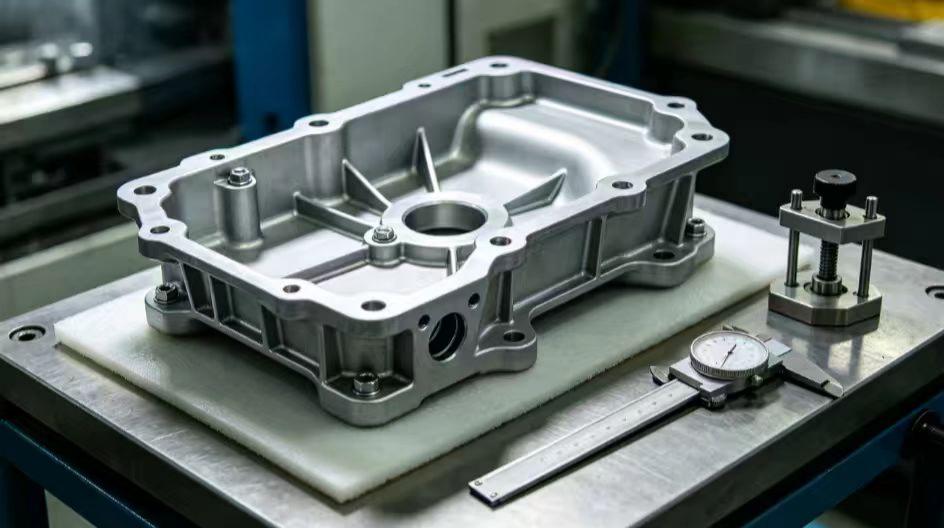
Plan the Surface Finish Before Casting
Gravity casting surface finish is not just a cosmetic outcome. It is a sign of the control of the process from the preparation of the mould to solidification. If you know what influences the surface quality, you will be able to make better judgements at the design and specification stage, reducing rework and avoiding surprises during inspection.
JTR handles both casting and finishing steps in-house, so surface quality issues can be identified before production commences rather than later on. If you’re involved with development work and unsure what surface quality you should expect or specifying it can be overwhelming, send your drawing so we can walk through it together.