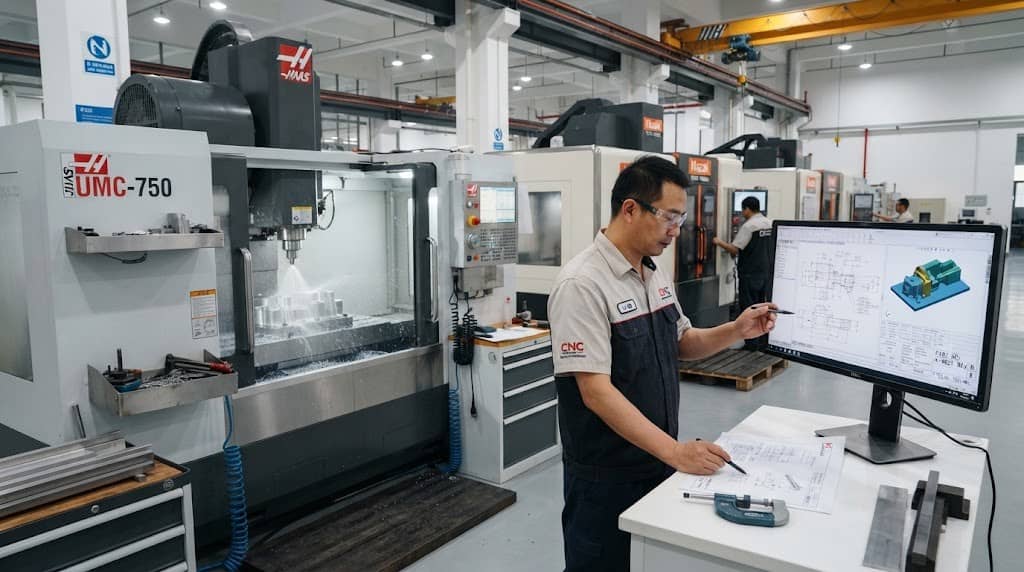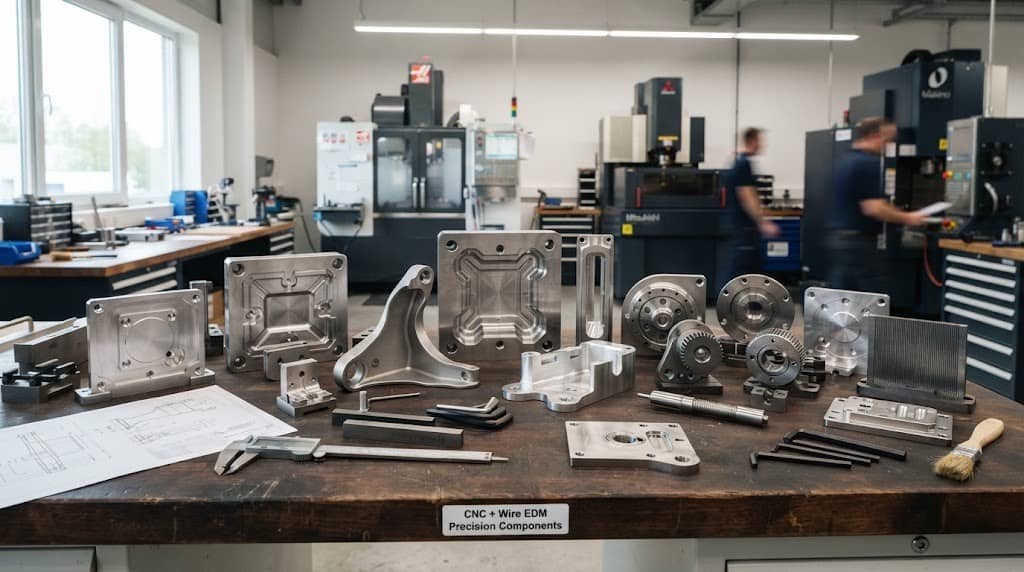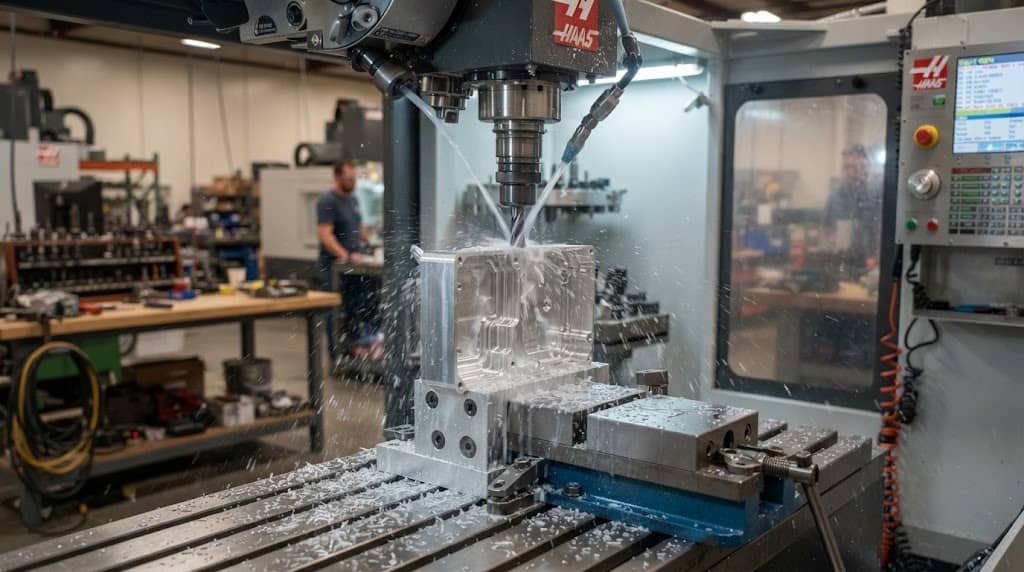


When two CNC machining suppliers receive the same engineering drawing, their quotations can differ significantly. One manufacturer may offer a competitive price, while another submits a quotation that is substantially higher for what appears to be the same component.
For OEM buyers, mechanical engineers, and procurement teams, the challenge is understanding whether the price difference reflects genuine manufacturing advantages, different technical assumptions, or missing items in the quotation. The key is that the same part drawing does not necessarily mean the same manufacturing process, inspection scope, or delivered product. Suppliers may use different machining strategies, raw material specifications, production methods, and quality control procedures. They may also interpret tolerances, surface finishing requirements, and delivery conditions differently.
A reliable CNC machining quote comparison therefore requires more than comparing unit prices. Buyers need to confirm that every supplier is quoting against the same technical specifications and commercial requirements.

Why Do CNC Machining Quotes Differ?
A CNC machining quotation reflects the supplier’s proposed manufacturing plan, not just the shape of the finished component. Machine selection, setup requirements, raw material consumption, dimensional tolerances, secondary operations, and inspection requirements can all influence the final price.
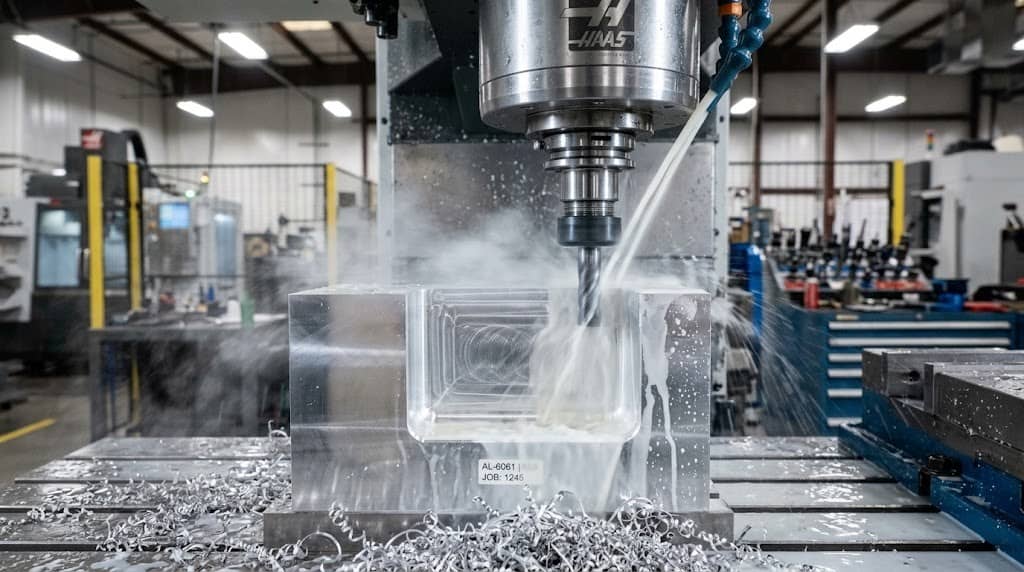
Consider two suppliers quoting for the same aluminum housing. One may machine the component from solid billet using several setups, while another may use a more efficient fixture and machining sequence. Both processes may produce an acceptable part, but their cycle times, material consumption, and quality verification costs may differ.
The quotations may also cover different deliverables. One supplier may include anodizing, dimensional inspection, and protective packaging, while another prices machining only.
| Cost factor | Why quotations differ | What buyers should verify |
| Machining strategy | Different equipment, setups, and toolpaths | Manufacturing route and machining scope |
| Material | Different grades, conditions, and stock sizes | Exact material specification |
| Tolerances | Different interpretations of critical dimensions | Drawing requirements and measurement methods |
| Surface finishing | Different processes and acceptance criteria | Finish type and post-processing scope |
| Order quantity | Different setup-cost allocation | Quantity breaks and one-time charges |
| Quality control | Different inspection and documentation levels | Inspection plan and report requirements |
| Delivery | Different packaging, freight, and lead-time assumptions | Total delivered cost and delivery terms |
The first step in any CNC machining quotation comparison is to standardize the technical and commercial scope. Without this step, a lower quotation may simply represent a different manufacturing specification.
1. Different Machining Strategies and Cycle Times
One of the most important reasons for a CNC machining price difference is the production strategy selected by each supplier. Even when two manufacturers use CNC equipment, they may differ in machine configuration, workholding methods, tool selection, programming, and machining sequence.
Machine configuration and setup requirements
A component with features on several sides may require multiple setups on a conventional three-axis machine. Each repositioning operation adds preparation time and can introduce positioning errors.
A suitable 4-axis or 5-axis machine may access multiple features with fewer setups, depending on the component geometry, machine configuration, tooling, and required accuracy. However, more advanced equipment does not automatically produce a lower quotation. Machine rates, programming complexity, tooling costs, and production volume must also be considered.
For simple components, a well-planned three-axis process may be more economical. For complex parts with angled features or demanding positional relationships, reducing setups may improve both efficiency and consistency.
Toolpaths and machining time
Different programming strategies can produce different machining times for the same component. Roughing methods, finishing passes, cutting parameters, tool changes, and tool access all affect productivity.
Deep cavities, narrow slots, small internal radii, and difficult-to-reach features may require specialized tools or additional finishing operations.
Buyers do not necessarily need a supplier’s proprietary CAM program. However, when quotations differ substantially, asking about the proposed machining route can help explain the difference. For design-stage projects, reviewing JTR Machine’s CNC machining design guidelines can help identify features that increase manufacturing complexity without contributing meaningful functional value.
2. Material Grades and Raw Material Costs
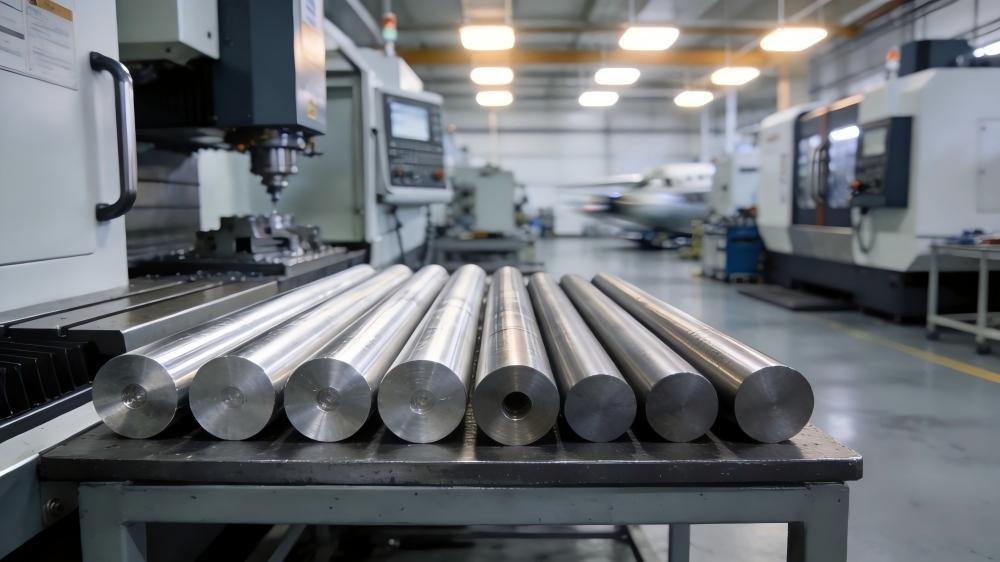
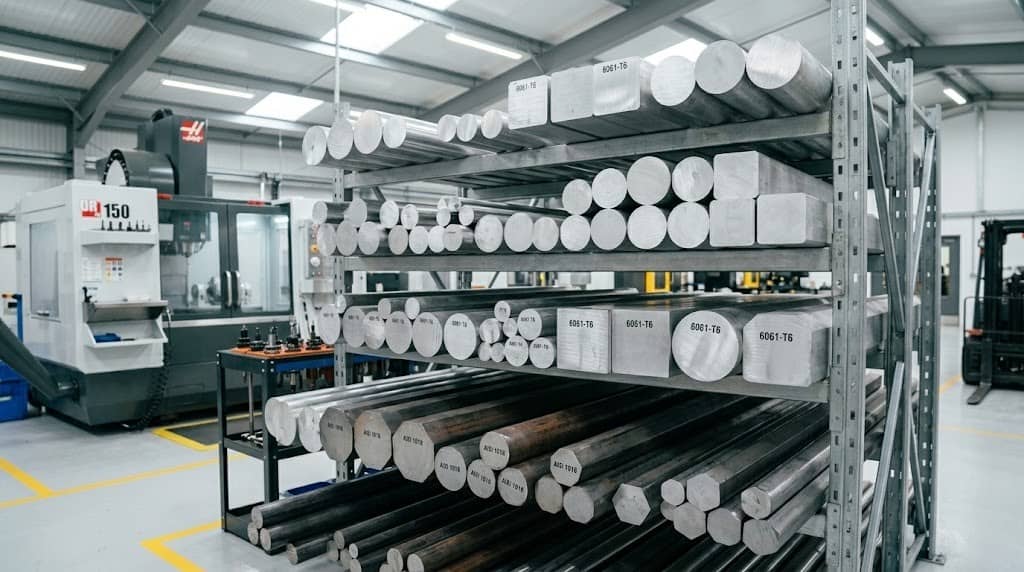
Material selection is another significant factor in a CNC machining quotation. A drawing may identify a general material family without specifying every detail needed for accurate purchasing and manufacturing. Even when two suppliers quote aluminum components, their prices may differ because of alloy grade, temper, stock dimensions, material sourcing, and certification requirements.
Material grade and condition
Different materials offer different combinations of strength, hardness, corrosion resistance, weight, and machinability.
For example, 6061-T6 and 7075-T6 aluminum are both widely considered for machined components, but they are not interchangeable in every application. Their mechanical properties, corrosion behavior, and material costs differ.
A higher-performance alloy may increase the raw material cost without delivering a meaningful benefit if the component does not require its specific properties. The same principle applies to stainless steel, carbon steel, titanium, and engineering plastics. Material selection should be based on functional requirements and operating conditions rather than price alone.
Material utilization and stock dimensions
The raw material required for a component is not equal to the finished part’s weight. CNC machining removes material to create pockets, holes, slots, and external profiles.
A complex housing machined from solid billet may require a large starting blank, resulting in substantial material waste. Suppliers may also purchase different stock sizes or use different cutting and nesting strategies when producing multiple components.
These differences affect material consumption and procurement costs. Buyers should confirm the exact material grade, condition, and certification requirements before comparing quotations. If an alternative material is proposed, it should be reviewed and approved by the responsible engineer before production.
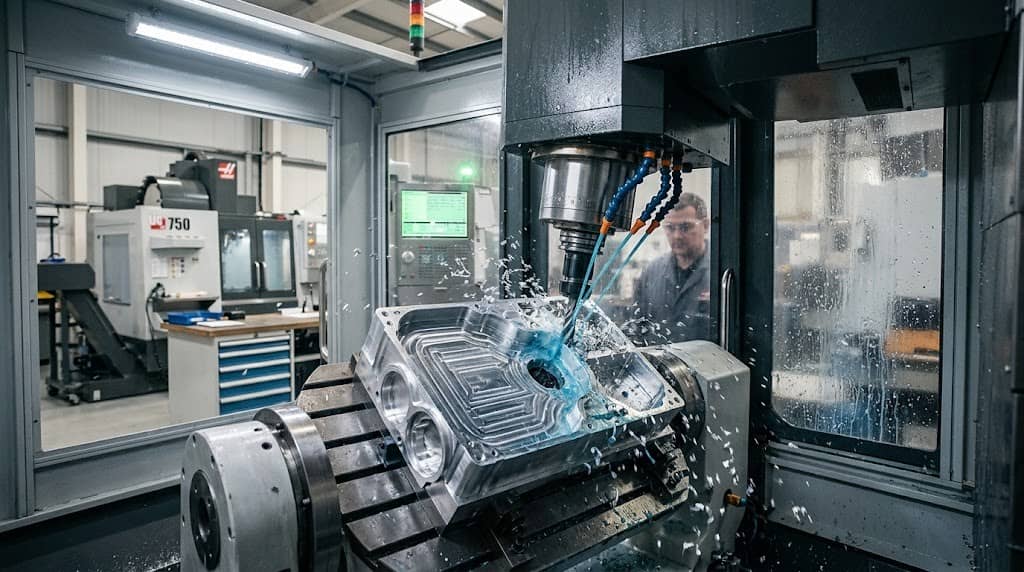
3. Tolerances, GD&T, and Inspection Requirements
Dimensional requirements can significantly influence CNC machining costs. A component with general tolerances may require a relatively straightforward production process. The same component with tight dimensional limits, strict geometric controls, and detailed inspection requirements may need additional machining and measurement operations.
Why tighter tolerances increase costs
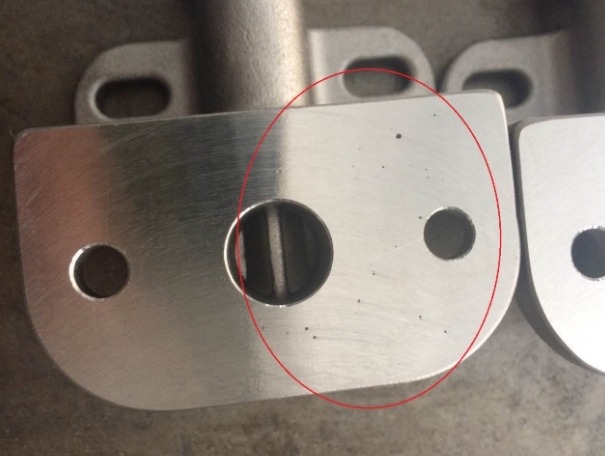
Tighter tolerances can require more precise setups, additional finishing passes, closer process monitoring, and more frequent measurements. They may also increase the risk of rejected parts if the manufacturing process is not sufficiently stable.
Geometric dimensioning and tolerancing (GD&T) requirements, including position, flatness, perpendicularity, and profile tolerances, can influence how a component is fixtured, machined, and inspected. For example, a mounting hole pattern may require accurate positional control to ensure correct assembly. A thin-walled component may require particular attention to flatness because machining forces and residual stresses can cause deformation.
Not every dimension, however, needs the tightest possible tolerance. Applying unnecessarily strict tolerances to non-critical features can increase manufacturing costs without improving product performance.
Inspection scope affects the quotation
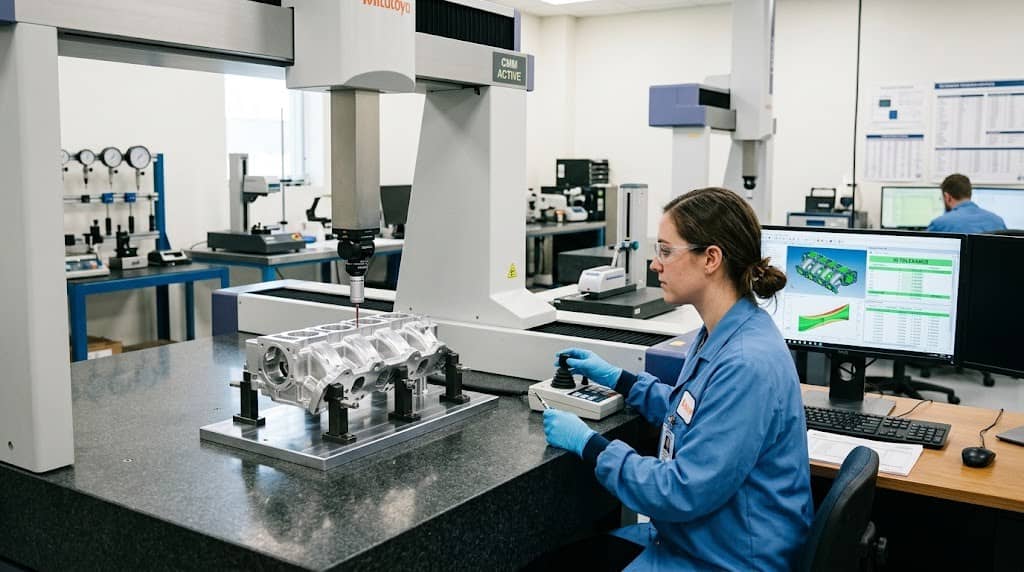
Two suppliers may also quote different levels of quality verification. One may include standard dimensional checks, while another includes first article inspection (FAI), measurements of critical characteristics, or a comprehensive dimensional report.
Buyers should clarify whether the quotation includes:
- First article inspection before production release.
- Measurement of all dimensions or selected critical features.
- Coordinate measuring machine (CMM) inspection where appropriate.
- Material certificates and batch traceability.
- Final inspection reports and nonconformance documentation.
The inspection method should match the characteristic being verified. CMM inspection is useful for many complex geometries, but it is not automatically necessary for every feature. For further guidance, see JTR Machine’s precision CNC machining tolerance guide.
4. Surface Finishing and Secondary Operations
A machined component is not always ready for delivery immediately after cutting operations are complete. Depending on the application, it may require deburring, anodizing, plating, polishing, heat treatment, blasting, or other secondary processes. If suppliers interpret the finishing requirements differently, their quotations may not be directly comparable.
Finishing specifications must be clear
Descriptions such as “smooth finish,” “black anodized,” or “corrosion-resistant surface” may not provide enough information for accurate pricing.
An anodizing specification may need to define coating type, color, thickness, appearance, and acceptance criteria. Certain areas may require masking to protect threads, electrical contact surfaces, or precision mating features. Plating and heat treatment can also affect dimensions and introduce additional inspection requirements.
Post-processing can change final dimensions
For a precision component, dimensional compliance may need to be verified after finishing rather than only after machining. The supplier may need to account for coating buildup, masking, process variation, and additional measurements after treatment.
When reviewing a CNC machining quotation, confirm whether the price includes all specified finishing processes, whether they are outsourced, and whether final inspection takes place after the secondary operations are completed. A lower machining price may simply exclude finishing costs that another supplier has already included.
5. Order Quantity and Setup-Cost Allocation
Order quantity affects how preparation and production costs are distributed across individual components. Before machining begins, suppliers may need to review the drawings, prepare CAM programs, select tools, establish workholding, and verify the first completed part. These activities create costs that do not necessarily increase in direct proportion to the number of parts produced.
Why unit prices change with quantity
Consider a simplified example with a fixed setup cost of $300 and a variable manufacturing cost of $20 per part.
For an order of 10 parts:
- Setup cost per part: $300 ÷ 10 = $30.
- Variable manufacturing cost: $20 per part.
- Illustrative total: $50 per part.
For an order of 100 parts, assuming the same setup and variable costs:
- Setup cost per part: $300 ÷ 100 = $3.
- Variable manufacturing cost: $20 per part.
- Illustrative total: $23 per part.
These figures are hypothetical and exclude other costs such as finishing, inspection, packaging, and freight. Actual costs may also change with tooling, production efficiency, material purchasing, and scrap risk. The example illustrates why a small prototype order may have a higher unit price than a larger production batch.
When requesting a CNC machining quote, specify the required quantities and ask suppliers to identify one-time programming, tooling, or fixture charges separately. This makes it easier to compare pricing across different production volumes.
6. Quality Documentation and Supplier Capabilities
A CNC machining quotation may include different levels of quality assurance and documentation.
One supplier may provide a component with standard final inspection. Another may include documented first article approval, critical-dimension reports, material traceability, and defined procedures for handling nonconforming parts. The second quotation may be higher because it includes additional work and accountability.
Define the quality requirements
Buyers must specify the evidence required to demonstrate that a component satisfies its functional and contractual requirements. Depending on the application, this could be material certificates, first article inspection documentation, dimensional reports, coating verification, inspection records, or batch traceability.
Not every piece of equipment needs every document. The appropriate inspection plan shall reflect component complexity, functional risk, customer requirements, and applicable industry norms.
Verify relevant manufacturing capability
The capability of suppliers should be measured against actual part requirements. A manufacturer who has experience with simple prismatic components is not necessarily the best choice for a thin-walled housing with complex datums and demanding geometric tolerances. Similarly, a higher quote does not necessarily mean higher quality.
Purchasing organizations should consider appropriate equipment, measurement capabilities, process controls, and documented experience on similar components. The comparison of CNC machining quotes that matters is based on similar quality commitments, not different prices.
What a Low CNC Machining Quote May Exclude
A low quotation is not necessarily a warning sign. It may reflect better process planning, efficient equipment, favorable material purchasing, or a suitable production strategy. However, buyers should investigate whether the quotation excludes costs that will appear later.
Common areas requiring clarification include:
- Finishing and secondary operations: The price may cover machining only, excluding anodizing, plating, deburring, or other specified processes.
- Inspection and documentation: First article inspection, detailed dimensional reports, material certificates, or additional testing may incur separate charges.
- Tooling and setup: Programming, fixtures, special tools, and engineering preparation may be billed separately.
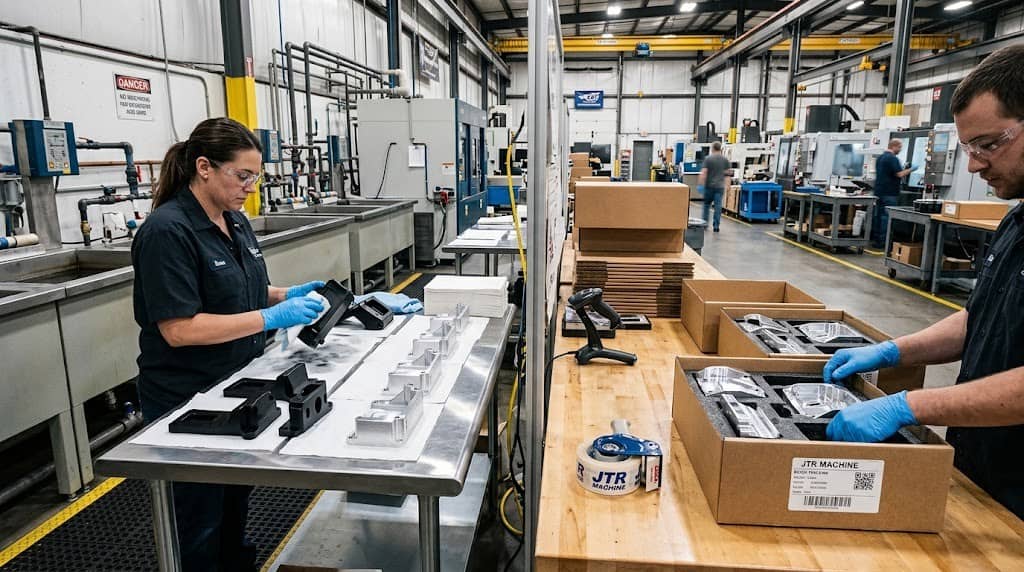
- Packaging and logistics: Protective packaging, export packing, freight, insurance, and delivery to the required destination may not be included.
- Material substitutions: The quotation may assume a different material grade or condition from the engineering drawing.
- Accelerated delivery: Shorter lead times may require additional resources and revised pricing.
- Rework and acceptance: The quotation may not clearly define responsibilities for nonconforming parts, reinspection, or corrective manufacturing.
The best response is to request clarification rather than immediately rejecting the lowest bid. Ask each supplier to identify inclusions, exclusions, assumptions, and conditional charges in writing.
How to Compare CNC Machining Quotes Fairly
A structured review process helps procurement teams distinguish genuine manufacturing efficiencies from differences in quotation scope.
Step 1: Standardize the technical package
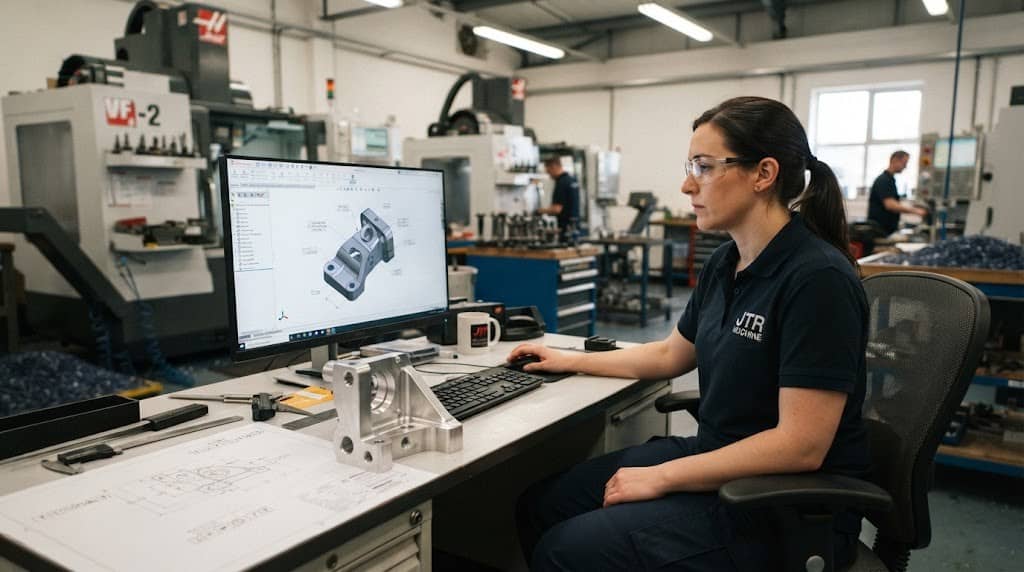
Provide every supplier with the same drawing revision, 3D CAD model, material specification, surface finish requirements, and quantity information.
Identify critical dimensions, GD&T requirements, inspection documentation, and special packaging or traceability requirements. If suppliers quote against different revisions or incomplete specifications, their prices may not be comparable.
Step 2: Request a consistent quotation breakdown
Where practical, ask suppliers to separate material, machining, setup, tooling, secondary operations, inspection, packaging, and delivery costs.
Not every supplier will disclose every internal cost in detail. Nevertheless, a consistent breakdown helps identify major differences in scope.
Step 3: Confirm technical compliance before comparing price
Verify that each quotation meets the specified material, dimensional, surface finish, and quality requirements. A quotation based on a substitute material or a less demanding inspection plan should not be treated as equivalent without engineering approval.
Step 4: Calculate the total delivered cost
Consider the unit price alongside setup charges, tooling, finishing, inspection, freight, and other applicable costs.
Lead time, minimum order quantities, repeat-order consistency, and the supplier’s ability to accommodate engineering changes may also affect the overall project cost.
Step 5: Resolve assumptions before placing the order
Ask suppliers to confirm ambiguous requirements in writing. Where quotations contain different assumptions, request revised pricing based on a common technical and commercial scope.
Clear requirements reduce the risk of unexpected charges, acceptance disputes, and delays caused by misunderstandings.
CNC Machining RFQ Comparison Checklist
Use the following checklist before selecting a supplier:
| Review item | Questions to confirm |
| Drawing and CAD files | Are all suppliers using the same revision? |
| Material | Are the grade, condition, and certification requirements identical? |
| Tolerances | Are critical dimensions and GD&T interpreted consistently? |
| Surface finish | Are the same finishing processes and acceptance criteria included? |
| Quantity | Are suppliers quoting the same order size and quantity breaks? |
| Inspection | Are required first article approval and dimensional reports included? |
| Additional charges | Are setup, tooling, programming, and finishing costs identified? |
| Delivery | Are lead time, packaging, freight, and delivery terms comparable? |
| Quality responsibility | Are acceptance criteria and nonconformance procedures clear? |
Once these items have been aligned, buyers can make a more informed decision based on price, technical suitability, quality assurance, and long-term supply requirements.
Get a CNC Machining Quote Based on Your Actual Requirements
Choosing a CNC machining supplier involves more than comparing unit prices. Material specifications, machining strategy, dimensional requirements, finishing processes, and inspection scope all affect the final cost and delivered quality.
JTR Machine provides precision manufacturing services for industrial components and OEM projects. Sharing the relevant engineering drawings, material requirements, order quantities, and quality expectations helps establish a clearer basis for manufacturing evaluation and quotation. Contact JTR Machine to discuss your CNC machining project and request a quotation tailored to your part requirements.