
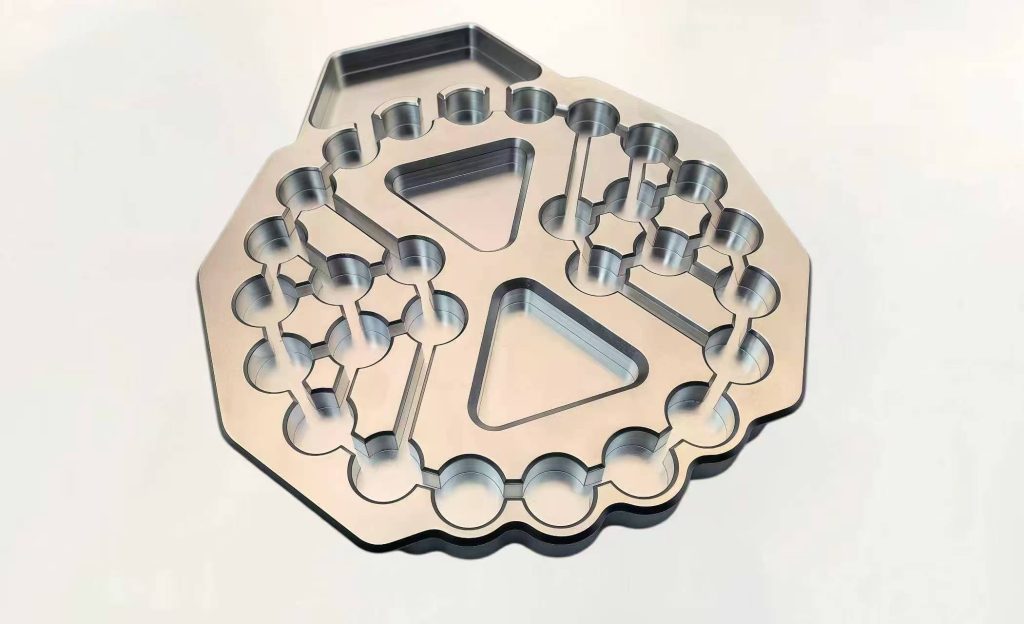
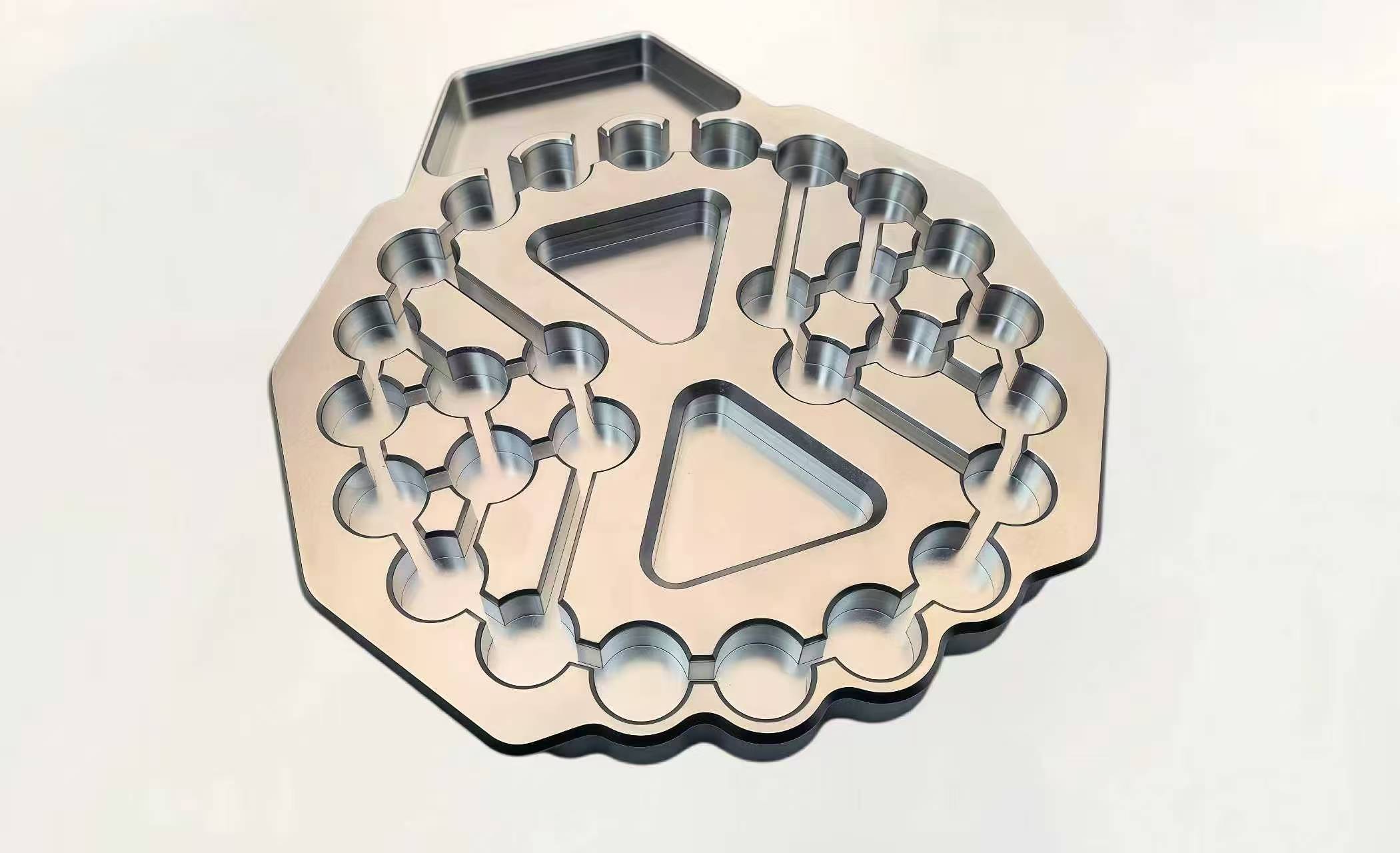
CNC Machined Stainless Steel Part with Electropolishing
- Material: Food-Grade Stainless Steel 316L
- Size: 184.0X206.1X21.3 mm
- Process: 3-Axis CNC Machining
- Surface treatment: Electropolishing
Machining 316L: Managing Its Tendencies
SS316L is the stainless steel of choice when chemical cleanliness matters. The “L” designation means low carbon, which minimizes sensitization risk during manufacturing.
The molybdenum content is what separates 316L from the more common 304 grade. It significantly improves resistance to chloride attack, making 316L the standard material for food processing equipment, pharmaceutical components, and medical devices that come into regular contact with salt, cleaning agents, and sterilizing chemicals.
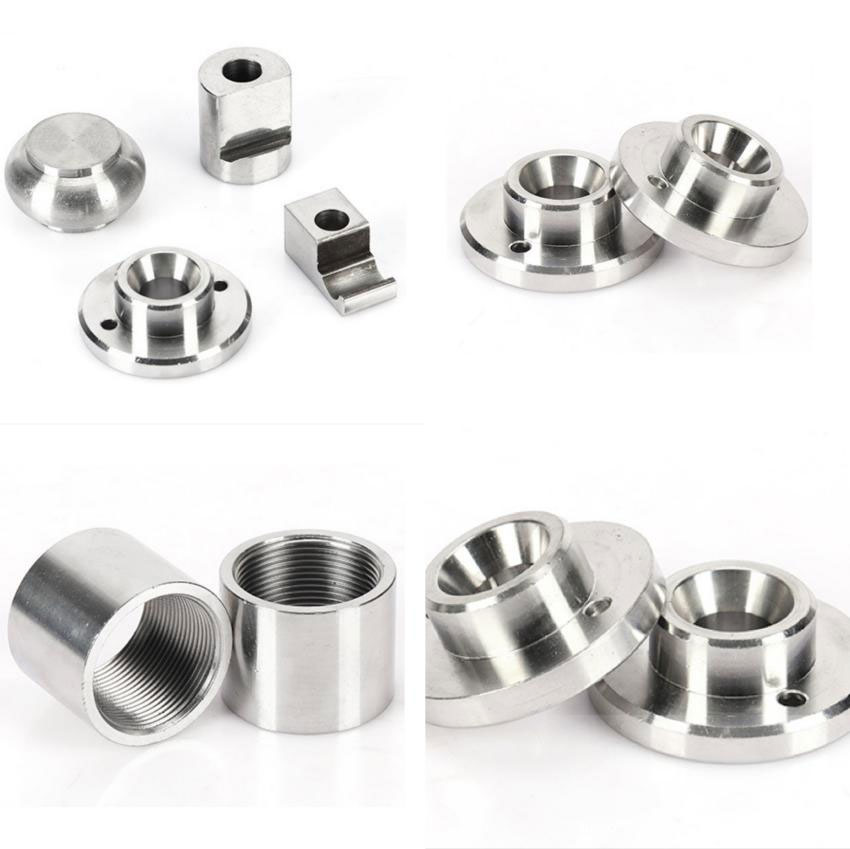
However, 316L is not the easiest stainless steel to machine. Two issues come up consistently:
1. Work hardening
The material hardens rapidly as the cutting tool passes over it. If the tool lingers or feeds too slowly, the surface becomes significantly harder than the bulk material, making subsequent passes more difficult and accelerating tool wear.
2. Built-up edge
316L tends to weld microscopically to cutting edges, which tears rather than cuts the surface and leaves a poor finish. Sharp tooling, correct cutting speeds, and adequate coolant flow are all essential to managing this.
Getting these parameters right produces a dense, clean machined surface, which is the ideal starting point for electropolishing.
What Electropolishing Actually Does
Electropolishing works essentially as the reverse of electroplating: instead of depositing material, it removes a thin, controlled layer of metal through an electrochemical reaction in an acid bath.
| Effect | Benefit |
| Levels microscopic surface peaks | Smoother surface that’s easier to clean and inspect |
| Removes iron-rich surface layer | Exposes chromium-rich layer that passivates more effectively |
| Eliminates embedded machining debris | Reduces contamination risk in food or medical environments |
| Reduces micro-cracks and stress risers | Slightly improves fatigue resistance in cyclic loading |
The resulting surface is cleaner at a microscopic level than mechanical polishing can typically achieve. The bacteria have fewer places to adhere, and cleaning agents can work more effectively.
For any component that needs to meet food safety or hygiene certification requirements, electropolishing is a well-recognized and trusted finishing method.if the anodized layer is damaged or compromised. Regular maintenance and care can help prolong the lifespan of black anodized aluminum surfaces.