

You send a CAD file and the manufacturer sends back a list of proposed revisions a few days later. If this is not something you’ve done previously, it can be a surprise, perhaps even a worry. Is there something wrong with design?
Usually not. This is a typical review most machine shops do before the machining starts. It helps to see what the whole process looks like, and what sorts of tweaks or small changes can come out of it, which helps you move faster and make better judgments as you work your way through your project.
Why Manufacturers Review Designs Before CNC Machining
Every CNC Project Starts with a DFM Review
Before cutting starts, most shops conduct what’s known as a Design for Manufacturability (DFM) review. This is a systematic review of the portion of part geometry to identify aspects that can be difficult, dangerous or unduly expensive to machine. The idea is not to redesign the part. That way you detect problems early, before they show up in the middle of production, when addressing them costs a lot more time and money.
Product Designers and Machining Engineers Solve Different Problems
Product designers care about how a part works and how it fits into an assembly. The machining engineer’s job is to figure out how to make that part reliably and precisely and at a fair cost. These aims are not mutually exclusive, but they may not necessarily lead to the same design conclusions.
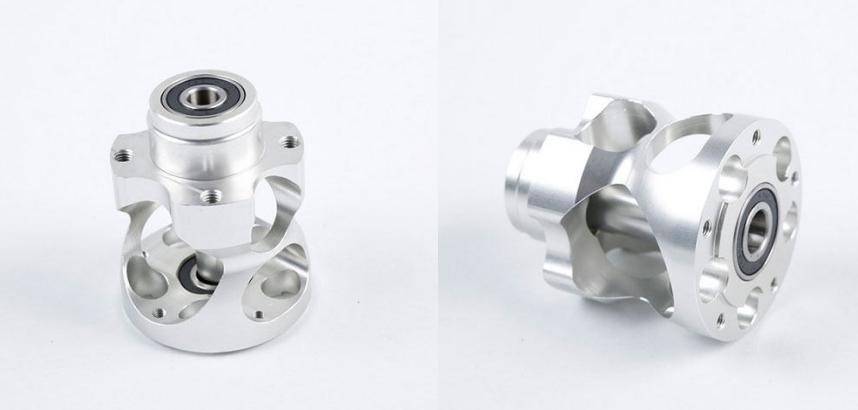
A corner radius that looks fine on paper might require specialized tooling on the shop floor. A wall thickness that passes structural simulation might flex under cutting forces and cause dimensional issues. DFM review is where those gaps get identified.
Early Design Feedback Prevents Bigger Problems Later
Any design errors are much less detrimental to the project than discovering them in production. Early feedback can be useful in a number of ways:
- Avoid rework: Sometimes parts that machine neatly will require further operations or are scrapped altogether.
- Reduce tooling changes: Some features require custom tooling, adding lead time and expense.
- Improve first-article results: Fewer surprises during initial inspection means faster sign-off.
- Support stable volume production: A design optimized for manufacturability is generally easier to scale into stable production.
The Most Common Design Changes Manufacturers Suggest
While every part is different, most recommendations during CNC machining design optimization reviews fall into a few recurring categories. They usually address features that affect tool access, process stability, or production cost.
1. Adjusting Corner Radii for Standard Cutting Tools
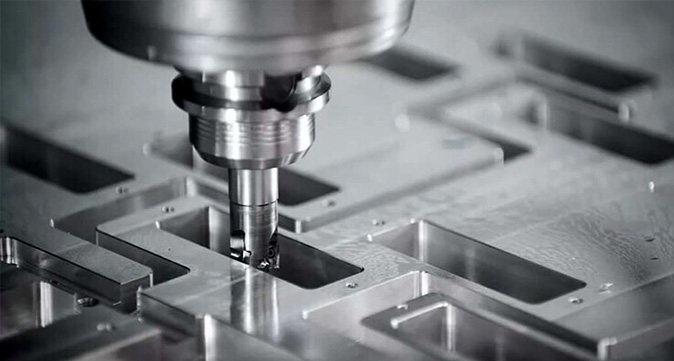
Sharp internal corners are one of the most frequently flagged issues. End mills are cylindrical, so cutting a perfectly sharp corner requires either EDM or very small tools running at slow speeds with many passes. Adding a small internal radius, ideally slightly larger than the cutter radius, allows standard cutters to work efficiently. The result is shorter cycle times and longer tool life, which directly affects cost.
In many cases, simply adding a small internal radius lets the shop use a standard cutting tool instead of a smaller one, reducing both machining time and tooling cost.
2. Revisiting Tolerances That May Be More Precise Than Necessary
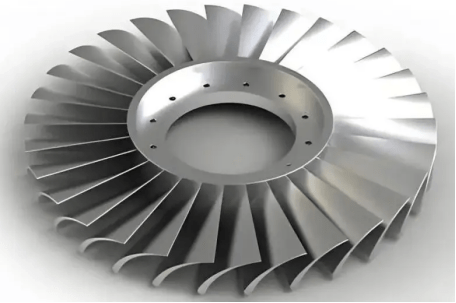
Not every surface needs micron-level accuracy. Tight tolerances necessitate slower feeds, additional inspection, and occasionally special equipment. Tighter tolerances than the part’s function actually demands add expense without enhancing performance. One of the simplest ways to reduce manufacturing cost without affecting the functional use of the part is to match tolerances to the actual functional needs.
3. Simplifying Deep Cavities and Hard-to-Reach Features
Deep pockets and narrow cavities limit which tools can access the feature. Longer tools deflect more under cutting load, making it harder to hold consistent dimensions across a batch. Reducing pocket depth or opening up the geometry improves tool rigidity and makes the overall machining process more predictable.
4. Strengthening Thin Walls and Delicate Structures
Thin walls flex under cutting pressure. This deflection causes noise, poor surface quality and dimensional irregularity. A little more wall thickness goes a long way to improving part quality and manufacturing yield.
| Design Feature | Manufacturing Challenge | Typical Recommendation |
| Deep pocket | Tool reach limitations | Reduce depth or increase radius |
| Sharp internal corner | Limited by standard end mills | Add internal corner radius |
| Thin wall | Vibration and deformation | Increase wall thickness |
| Very tight tolerance | Higher machining cost | Relax tolerance where possible |
| Small deep hole | Tool breakage risk | Adjust diameter-to-depth ratio |
Why Better Manufacturability Often Improves Both Cost and Quality
There’s a common assumption that cutting manufacturing cost means accepting lower quality. In practice, many production design optimization recommendations actually improve both, because a part that’s easier to machine is also easier to machine accurately.
- Lower cost through more efficient machining: When a part is designed for CNC machining from the outset, toolpaths are cleaner, cycle times are shorter, and fewer setups are necessary. That efficiency cuts costs without sacrificing quality.
- Better process stability means better quality: A part that machines predictably holds tighter dimensions across an entire batch. Consistency is a quality outcome, not just a cost metric.
- Scalable designs perform better in production: Changes that improve manufacturability at the prototype stage pay off even more at volume, where small inefficiencies repeat across hundreds or thousands of parts.
| Design Change | Why It Helps | Main Benefit |
| Increase corner radius | Allows standard end mills to cut efficiently | Longer tool life |
| Relax unnecessary tolerance | Reduces precision machining requirements | Lower machining cost |
| Reduce pocket depth | Improves tool access and rigidity | More stable machining |
| Increase wall thickness | Reduces vibration and deformation | Better dimensional stability |
When You Should Accept a Design Change
Not every suggestion needs to be accepted without question. A good DFM review is a conversation, not a directive. The right outcome depends on what your part actually needs to do.
Changes Worth Serious Consideration
Some recommendations are straightforward to evaluate:
- Improve manufacturability without affecting function: If a change does not impact the fit, assembly or performance of a product it is usually worth it.
- Reduce production risk: Changes that avoid tool breakage, scrap or inspection failures safeguard your schedule and budget.
- Improve repeatability in larger runs: Features that function well for modest numbers might cause problems when scaled, so it’s best to address them early.
Questions to Ask Before Approving a Revision
Before agreeing to any modification, a few questions are worth walking through:
If the manufacturer can answer that last question clearly and specifically, the recommendation is almost always worth taking seriously.
Good Manufacturers Explain the Reasoning
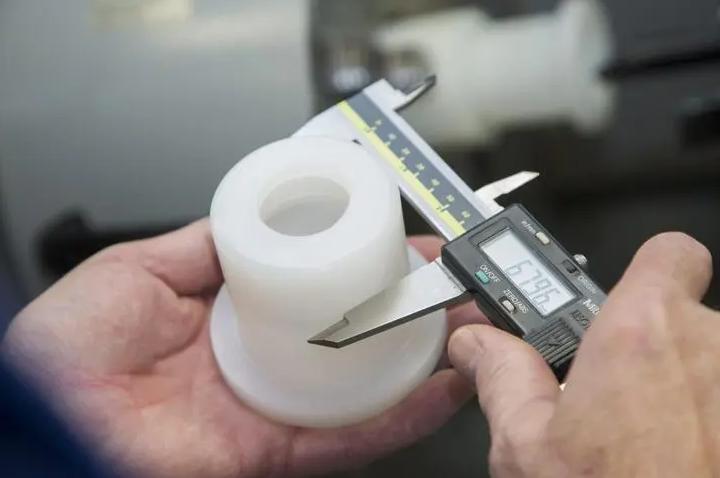
Advice without some explanation just isn’t very useful. If you’re going to suggest changes to the design before production, the engineer who’s making that recommendation should be able to tell you what issue it actually addresses, and also what the trade-off looks like. That transparency, and openness to design side feedback is what makes a DFM review genuinely useful, rather than just a friction point.
Final Thoughts
Design improvements are not only good to make parts easier to produce. It’s about making sure the features in your design can be manufactured reliably, consistently and at a cost that makes sense for your project. The earlier you work through those questions, the less disruptive they tend to be, and the smoother the whole path from prototype to production becomes.
At JTR, we review every project before machining begins. If we spot something that could affect quality, process stability, or lead time, we’ll raise it with a clear explanation and practical options. Our goal is to help your parts get made right. Send us your files for a free DFM review.