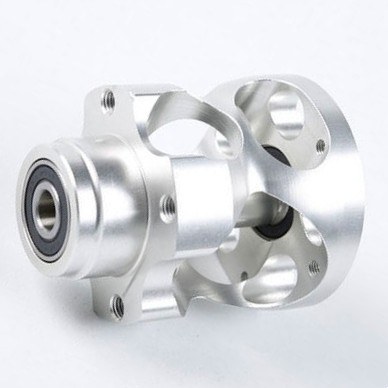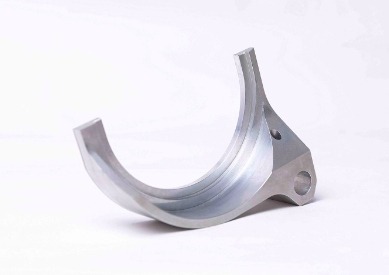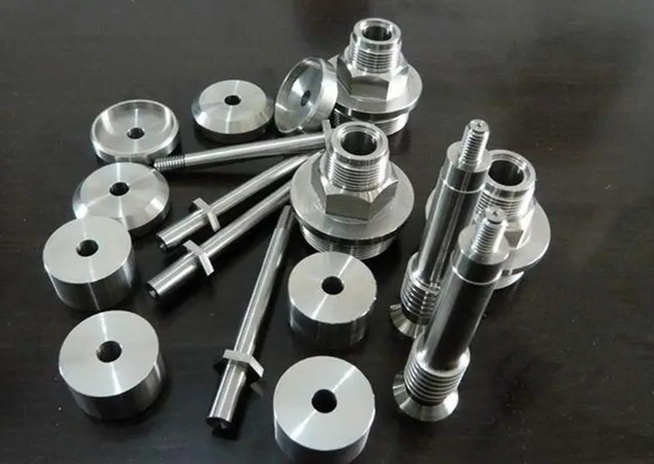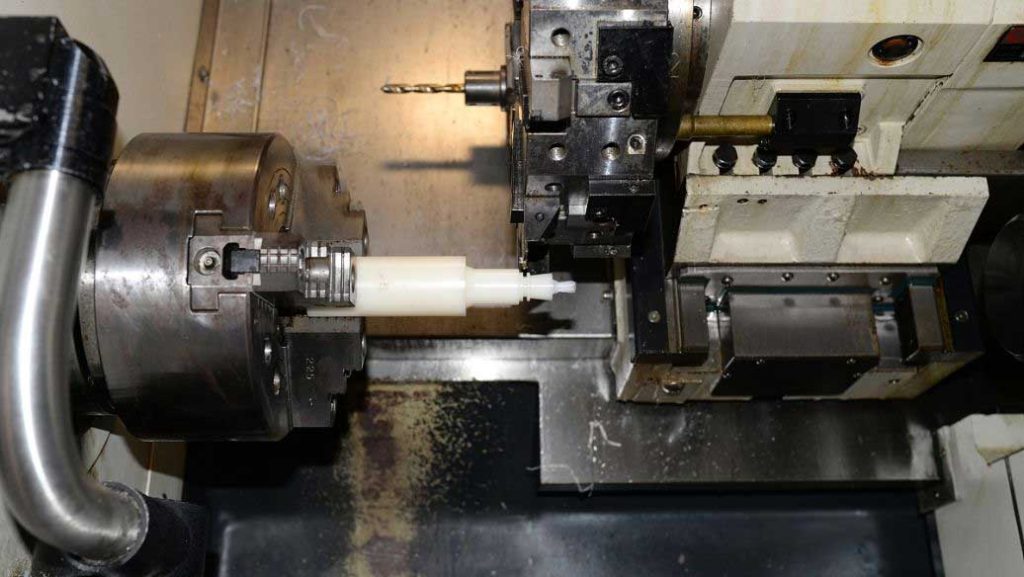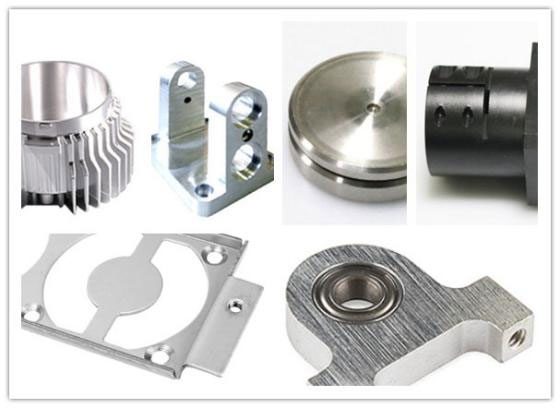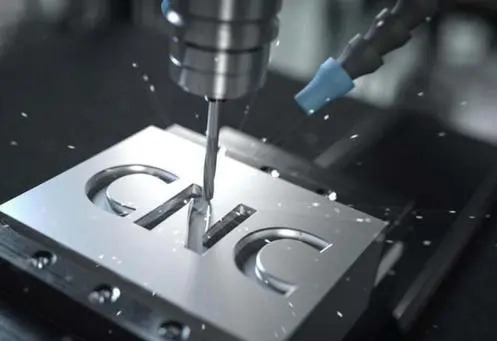


CNC machining is the foundation of high-precision manufacturing in the arena of modern industrial production. This innovation has turned digital blueprints into physical realities with sub-micron precision and has virtually replaced the manual machining techniques that dominated the last century. Traditional manufacturing relied heavily on physical dexterity, sight, and subjective judgment of manual operators, which are all inherently limited by human fatigue and systemic variance in operations. Conversely, CNC machining moves the act of physically cutting material into the digital world, where pre-programmed software matrices control rigid mechanical axes. This transition from manual articulation to automatic numerical execution ensures an unprecedented level of part geometric fidelity.
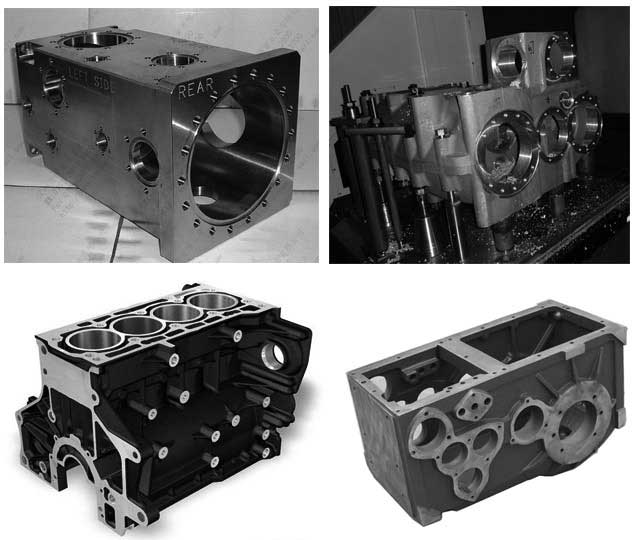
Mission-critical sectors such as aerospace, automotive, medical device manufacturing, defence, and the semiconductor industries today unconditionally depend on CNC systems. From aerospace structural bulkheads that have to cope with severe aerodynamic forces, to multi-valved automotive engine blocks, to custom orthopaedic bone screws needing bio-compatible surface finishes, CNC machining delivers the structural integrity and component tolerances demanded in modern engineering. This guide is a comprehensive breakdown of how CNC systems work, their structural variations, their material compatibilities, their inherent advantages, their systemic limitations, and the precise frameworks required to choose a top-tier manufacturing partner.
What is CNC machining?
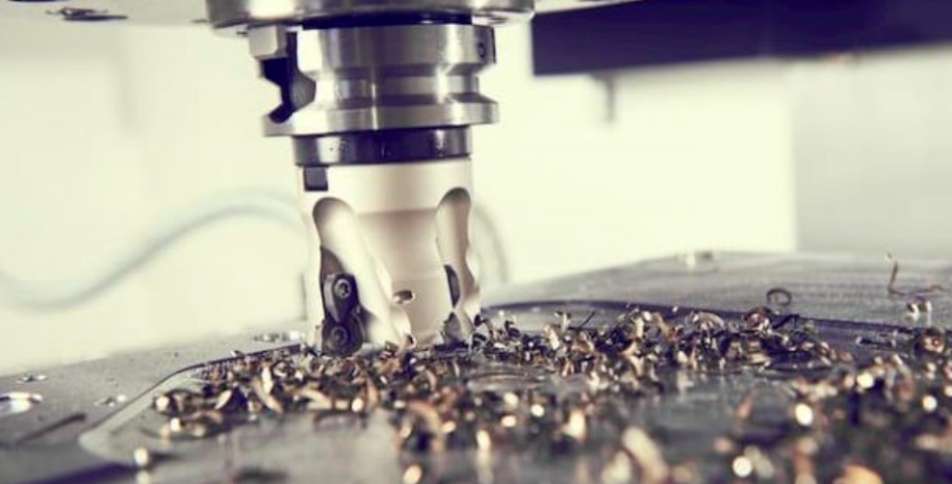
CNC machining is a subtractive manufacturing process that uses automated, computer-directed cutting tools to systematically remove raw stock material from a blank workpiece. CNC machining is a precise process. This process, driven by specialised digital instructions (G-code and M-code), produces finished structural components with superior geometric repeatability, microscopic dimensional tolerances (down to ±0.005 mm) and uncompromising surface characteristics, making it a critical production vector for aerospace, medical, defence and robotics ecosystems.
How Does CNC Machining Work? The End-to-End Technical Workflow
The operational logic of a CNC machine follows a strictly structured sequential workflow that translates an abstract conceptual design into a physical, high-tolerance mechanical asset. This lifecycle bridges software optimization, engineering compilation, mechanical setup, and empirical execution:
- CAD Design (Computer-Aided Design): The engineering lifecycle initiates within advanced 3D modeling environments (e.g., SolidWorks, Autodesk Inventor). The designer constructs a boundary representation of the part, establishing critical nominal parameters, structural interfaces, and raw spatial geometries.
- CAM Programming (Computer-Aided Manufacturing): The completed native CAD file is imported into a CAM software suite. Here, the manufacturing engineer defines the processing strategy. The engineer establishes the physical coordinates of the stock material, dictates the sequence of operations (roughing, semi-finishing, and finishing), and sets parameters like spindle speed (RPM), feed rate (mm/min), and stepover distance.
- G-code and M-code Generation: The CAM software passes the specialized toolpaths through a localized “Post-Processor” to translate the visual paths into alphanumeric programming code. G-code (Geometric Code) commands the precise spatial coordinates (X, Y, Z, A, B, C axes) and trajectory vectors of the tool. M-code (Miscellaneous Functions Code) governs auxiliary machine triggers, including activating high-pressure coolant pumps, initiating spindle rotation direction, opening safety enclosure doors, and locking rotary platens.
- Machine Setup and Workholding: The physical machine environment must be carefully configured. The machine operator secures raw material blanks into specialized workholding devices, such as hydraulic vises, modular fixtures, custom soft jaws, or vacuum chucks. Precise alignment of the workpiece zero point (Part Origin) is conducted via touch probes or optical dial indicators, syncing the physical blank directly to the digital coordinate system inside the CNC Controller.
- Automatic Toolpaths and Tool Changers (ATC): Once cleared for execution, the CNC controller processes the alphanumeric matrix. The machine employs an Automatic Tool Changer (ATC) to index through varied tool carousels containing face mills, end mills, center drills, taps, and reamers, matching each operation to the specified structural geometry without manual intervention.
- In-Process and Post-Machining Inspection: High-end manufacturing relies on automated coordinate measuring systems. Radio-frequency touch-probes integrated directly into the machine spindle measure critical features mid-cycle to dynamically compensate for tool wear. Post-machining, parts are audited via Coordinate Measuring Machines (CMM) and laser scanners.
- Surface Finishing: The extracted components undergo secondary finishing protocols to achieve the desired aesthetic or mechanical profile. Standard processes include abrasive bead blasting, anodizing, hard-coat passivation, electropolishing, or chemical blackening.
Types of CNC Machines and Specialized Applications
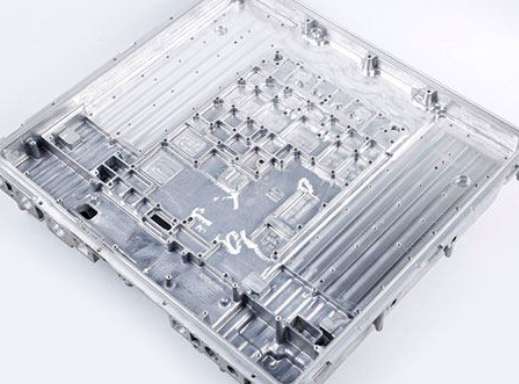
Modern manufacturing utilizes a vast array of specialized multi-axis CNC configurations, each tailored to specific geometric capabilities, material densities, and volume scales. Relying only on basic 3-axis milling or simple lathes limits manufacturing efficiency. The comprehensive table below establishes the core machinery landscape utilized by advanced engineering hubs like JTR Machine:
| CNC Machine Type | Core Mechanical Function | Optimal Engineering Applications |
| CNC Milling Machine | Multi-axis rotary cutter removes stock from stationary material blocks. | Prismatic components, complex structural enclosures, manifolds, aerospace brackets. |
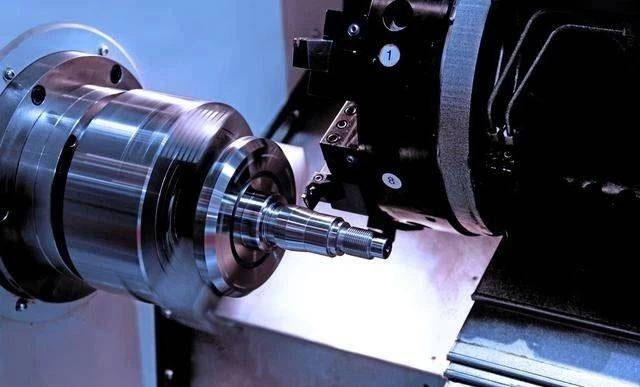
| CNC Lathe (Turning Center) | Rotates the workpiece block against a stationary, fixed single-point cutting tool. | Symmetrical cylindrical parts, custom fasteners, axles, drive shafts, pins. |
| CNC Swiss Lathe | Feeds stock through a sliding guide bushing right next to the cutting tools. | Micro-precision components, miniature dental implants, medical bone pins, aerospace connectors. |
| CNC Router | High-speed spindle cutting utilizing open gantry configurations. | Large-scale panel machining, soft plastics prototyping, architectural woodwork, light aluminum plates. |
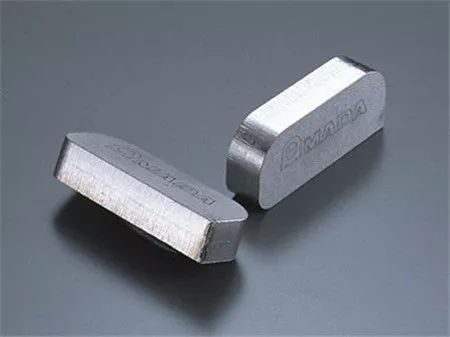
| Wire EDM (Electrical Discharge) | Uses a continuously feeding micro-thin brass wire energized with high-frequency electrical sparks. | Ultra-hardened tool steels, complex through-hole profiles, keyways, extrusion dies with zero mechanical stress. |
| Sinker EDM (Plunge EDM) | Immerses a machined graphite/copper electrode into dielectric oil to erode material. | Deep, intricate internal mold cavities, blind keyways, complex blind stamping dies. |
| CNC Grinding Machine | Utilizes rotating abrasive wheels to achieve extremely fine material removal. | Ultra-precise mating surfaces, engine valve guides, fuel injector pins requiring sub-micron finishes. |
| CNC Laser Cutter | Focuses a coherent high-power laser beam to melt or vaporize localized targets. | Rapid sheet metal fabrication, custom brackets, enclosure flat-patterns, signs. |
| CNC Waterjet Cutter | Expels an ultra-high pressure water stream embedded with hard garnet abrasives. | Thick steel slabs, composite laminates prone to thermal cracking, stone, heat-sensitive alloys. |
CNC Milling vs. CNC Turning
Selecting the optimal kinematic approach is a crucial factor in driving down component production costs while safeguarding spatial accuracy. The choice between milling and turning depends primarily on the geometric symmetry of the part.
| Kinematic Feature | CNC Milling (3-Axis, 4-Axis, 5-Axis) | CNC Turning (Turning Centers & Mill-Turn) |
| Tool Motion Profile | The cutting tool spins dynamically at high RPMs; the raw stock material remains mechanically locked to the machine bed. | The raw stock material spins rapidly within a hydraulic chuck; the cutting tool remains fixed on a programmable turret. |
| Geometric Suitability | Asymmetrical, prismatic, complex organic contours, flat surfaces, rectangular cross-sections. | Axially symmetrical, cylindrical, conical, tubular geometries, concentric internal bores. |
| Achievable Tolerances | Standard: ±0.02 mm; Precision: ±0.005 mm. | Standard: ±0.01 mm; Precision: ±0.002 mm (superior roundness tracking). |
| Typical Industry Parts | Electronic enclosures, aerospace structural ribs, robotic links, mold plates, engine heads. | Custom dowel pins, hydraulic pistons, threaded fittings, main drive shafts, bushings. |
When to Select Milling or Turning?
Choose CNC Milling: The final object has multi-faceted features, pockets, asymmetrical profiles, or requires complex 3D surface mapping. When utilizing 5-axis CNC milling, the cutter can access five sides of a component simultaneously, significantly reducing fixture overhead and eliminating cumulative setup stack-up errors.
Choose CNC Turning: The component is fundamentally round or exhibits concentric features along a central axis. Turning is exceptionally efficient for high-volume cylindrical parts due to its continuous cutting action, which ensures superior surface finishes and concentricity compared to interpolating a round feature on a mill. For complex parts requiring both turning and milling features, advanced Mill-Turn centers integrate rotary tooling into a lathe configuration, allowing complete single-setup processing.
Comprehensive Material Matrix Used in CNC Machining
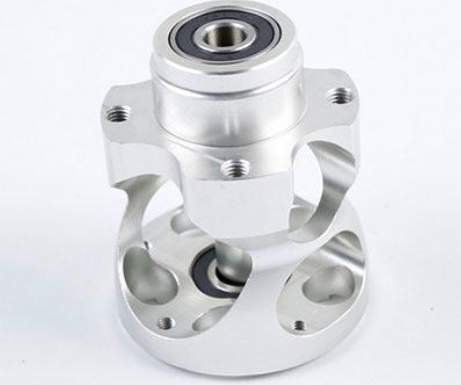
CNC machining features vast material compatibility, easily handling everything from lightweight polymers to high-strength, heat-resistant superalloys. Below is an engineering assessment of standard industrial materials processed daily by modern manufacturing networks:
1. Engineering Metals
Aluminum Alloys (e.g., Al6061-T6, Al7075-T6, ADC12):
- Advantages: Exceptional strength-to-weight characteristics, superior thermal conductivity, highly machinable, naturally resistant to oxidation.
- Drawbacks: Lower absolute hardness compared to steel alloys; highly susceptible to galling if unlubricated.
- Core Industries: Aerospace structural ribs, lightweight automotive casings, consumer electronics housings, heat sinks.
Stainless Steel (e.g., SS304, SS316L, SS17-4 PH):
- Advantages: Excellent tensile strength, high corrosion and oxidation resistance, excellent structural longevity under extreme conditions.
- Drawbacks: High work-hardening rates; lower thermal dissipation creates rapid tool wear.
- Core Industries: Medical implants, marine hardware, chemical processing valves, food production machinery.
Titanium Alloys (e.g., Grade 5 / Ti-6Al-4V):
- Advantages: Exceptional bio-compatibility, extreme strength-to-weight ratio, excellent fatigue limits.
- Drawbacks: Poor thermal conductivity routes heat directly to the tool edge; high chemical reactivity at elevated temperatures requires specialized tooling.
- Core Industries: Orthopedic bone anchors, orthopedic implants, structural aerospace fasteners, jet engine compressor blades.
Copper and Brass (e.g., C360 Brass, C101 Copper):
- Advantages: Excellent electrical and thermal conductivity, highly decorative aesthetic, highly machinable with minimal tool wear.
- Drawbacks: Copper is highly ductile and prone to forming long, problematic stringy chips if the tool geometry is sub-optimal.
- Core Industries: Electrical busbars, RF shielding enclosures, fluid plumbing manifolds, artistic architecture.
2. Engineering Plastics
POM (Polyoxymethylene / Acetal / Delrin):
- Advantages: Exceptional dimensional stability, ultra-low friction coefficient, high rigidity, and low moisture absorption.
- Drawbacks: Prone to centerline porosity in thick cross-sections; poor resistance to strong acids.
- Core Industries: Precision mechanical gears, plastic bushings, optical instrument frames, and electrical insulation blocks.
PEEK (Polyether Ether Ketone):
- Advantages: Exceptional thermal stability up to 250°C, outstanding chemical resistance, and high mechanical strength that competes with light metals.
- Drawbacks: Extremely high raw material costs; requires precise internal stress relief protocols during machining to prevent warping.
- Core Industries: Semiconductor handling nests, down-hole oil exploration components, aerospace wire conduits.
ABS (Acrylonitrile Butadiene Styrene):
- Advantages: Highly cost-effective material, excellent impact resistance, easily accepts secondary finishes like electroplating or painting.
- Drawbacks: Lower thermal deflection thresholds; susceptible to structural degradation under prolonged UV exposure.
- Core Industries: Commercial electronic enclosures, structural prototypes, automotive interior trim panels.
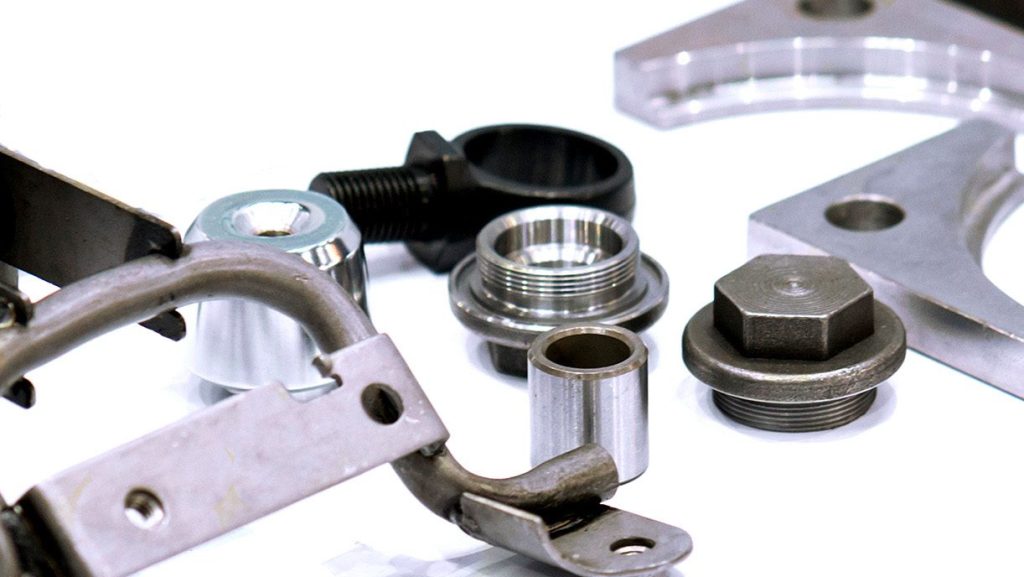
Major Engineering Advantages of CNC Machining
The industrial dominance of CNC systems stems from several distinct advantages that enhance manufacturing performance, repeatability, and cost efficiency:
Exceptional Precision and Dimensional Tolerances: Standard production runs regularly achieve tolerances of ±0.01 mm to ±0.005 mm. When operating in climate-controlled cleanrooms with specialized linear-scale feedback loops, precision centers can hit tolerances under ±0.002 mm. This capability is essential for generating the interference fits and hermetic seals required in high-stress assemblies.
High Geometric Repeatability: Unlike manual processes that introduce operator-to-operator variance, CNC machines duplicate identical tool paths perfectly across thousands of parts. This level of consistency ensures that the 1st part and the 10,000th part match the exact same digital nominal specification.
Continuous 24/7 Automated Production: CNC systems run uninterrupted through nights and weekends, stopping only for scheduled preventative maintenance or material reload cycles. This rapid throughput shortens supply chains and compresses time-to-market.
Multi-Axis Kinematic Machining: Modern manufacturing leverages advanced movement control configurations:
- 3-Axis Systems: The cutting tool translates along linear X, Y, and Z spatial tracks. Ideal for simple plates and prismatic brackets.
- 4-Axis Systems: Adds a rotational axis (typically Axis A) around the X-axis, allowing continuous machining along cylindrical boundaries without manual repositioning.
- 5-Axis Systems: Introduces two rotational axes simultaneously (Axes A/B/C). The spindle or machine trunnion tilts and rotates dynamically, allowing the tool to stay perfectly perpendicular to complex, free-form organic shapes. This maximizes tool rigidity, eliminates complex secondary fixture setups, and reduces tool deflection.
Broad Material Versatility: A single multi-axis milling center can transition seamlessly from cutting soft polymers like ABS to handling dense, hardened metals like Titanium, simply by swapping the cutting tools and updating the spindle speed parameters.
Inherent Limitations and Constraints of CNC Machining
While exceptionally capable, effective engineering design requires a clear understanding of the mechanical limits and economic thresholds inherent to CNC technology.
1. High Initial Capital Investment
Procuring advanced multi-axis CNC machine tools requires significant upfront capital. High-performance industrial centers, continuous filtration coolant units, robust tool carousels, and advanced CAD/CAM software licenses represent a substantial financial commitment compared to basic manual tools or rapid 3D printing systems.
2. Material Waste and the Subtractive Dilemma
Because CNC machining is fundamentally a subtractive manufacturing methodology, components are carved out of a larger solid block. The volume of material removed often represents a large percentage of the initial raw block. In aerospace manufacturing, it is common to encounter a high “buy-to-fly” ratio, where up to 80-90% of the raw titanium block is reduced to scrap metal chips. This results in significantly higher raw material costs compared to additive processes like 3D printing or near-net-shape injection molding.
3. Highly Skilled Programming Requirements
Automation does not eliminate the need for human expertise. Generating stable toolpaths, managing complex part fixtures, optimizing raw cutting parameters, and ensuring the machine does not collide requires deep engineering knowledge. A single programming error in G-code can cause severe machine collisions, resulting in expensive spindle damage and lengthy production downtime.
4. Geometric Accessibility and Complex Internal Structures
CNC cutting tools operate via direct line-of-sight access. The machine cannot cut around sharp internal corners or generate complex internal fluid channels that twist inside a sealed metal block. If a part features internal hollow spaces or sharp 90-degree internal edges, traditional CNC tools cannot reach them due to the physical diameter of the rotating cutter. In these scenarios, engineers must either choose Additive Manufacturing (3D Printing) or split the component into a multi-part bolt assembly.
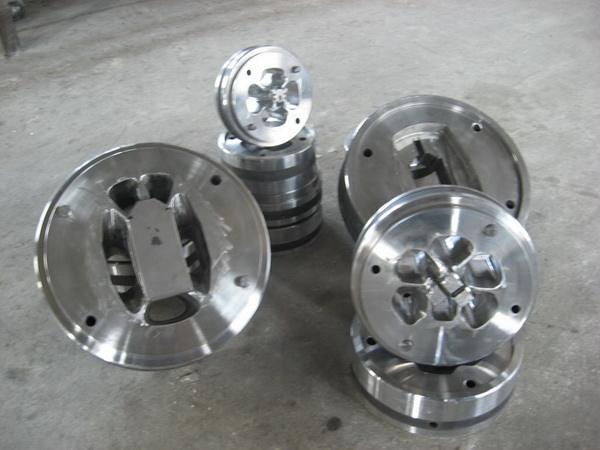
Strategic Industrial Integration of CNC Components
Every major high-technology sector relies on CNC components to sustain its operational infrastructure. The following matrix illustrates key components manufactured daily across major industries:
Aerospace & Defense: Precision components must operate under extreme thermal differentials and immense vibrational loads. Key applications include thin-walled aircraft bulkheads, jet engine fuel nozzles, custom turbine blades, landing gear retention pins, and military drone frames. The preferred material is typically Ti-6Al-4V or Al7075-T6, machined on 5-axis centers to minimize weight while preserving structural integrity.
Automotive Systems: The automotive sector demands both high mechanical durability and rapid volume scaling. Critical parts include complex transmission housings, multi-cylinder engine blocks, suspension control arms, custom brake calipers, and steering knuckles. These parts rely on high-pressure die casting combined with final precision CNC milling to ensure accurate mating surfaces.
Medical Equipment: The medical sector requires ultra-precise tolerances coupled with bio-compatible materials. Typical applications include titanium orthopedic bone plates, artificial hip joints, intricate surgical forceps, endoscopic camera housings, and dental abutments. These components are typically produced on highly automated CNC Swiss Lathes to achieve mirror-like finishes and burr-free edges.
Electronics & Semiconductors: Electronics manufacturing requires excellent thermal dissipation and clean EMI shielding. Key applications include precision aluminum heat sinks, customized optoelectronic enclosures, microfluidic handling blocks, and complex high-density PCB testing fixtures.
Process Cross-Reference: CNC Machining vs. Alternative Manufacturing Methods
To establish where CNC machining provides the highest return on investment (ROI), it is valuable to evaluate it against alternative modern manufacturing methodologies:
| Manufacturing Methodology | Dimensional Precision | Production Lead Time | Material Strength Properties | Optimal Volume Threshold |
| CNC Machining | ±0.005 mm (Extreme) | Short to Medium (Days) | Excellent (Uses isotropic raw metal blocks) | 10 to 5,000 units (Highly adaptable) |
| 3D Printing (Additive) | ±0.1 mm (Moderate) | Very Short (Hours) | Anisotropic properties (Layer weaknesses) | 1 to 50 units (Prototyping only) |
| Injection Molding | ±0.05 mm (High) | Long (Requires tooling molds) | Good (Limited to polymers only) | 5,000 to 100,000+ units |
| Die Casting | ±0.1 mm (Moderate) | Very Long (Requires steel dies) | High (Prone to internal porosity) | 10,000+ units (Mass production) |
| Sheet Metal Fabrication | ±0.2 mm (Standard) | Short (Fast processing) | High (Limited to uniform thickness sheet) | 100 to 10,000 units |
How Much Does CNC Machining Cost?
Optimizing manufacturing costs requires a clear understanding of the core factors that drive production pricing. Total manufacturing costs are calculated based on several interrelated parameters:
- Raw Material Cost: The base price of the material block, combined with its relative machinability index. For example, machining Titanium Grade 5 takes significantly longer than cutting Al6061-T6, which increases tool wear and machine runtime costs.
- Total Machine Hours (Cycle Time): The absolute time the component spends inside the machine chamber. Complex designs with deep internal pockets or fine details require extended machining cycles, which increases the total hourly machine rate.
- Labor and CAM Programming Overhead: The upfront cost to program the G-code, design the custom part fixtures, and complete the initial machine setup. This setup cost is fixed; therefore, spreading it across a larger batch significantly lowers the cost per individual part.
- Dimensional Tolerances and Inspection Standards: Requesting ultra-tight tolerances (e.g., under ±0.005 mm) requires continuous CMM verification, slower cutting feeds, and specialized cutting tools, all of which increase production costs. Engineering Tip: Keep tolerances as generous as the design allows, reserving ultra-tight limits only for critical mating interfaces.
How to Choose a Reliable CNC Machining Supplier
Partnering with a premier manufacturer is essential to ensuring smooth production cycles and consistent part quality. When vetting a potential supplier, prioritize the following criteria:
- Comprehensive Manufacturing Infrastructure: Ensure the facility operates a diverse range of machinery, including multi-axis 3, 4, and 5-axis milling centers, precision CNC lathes, and Wire EDM systems. This diversity allows them to select the most efficient processing path for your specific design.
- Certified Quality Management Systems: A reliable supplier must maintain active certifications such as ISO 9001:2015, AS9100D (for aerospace), and ISO 13485 (for medical devices). These certifications guarantee rigid material traceability, structured inspection workflows, and reliable corrective action processes.
- Expert Design for Manufacturing (DFM) Support: Top-tier suppliers do not just take your file and cut it blindly. Look for partners like JTR Machine, who provide thorough, proactive DFM analyses. Experienced engineers review your designs up front to identify deep internal pockets, non-standard thread sizes, or overly restrictive tolerances, helping you optimize the geometry to reduce costs before cutting begins.
CNC machining remains a foundational column of modern high-technology industry, delivering unmatched precision, material integrity, and operational scalability. Navigating the nuances of multi-axis setups, material attributes, and cost factors can be challenging, but partnering with the right manufacturer simplifies the journey from digital design to physical part delivery.
At JTR Machine, we leverage advanced multi-axis CNC milling, high-efficiency turning centers, precision Swiss lathes, and specialized surface finishing services to deliver high-quality components tailored to your exact specifications. Whether you are producing rapid functional prototypes or launching high-volume production runs, our engineering team provides the technical insights, rigorous quality control, and rapid lead times your business requires. Contact JTR Machine today to submit your 3D CAD files and receive a detailed, comprehensive DFM quote.