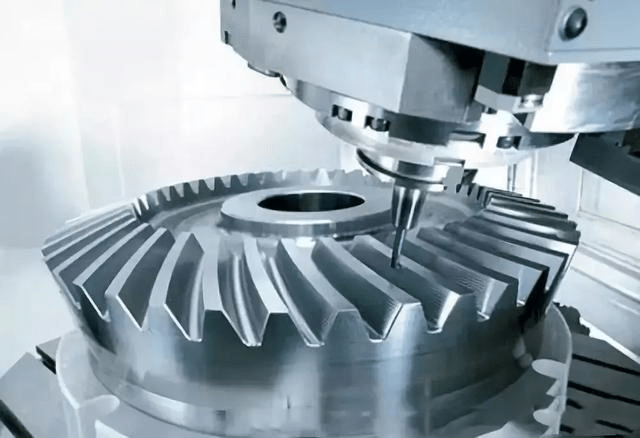


CNC machining costs are mainly determined by five core factors:
- Part geometry (complexity, features, and accessibility)
- Material (raw stock price and machinability index)
- Tolerance (dimensional precision and geometric control)
- Machine time (cycle time and tool engagement rate)
- Production quantity ( economies of scale and setup amortization )
Most manufacturers can reduce CNC machining costs by 20–50% through strategic Design for Manufacturability (DFM) without affecting part performance or structural integrity. By carefully evaluating every engineering decision from initial CAD modeling to final production scaling, businesses can unlock massive economic advantages in custom manufacturing.
What Determines CNC Machining Cost?
Understanding the primary drivers of custom manufacturing expenses is the first step toward optimization. The table below outlines how various parameters impact overall project expenditure and highlights the corresponding optimization opportunities available to design engineers.
| Cost Factor | Typical Impact | Optimization Opportunity |
| Material | High | Choose easier-to-machine alloys with high stock availability |
| Machining Time | Very High | Simplify geometry, minimize tool changes, and optimize feed rates |
| Setup Time | Medium | Batch production runs and leverage multi-axis setups |
| Tolerance | High | Relax unnecessary precision on non-mating surfaces |
| Surface Finish | Medium | Avoid excessive finishing unless functionally required |
| Inspection | Medium | Simplify Geometric Dimensioning and Tolerancing (GD&T) |
| Tool Wear | Medium | Avoid deep cavities and abrasive high-hardness materials |

CNC Machining Cost Breakdown
To systematically reduce expenses, product developers must analyze where every dollar goes during the manufacturing lifecycle. The cost structure typically flows across multiple operational stages:
Total Cost⟶Material⟶Programming⟶Machine Setup⟶Machining Time⟶Inspection⟶Surface Finishing⟶Packaging
When examining a standard mid-volume production run, the capital distribution generally breaks down as follows:
- Machining Time: 30–50% of total expenses, driven directly by tool path complexity and material removal rates.
- Setup Time: 15–30% of total costs, accounting for fixture design, CAM programming, and machine calibration.
- Material: 10–30% of the bill, fluctuating heavily based on raw stock grades and market availability.
- Inspection & Quality Control: 5–15% of overall expenditures, scaling up significantly with high-precision CMM requirements.
15 Proven Ways to Reduce CNC Machining Costs
1. Simplify Part Geometry
- Why it costs more: Highly complex geometries require multi-axis simultaneous motion, frequent manual reorientation, custom-engineered workholding fixtures, and intricate tool paths that extend cycle times exponentially.
- Real-world example: A mechanical bracket with ornamental pockets, chamfered internal reliefs, and multi-angled faces requires five separate manual repositioning steps on a standard 3-axis mill.
- Optimisation strategy: Remove non-functional aesthetic flourishes, remove unnecessary pockets, design parts to be machined from fewer sides.
- Before vs. After: The multi-sided organic shape to a prismatic design transition cuts setup interventions from 5 times down to 1, reducing overall labour and programming hours by 40%.
2. Avoid Unentionally Tight Tolerances
Over-specifying tolerances is one of the most common budget drains in precision engineering. Tightening a dimension forces machinists to slow down cutting speeds, use specialized tooling, and run exhaustive Quality Assurance checks.
±0.1 mm (Standard Commercial)⟶±0.02 mm (Precision)⟶ Higher inspection⟶ Longer machining⟶ Higher price
Tolerance Recommendation Table
| Feature Type | Standard Commercial Tolerance | High-Precision Tolerance | Cost Impact |
| Linear Dimensions | ±0.1 mm to ±0.2 mm | ±0.01 mm to ±0.02 mm | Low to Very High |
| Hole Diameters | ±0.05 mm | ±0.005 mm | Medium to High |
| Angular Limits | ±0.5∘ | ±0.05∘ | Medium |
3. Reduce the Number of Setups
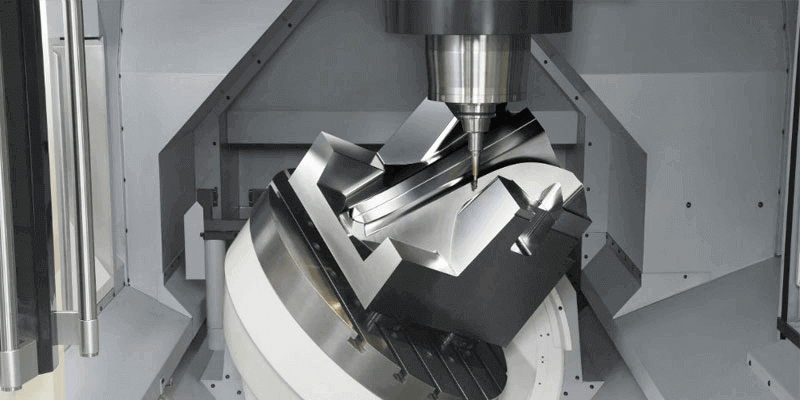
Every time a machinist unclamps a part and flips it to machine another side, human error risks increase, alignment time accumulates, and labor costs rise. Higher dimensional accuracy. Reduced Labour overhead with single or two set-up configurations. Complex parts can be machined in one fixture clamping using 5-axis machining centres, avoiding cumulative tolerance stack-ups and reducing part cost up to 25%.
4. Choose Cost-Effective Materials
Raw material selection dictates both the physical performance of your component and the speed at which it can be cut. Harder, exotic materials require slower feed rates, specialized coatings, and replacement of worn tools more frequently.
| Material | Machinability Index | Relative Cost | Best Application |
| Aluminum 6061 | Excellent | Low | Structural prototypes, lightweight enclosures |
| Brass (C36000) | Excellent | Medium | Fittings, valves, intricate electrical components |
| Mild Steel (1018/1045) | Good | Medium | General mechanical components, heavy-duty brackets |
| Stainless Steel 304 | Moderate | High | Food processing equipment, medical devices |
| Titanium (Grade 5) | Poor | Very High | Aerospace structural parts, high-stress implants |
5. Standardize Hole Sizes
For parts with lots of holes, specify standard drill and reamer sizes, not custom or imperial to metric conversions. CNC machine can do the job quickly with standard metric or fractional drill sizes without the need for special boring bars or custom end mills.
6. Avoid Deep Cavities
Deep pockets and cavities require long, slender end mills that vibrate heavily under cutting forces. To prevent tool breakage and chatter marks, machinists must reduce spindle speeds and feed rates drastically.
- Depth≤3×Diameter⟶ Good (Optimal Rigidity)
- Depth≈6×Diameter⟶ Acceptable (Requires Reduced Feed)
- Depth≥10×Diameter⟶ Expensive (High Risk of Tool Deflection)
7. Limit Thread Length
Designing threads that extend excessively deep into a blind hole provides negligible mechanical strength improvement while significantly elevating the risk of tap breakage. Limit functional thread depth to 1.5 to 2 times the nominal fastener diameter to ensure maximum holding strength without complicating the machining process.
8. Use Standard Cutting Tools
Custom-profiled cutting tools require long lead times and high initial tooling investments, which are then passed down to the customer. Designing components with standard corner radii, standard hole diameters, and standard chamfers allows shops to use off-the-shelf end mills, keeping tooling overhead minimal.
9. Reduce Surface Finish Requirements
While mirror-like surface finishes look appealing, they require tedious post-processing steps such as manual hand-polishing, bead blasting, or chemical smoothing.
- Ra 3.2 micrometers is standard for general CNC milling and incurs baseline manufacturing costs.
- Ra 0.4 micrometers requires secondary polishing operations, specialized finishing passes, and increased quality inspection times, driving up part costs by 30–60%. Reserve ultra-fine finishes strictly for functional sealing surfaces or high-wear sliding interfaces.
10. Design for Standard Stock Sizes
Always align your raw model dimensions with commercially available stock sheet and bar sizes. Designing a part with a thickness of 9.5 mm when standard aluminum stock comes in 10 mm increments means the machine must face-mill away solid material simply to reach your target thickness, wasting both raw material and valuable machine time.
11. Consolidate Multiple Parts
Redesigning an assembly of several bolted or welded pieces into a single unified monolithic CNC machined component removes assembly labour, reduces cost of fasteners, and eliminates tolerance stacking problems between mating interfaces.
12. Increase Production Quantity
CNC machining has high upfront non-recurring engineering (NRE) costs including CAM programming, fixture design and machine setup. As you make more and more, those fixed costs are spread out over hundreds or thousands of parts, dramatically reducing the price of each individual part.
Quantity: 1⟶10⟶100⟶1000(Unit Cost Decreases Exponentially)
13. Choose the Right CNC Machine
Not every part requires advanced multi-axis machining. Selecting the correct machine type for the job profile optimizes hourly machine rates:
- 3-axis mills: Ideal for prismatic parts, 2.5D pockets, and flat plates. Most economical hourly rate.
- 4-axis mills: Perfect for cylindrical components and features requiring radial indexing.
- 5-axis and Mill-Turn centers: Best for complex aerospace components, impellers, and parts requiring multi-sided machining in a single setup. Higher hourly rates, but lower total labor overhead for complex geometries.
14. Optimize Parts for DFM
Design for Manufacturability (DFM) is the practice of designing components with the manufacturing process in mind. Reviewing your CAD files with a DFM mindset ensures that every feature can be efficiently accessed by a cutting tool, clamped securely, and measured without specialized ultra-precise metrology equipment.
15. Work with an Experienced CNC Supplier
Partnering with an industry leader like JTR Machine means you can be confident that master machinists are reviewing your engineering designs before any chips are cut. With their strong capabilities, including professional DFM Review, expert Engineering Support, fast Rapid Prototyping, stringent ISO QC standards, and seamless Production Scaling, every manufacturing milestone is achieved to ensure optimal quality control and cost efficiency.
Common CNC Design Mistakes That Increase Costs
| Design Mistake | Why It Costs More | Better Alternative |
| Deep pockets | Requires long, fragile tools and slow feed rates | Shallower pockets with wider corner radii |
| Sharp internal corners | Standard round milling cutters cannot form true square inside corners; requires EDM or manual broaching | Add corner radii larger than half the tool diameter |
| Thin walls | Prone to vibration, chatter, and dimensional warping under cutting pressure | Increase wall thickness or add structural ribs |
| Excessive tight tolerances | Forces 100% inspection, slower feeds, and scrap risks | Apply tight tolerances only to critical mating interfaces |
| Overly complex 3D geometry | Requires extensive multi-axis programming and repositioning | Simplify design into modular components or unified prismatic features |
Real Example: How a Simple Redesign Reduced Costs by 35%
A mid-sized robotics firm recently submitted an enclosure bracket for custom manufacturing. The initial design suffered from excessive complexity, driving production quotes far above their target budget.
- Original Design: Featured 18 intricate pockets, extremely tight tolerances (±0.01 mm across all dimensions), and was specified in solid Titanium.
- Optimized Design (DFM Applied): Reduced pocket count to 8, relaxed non-critical dimensions to standard commercial tolerance (±0.05 mm), and substituted the material with Aluminum 6061.
Quantified Results
- Machine Time: ↓ 42% reduction in total spindle run time.
- Inspection Effort: ↓ 30% reduction in CMM verification time.
- Total Project Cost: ↓ 35% overall savings achieved without compromising part structural integrity or functional performance.
CNC Cost Reduction Checklist
Before releasing your CAD files to your manufacturer, review this practical checklist to ensure maximum cost optimization:
- Use standard stock material sizes to minimize raw stock waste.
- Specify standard cutting tool radii and hole dimensions.
- Relax dimensional tolerances on non-mating, non-functional surfaces.
- Minimize the total number of machine setups and part refixturing steps.
- Avoid deep, narrow cavities and excessive wall depth-to-diameter ratios.
- Limit thread length to 1.5× to 2× the nominal diameter.
- Standardize hole sizes to match common drill and reamer diameters.
- Complete a comprehensive DFM review with your supplier before production.
Frequently Asked Questions
How much does CNC machining typically cost?
CNC machining costs vary widely based on raw material choice, part complexity, labor rates, and total order volume. Simple prototype parts made from standard aluminum can cost anywhere from $30 to $150, while complex production-grade multi-axis components can range from hundreds to thousands of dollars per unit.
What increases CNC machining costs the most?
Extended machining time, frequent manual machine setups, difficult-to-machine exotic alloys (such as titanium or Inconel), and overly tight dimensional tolerances are the primary drivers of inflated manufacturing costs.
Does 5-axis machining always cost more?
Not necessarily. While 5-axis machine hourly rates are higher than standard 3-axis mills, 5-axis machining can significantly reduce total project costs for complex parts by completing all operations in a single setup, eliminating multiple fixture designs and reducing manual labor hours.
Can design optimization reduce machining costs?
Yes. Design for Manufacturability (DFM) principles—such as adding radii to internal corners, limiting pocket depths, and standardizing hole sizes—can easily reduce overall production costs by 20% to 50%.
How does DFM reduce CNC machining costs?
DFM simplifies tool paths, shortens cycle times, reduces setup interventions, minimizes tool wear, and eliminates the need for expensive secondary manufacturing processes or custom tooling.