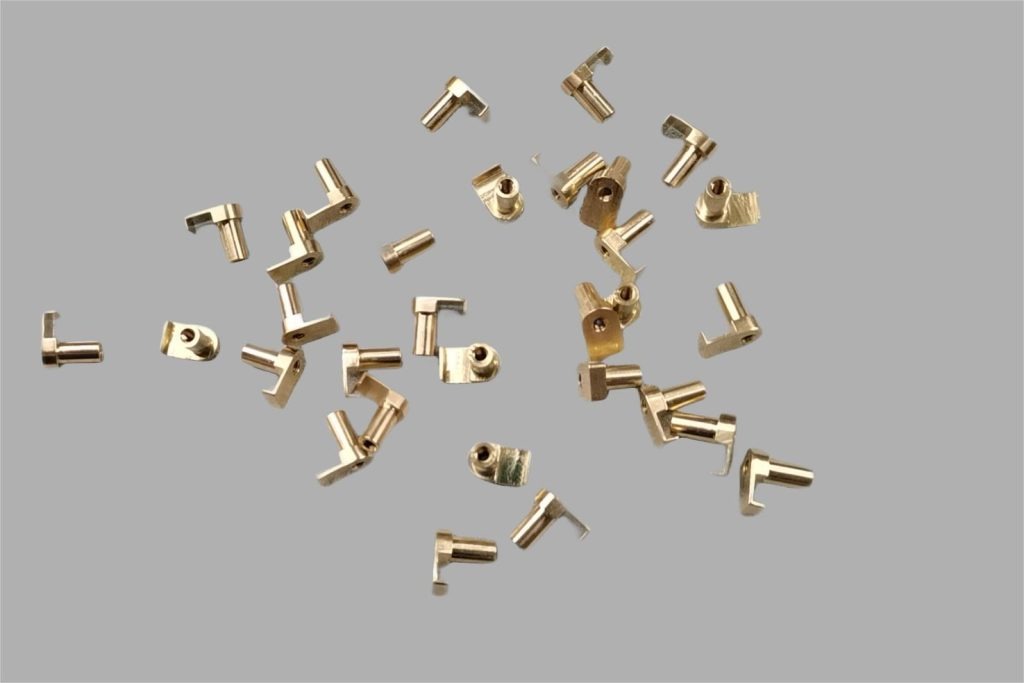


To a machinist, Carbon Fibre Reinforced Polymers (CFRP) are a wonderful engineering achievement and a manufacturing nightmare. Due to its unrivalled strength-to-weight ratio, outstanding structural rigidity and low thermal expansion coefficient, CFRP is an essential material in high-performance sectors such as aerospace structures, motorsport chassis, advanced medical imaging components and high-velocity industrial automation components.
But the same properties that make carbon fibre desirable also make it notoriously difficult to machine with subtractive processes. Aluminium or steel, isotropic metals, have uniform physical properties in all directions and produce predictable, continuous chips during cutting. CFRP is inherently anisotropic and highly heterogeneous. It is made up of high strength, highly abrasive carbon fibres embedded in a relatively soft polymer matrix. When a cutting edge contacts CFRP, it is not shearing a homogeneous material, but it is repeatedly fracturing thousands of microscopic abrasive fibres and imposing alternating thermal and mechanical loads on the polymer matrix. Standard CNC machining practices just don’t work here. You don’t get precise parts; you get degradation of the structure. Carbon fibre machining is a specialised discipline governed by strict micro-mechanical principles that machine shops must consider in order to successfully harness the potential of carbon fibre.
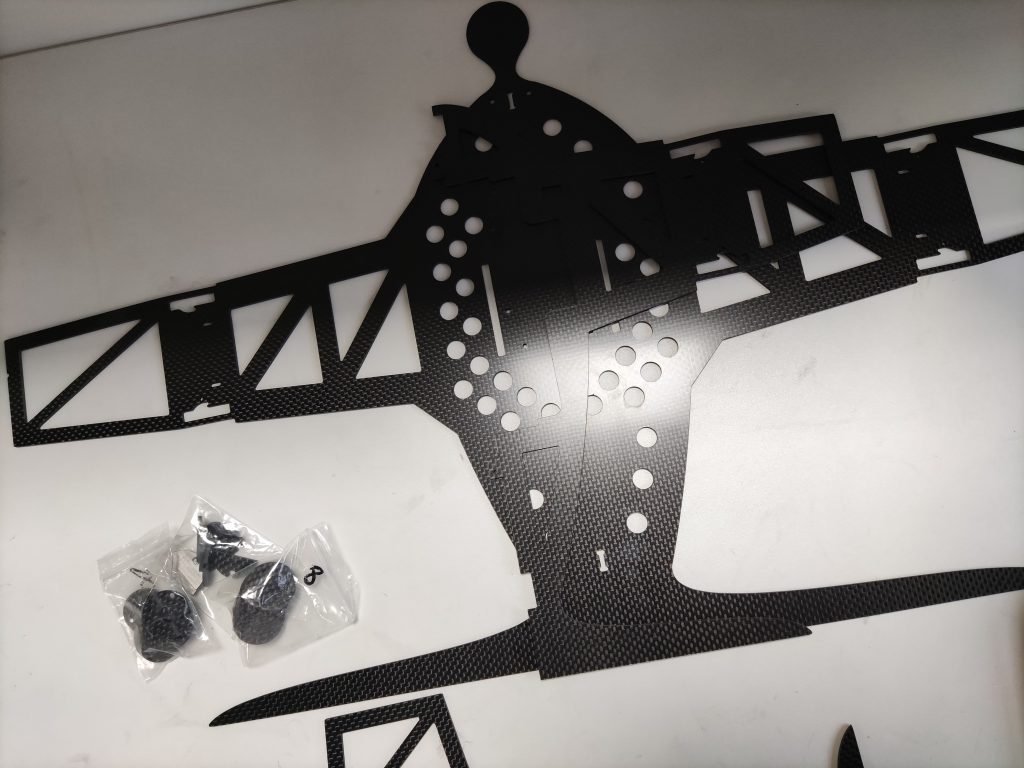
FAQ Quick Answers: Can CNC Machines Reliably Handle Carbon Fiber?
Q1: Can carbon fibre parts be cut on a regular CNC machine?
A1: Yes, for sure. Carbon fibre can be machined in standard industrial CNC milling and turning centers, provided that the spindle is highly rigid, the dust-sealing is robust and the tooling geometries, the toolpath strategies and the extraction systems are adapted.
Q2: Do you recommend using fluid coolant while milling carbon fibre on a CNC?
A2: Not normally. Preferred are dry machining with high vacuum dust extraction. Liquid coolants often combine with fine carbon dust to form an abrasive slurry, which increases the rate of slide wear in the machine, and some polymer matrices are moisture absorbing, which may lead to matrix degradation.
Consideration 1: Tool Selection — Why Diamond Reigns Supreme
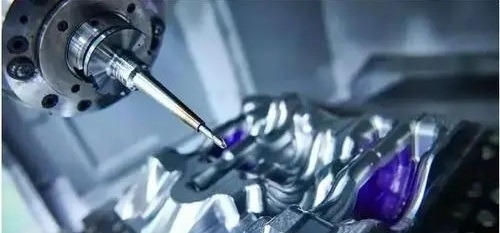
In the world of composite machining, traditional uncoated tungsten carbide tools fail within meters of cut distance. The extreme abrasiveness of the carbon fibers causes rapid flank wear, rounding the cutting edge and shifting the tool from a cutting action to a rubbing action. This is why Polycrystalline Diamond (PCD) tools and advanced Diamond-Coated Carbide tools are mandatory.
Consideration 2: Cutting Parameters — Slow and Steady Wins the Race
In optimising cutting parameters for CFRP, there is a trade-off between thermal management and mechanical stress. The main goal is to keep relatively conservative cutting speeds (SFM) and optimised feed-per-tooth (chip load) values. Excessive cutting speeds produce friction-induced localised heat that can exceed the glass transition temperature of the polymer matrix, causing softening and smearing.
Consideration 3: Workholding — Stability is King
Carbon fiber plates and thin-walled components are highly susceptible to vibration and aerodynamic lift during high-speed milling. Vacuum fixtures are highly recommended for machining thin carbon fiber sheets because they distribute holding forces uniformly across the entire surface area, eliminating the localized stresses caused by mechanical clamps. Furthermore, sacrificial backing plates must be placed directly beneath the composite part.
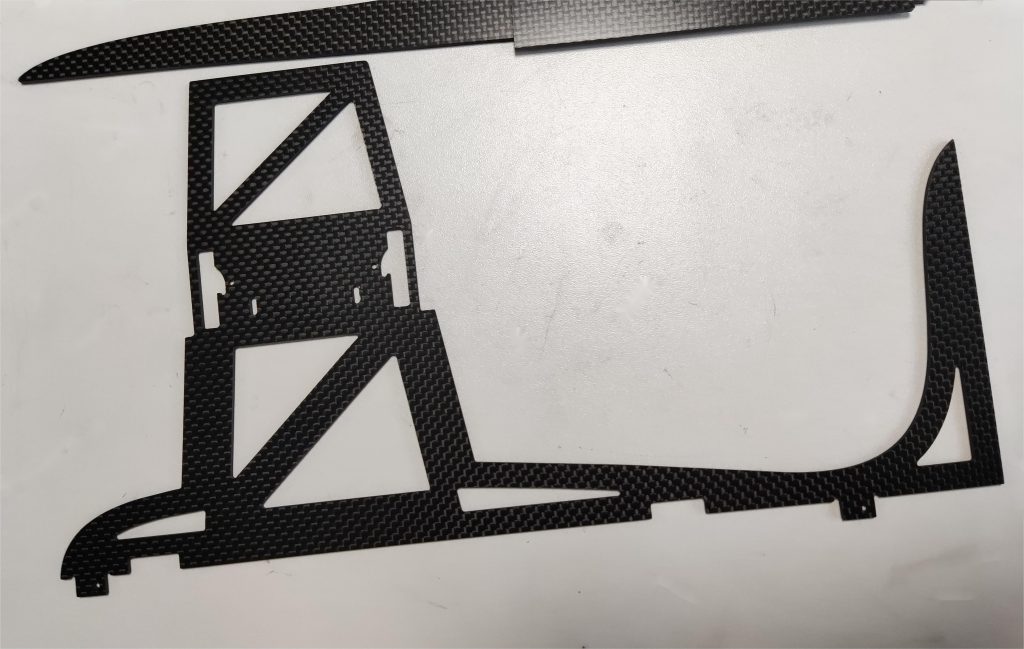
Three Core Challenges of Carbon Fiber CNC Machining and Engineering Solutions
| Core Challenge | Mechanical & Safety Impact | Industrial Engineering Solutions |
| Dust Generation | CFRP machining produces fine, airborne, non-hazardous but highly irritating micro-dust particles. Because carbon fiber is highly conductive, airborne dust can infiltrate electrical enclosures and cause catastrophic short circuits. | Install industrial-grade HEPA filtration extraction systems directly at the spindle. Use custom dust collection shrouds. |
| Severe Tool Wear | The microscopic carbon strands act like sandpaper on the cutting edge. Flank wear rounds the tool tip rapidly, increasing mechanical cutting forces by up to 300%. | Standardize on Polycrystalline Diamond (PCD) or CVD diamond-coated end mills. Implement automated in-machine tool-wear monitoring. |
| Interlaminar Delamination | The tool’s upward or downward cutting force peels the outer layers of fabric away from the resin matrix. This separation compromises structural integrity. | Maintain strict tool-life limits to ensure sharp cutting edges. Utilize specialized down-cut or compression geometries. |
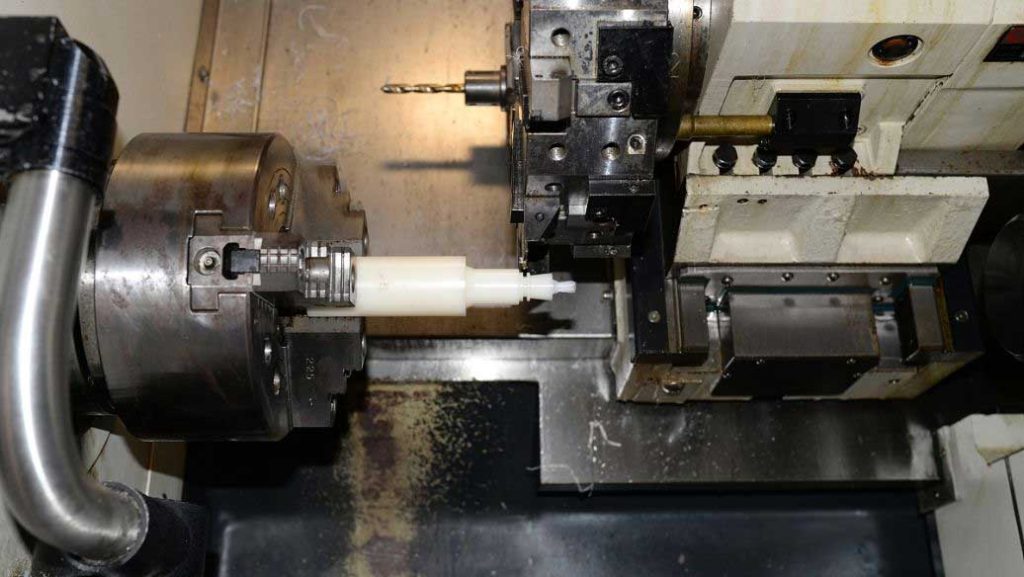
Is CNC Machining the Optimal Route for Your Carbon Fiber Project?
CNC machining is a highly precise and robust manufacturing process for carbon fiber, but it must be applied selectively based on the part’s design intent and production volume.
When to Strongly Choose CNC Machining:
• Intricate Geometries & High Complexity: When components require tightly tolerance-controlled counterbores, complex O-ring grooves, or multi-axis edge bevels.
• Exceptional Dimensional Accuracy: If your engineering specifications demand tolerances within ±0.02 mm for critical mechanical assemblies.
• Low-to-Medium Production Volumes: For production volumes spanning from prototype development up to several hundred units, avoiding heavy upfront mold capital.
When to Consider Alternative Fabrication Processes:
• Mass Production Scale: For high-volume auto or consumer electronics runs, net-shape processing methods like compression molding offer superior cycle times.
• Extreme Material Thickness: Machining exceptionally thick blocks leads to prohibitive tooling costs due to accelerated diamond wear.
Conclusion and Strategic Supply Chain Alignment
To conquer carbon fibre successfully, one must break away from traditional metalworking paradigms to a highly controlled, low-stress, and specialised composite machining approach. To get the most return on investment from your project, you need premium PCD tools, heat-managed cutting parameters and high-rigidity workholding.
JTR Machine offers full-service, high-precision composite CNC machining in China, taking your projects from rapid prototyping to scaled contract manufacturing. Your complex carbon fibre plates and custom components are entrusted to expert machinists, with precise tolerances and zero delamination.