

Selecting the right manufacturing process is one of the most important decisions in product development. When comparing casting vs forging, engineers and procurement teams must balance mechanical performance, manufacturing cost, design complexity, production volume, and lead time. Although both processes are widely used to produce metal components, they create parts with significantly different internal structures, material properties, and application advantages. In general, forging offers superior strength, toughness, and fatigue resistance, while casting is ideal for producing complex geometries and large components at competitive costs. This guide explains the key differences between casting and forging, compares their processes, materials, costs, strengths, and limitations, and provides practical selection advice to help you choose the most suitable manufacturing solution for your custom metal parts.
Quick Comparison: Casting vs Forging
Engineering procurement managers must evaluate multiple parameters when selecting between casting and forging. The comparative matrix below outlines the primary technical and economic distinctions:
| Factor | Casting | Forging |
| Material State | Molten Metal | Solid Metal (Billet / Ingot) |
| Mechanical Strength | Medium (isotropic properties) | High (anisotropic directional strength) |
| Grain Structure | Random dendritic crystal structure | Continuous Grain Flow conforming to shape |
| Fatigue Resistance | Medium (susceptible to micro-voids) | Excellent (refined grain refinement) |
| Dimensional Accuracy | High (Die Casting), Moderate (Sand Casting) | High (Closed Die Forging), Moderate (Open Die) |
| Large Parts Capability | Excellent (virtually unlimited scale) | Limited by press capacity (tonnage limits) |
| Complex Geometry | Excellent (intricate internal cores & undercuts) | Moderate (requires draft angles & simple parting lines) |
| Internal Defects | Possible (porosity, shrinkage, gas holes) | Much Lower (forging pressure welds internal voids) |
| Tooling Cost | Lower to Moderate (depending on mold type) | Higher (requires heavy steel die blocks & machining) |
| Production Volume | Medium to High (Sand vs Die Casting) | High volume preferred to amortize high tooling costs |
What Is Casting?
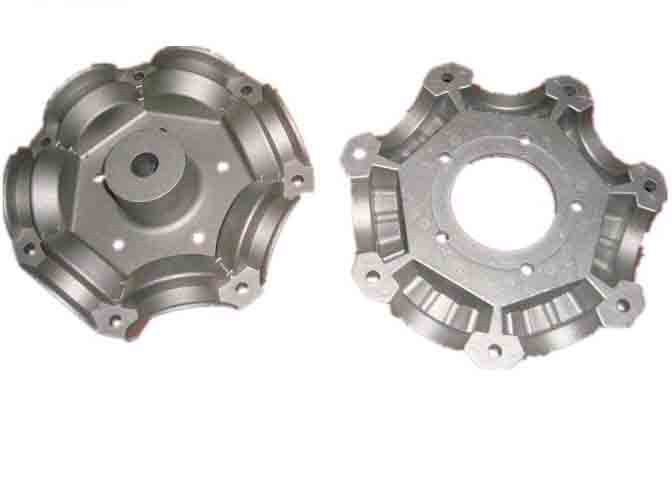
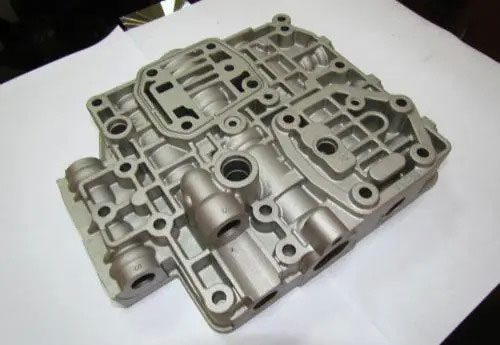
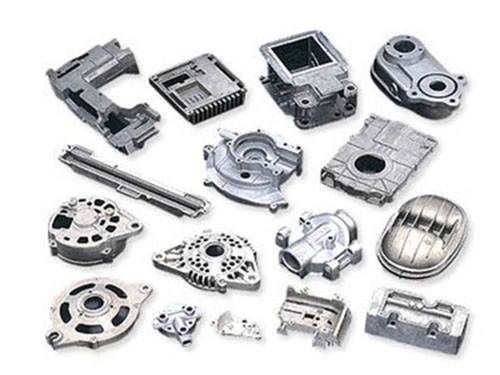
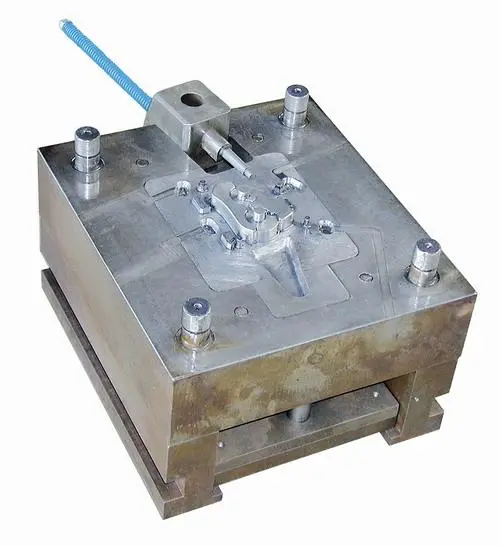
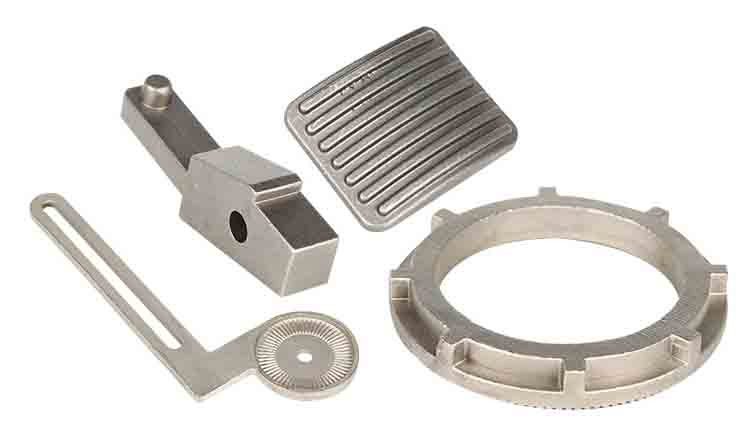
Metal casting is one of the oldest and most versatile manufacturing techniques in human history. The fundamental principle involves heating a metal alloy until it completely liquefies, pouring or injecting the molten metal into a preformed mold cavity that mirrors the desired shape, and allowing it to solidify. Casting enables engineers to fabricate components ranging from small carburetor brackets weighing a few ounces to massive marine diesel engine blocks weighing several tons.
Standard Metal Casting Workflow: Raw Material Selection→Melting in Furnace→Mold Preparation→Pouring / Mold Filling→Solidification & Cooling→Shakeout & Cleaning→CNC Machining→Quality Inspection
Common Casting Processes
| Casting Process | Best For | Tolerance / Finish |
| Sand Casting | Large parts, heavy industrial machinery, low-to-medium volume production. | Medium tolerance; rough surface finish requiring machining allowances. |
| Die Casting | High-volume aluminum, zinc, and magnesium components with thin walls. | High dimensional accuracy; excellent smooth surface finish. |
| Investment Casting (Lost Wax) | Precision components, intricate medical implants, turbine blades. | High precision, exceptional surface finish (Ra 1.6−3.2 μm). |
| Permanent Mold Casting | Medium-to-high volume non-ferrous parts requiring higher mechanical strength than sand casting. | Good dimensional control; reusable metal molds. |
| Lost Foam Casting | Complex shapes with undercuts utilizing expendable polystyrene patterns. | High geometrical freedom with minimal draft angles. |
What Is Forging?
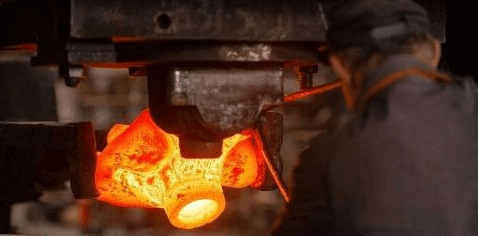
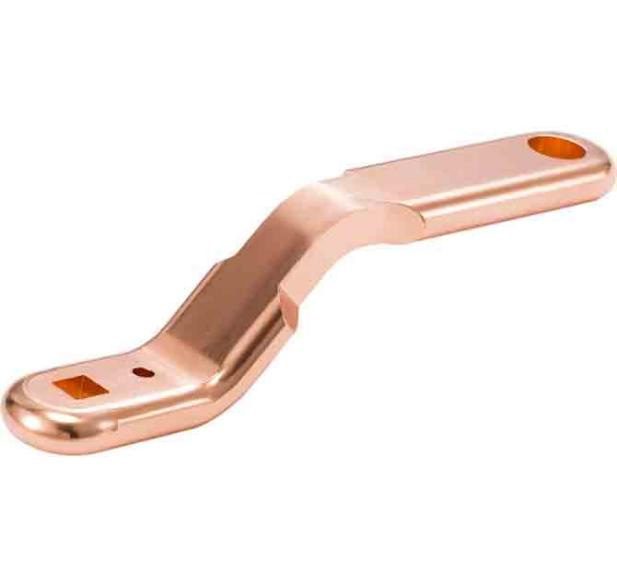
Metal forging is a manufacturing process where solid metal is plastically deformed and shaped using localized compressive forces. These forces are delivered via hammers, mechanical presses, hydraulic presses, or specialized rolling equipment. Unlike casting, which relies on liquid solidification, forging modifies the metallurgical structure of the metal in its solid state, refining the grain structure and eliminating internal porosity.
Standard Metal Forging Workflow: Metal Billet / Ingot→Preheating / Thermal Conditioning→Compression (Hammering / Pressing)→Flash Trimming→Heat Treatment (Quenching & Tempering)→CNC Machining→Non-Destructive Testing
Primary Forging Classifications
- Open Die Forging: Involves hammering metal between flat or simple contoured dies without fully enclosing the workpiece. Ideal for very large, custom, heavy-duty components like shafts and rings.
- Closed Die (Impression Die) Forging: Molten or pre-formed metal is squeezed between two matched steel dies that contain the precise impression of the final part. Excess metal forms “flash” which is subsequently trimmed.
- Cold Forging: Performed at room temperature. Offers superior surface finish, tight dimensional tolerances, and high work-hardening strength, primarily utilized for fasteners and small automotive hardware.
- Warm Forging: Conducted above room temperature but below the recrystallization point. Strikes an ideal balance between reduced deformation resistance and tight dimensional control.
- Hot Forging: Executed significantly above the recrystallization temperature of the metal. Permits extreme plastic deformation, high strain rates, and eliminates internal structural stresses.
- Rolled Ring Forging: Specialized circular forging process where a punched billet is rolled between heavy rollers to produce seamless, high-strength rings for aerospace and bearing applications.
Casting vs Forging: 10 Critical Differences
1. Manufacturing Process
The fundamental divergence between casting and forging lies in the thermodynamic state of the feedstock. Casting melts metal completely into a liquid state (T>Tliquidus), allowing it to flow passively into complex cavities under gravity or pressure. Forging maintains the metal in a solid or semi-solid plastic state (Tambient≤T≤Tsolidus), actively reshaping the material through severe mechanical work and plastic strain.
2. Mechanical Strength & Grain Structure
Mechanical performance represents the single most decisive factor in engineering selection. During forging, the metallic crystals are physically elongated and aligned along the primary contours of the tool, generating a Continuous Grain Flow (CGF). This directional orientation dramatically elevates tensile strength, impact toughness, and fatigue resistance.
Conversely, casting yields a random, isotropic dendritic grain structure during solidification. While uniform in all directions, cast grain structures lack the localized reinforcement provided by deformed grain boundaries, making cast parts more vulnerable to sudden impact shock and cyclic fatigue propagation under extreme operational loads.
3. Internal Defects & Structural Integrity
Structural soundness differs inherently between the two methodologies. Casting processes are susceptible to volumetric shrinkage during cooling, gas entrapment (porosity), and slag inclusions. Engineers must deploy rigorous non-destructive testing (NDT) such as X-ray radiography and ultrasonic inspection to detect subsurface flaws.
Forging, by subjecting the solid metal to massive compressive hydrostatic pressure, physically welds shut internal micro-voids, eliminates gas pockets, and breaks up brittle cast segregation networks. The resulting forged matrix displays exceptional density and structural integrity.
4. Material Utilization & Waste
Material efficiency heavily influences manufacturing economics. Casting typically operates on a “near-net-shape” principle, pouring precisely the required volume with minimal raw material waste, although gating systems, risers, and sprues must be sheared off and recycled.
Forging, particularly closed-die forging, generates “flash”—excess metal squeezed out between die halves. Furthermore, forged components frequently require extensive secondary CNC machining to achieve precise functional dimensions, decreasing overall material utilization efficiency unless precision cold-forming techniques are employed.
5. Dimensional Accuracy & Tolerances
Achievable tolerances dictate assembly feasibility. High-pressure die casting and precision investment casting achieve exceptional dimensional accuracy (±0.05 mm to ±0.15 mm) straight from the mold. Closed-die forging also provides tight tolerances, but thermal contraction during cooling and die wear introduce variations that require finishing operations.
6. Surface Finish Quality
Surface texture dictates immediate downstream processing costs. Investment casting and die casting can deliver smooth surface finishes ranging from Ra 1.6 μm to 6.3 μm. Sand casting and hot forging produce rough, oxidized scales (Ra 12.5 μm to 25 μm+) necessitating shot blasting, pickling, or surface grinding prior to deployment or coating.
7. Production Cost Dynamics
Financial viability depends directly on production scale. Casting generally offers lower variable production costs per unit for complex geometries because raw metal and pouring energy requirements are modest. Forging requires heavy capital equipment (hydraulic presses, induction heaters, massive forging hammers) and higher labor skill levels, driving up initial unit expenditure.
8. Tooling Cost & Amortization
Tooling investments dictate project feasibility. Sand casting patterns and basic permanent molds have moderate initial costs. Die casting dies and closed-die forging dies represent heavy capital expenditures (often ranging from $10,000 to $50,000+) machined from premium tool steels (e.g., H13). Consequently, forging tooling is economically viable only when amortized across large production volumes.
9. Production Volume Suitability
- Low Volume / Prototyping: Sand casting, open-die forging, and rapid prototyping.
- Medium Volume: Permanent mold casting, investment casting, and specialized closed-die runs.
- High Volume: High-pressure die casting and high-speed automatic closed-die forging.
10. Suitable Applications Summary
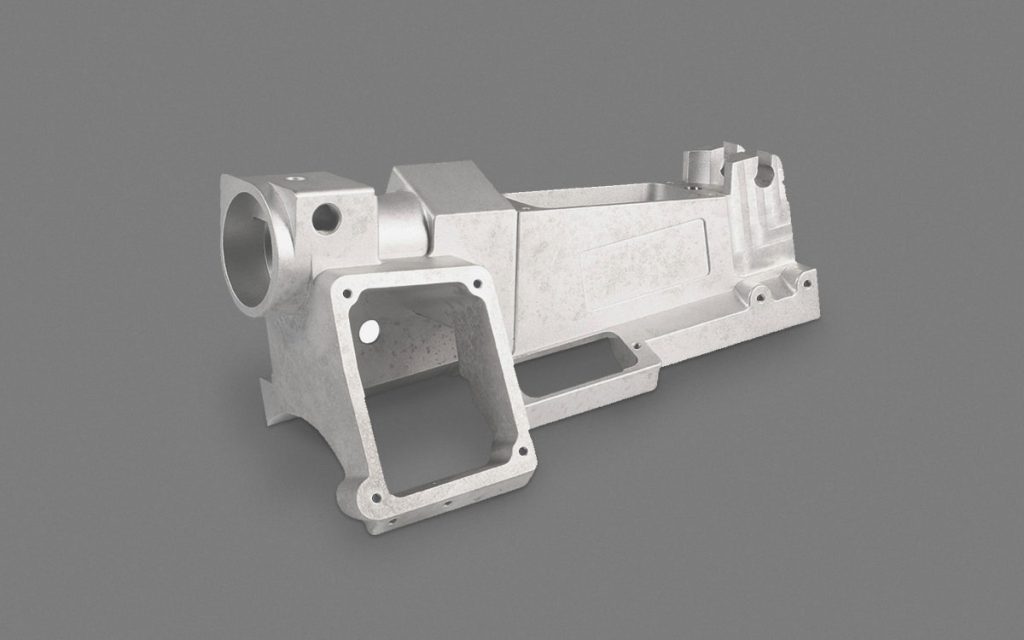
Casting dominates in complex housings, brackets, engine blocks, and artistic sculptures. Forging dominates in crankshafts, connecting rods, landing gear struts, aerospace turbine discs, high-pressure valves, and heavy-duty hooks.
Forged Parts vs Cast Parts: Property Comparison
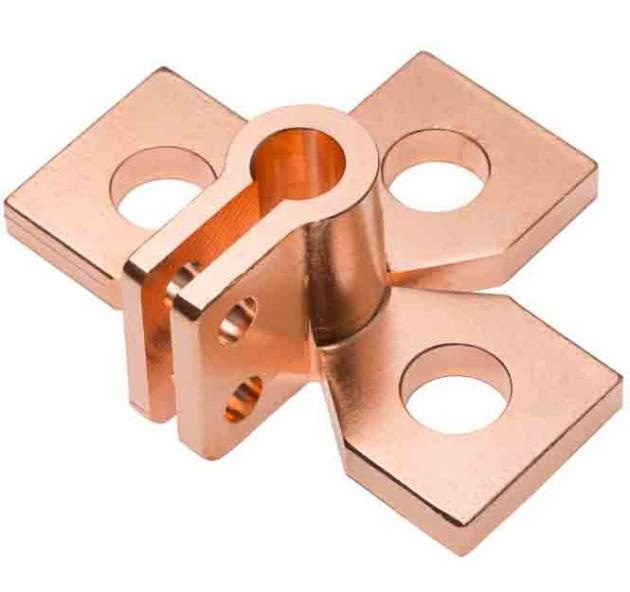
To assist design engineers in quantitative material selection, the performance matrix below evaluates key mechanical characteristics of cast versus forged components of identical alloy composition:
| Mechanical Property | Cast Components | Forged Components | Engineering Implication |
| Tensile Strength | Moderate | Superior | Forging withstands higher static pull forces without permanent elongation. |
| Yield Strength | Moderate | High | Forged parts resist plastic deformation under heavy operational loads. |
| Impact Resistance | Low to Moderate | Exceptional | Continuous grain flow absorbs shock energy without catastrophic brittle fracture. |
| Fatigue Life | Moderate | Superior | Forging resists crack initiation under millions of cyclic stress reversals. |
| Toughness & Ductility | Variable (void-dependent) | High | Forged metals bend rather than shatter under extreme overloads. |
| Density & Uniformity | Susceptible to micro-porosity | Homogeneous & Dense | Forging eliminates internal gas pockets and shrinkage voids. |
| Crack Resistance | Moderate | High | Refined grain structure halts micro-crack propagation. |
Cost Comparison: Casting vs Forging
Procurement professionals must weigh upfront tooling expenses against per-unit manufacturing costs and secondary machining overhead. The matrix below outlines relative cost drivers:
| Cost Factor | Casting Economics | Forging Economics |
| Mold / Die Initial Cost | Low to Moderate (Sand / Permanent) | High (Precision Machined Steel Dies) |
| Raw Material Cost | Low (near-net shape efficiency) | Moderate to High (flash waste & machining stock) |
| Machining Cost | Low to Moderate | Higher (requires more stock removal for tight fits) |
| Labor & Energy | Automated pouring / melting overhead | Intensive press operation & thermal heating |
| Lead Time | Faster pattern making & mold setup | Longer die sinking and thermal validation cycles |
Strategic Rule of Thumb for Buyers: For small batches (N<500 units) with complex internal geometry, casting minimizes total cost. For high-volume (N>5,000 units) safety-critical components requiring supreme structural integrity, forging provides superior long-term value by eliminating field failure risks.
Material Compatibility
Not all metal alloys behave equally under thermal liquefaction and plastic deformation. The table below illustrates alloy compatibility across manufacturing techniques:
| Metal Alloy | Casting Suitability | Forging Suitability |
| Carbon & Alloy Steels | Excellent (widely used in structural steel casting) | Superior (industry standard for heavy-duty forged shafts & gears) |
| Stainless Steel | Excellent (investment and sand casting for valves & pumps) | Very Good (corrosion-resistant fasteners, marine hardware) |
| Aluminum Alloys | Outstanding (die casting engine blocks, housings, brackets) | Good (wrought aluminum alloys like 6061 and 7075 for aerospace) |
| Brass & Bronze | Excellent (plumbing fittings, bushings, marine propellers) | Good (hot forged valves, high-pressure hydraulic components) |
| Titanium Alloys | Difficult (requires vacuum induction melting to prevent oxidation) | Excellent (aerospace structural frames, biomedical bone implants) |
| Superalloys (Inconel) | Specialized investment casting for turbine airfoils | Challenging but feasible for high-performance jet engine disks |
Typical Applications
Industry-specific demands dictate whether casting or forging dominates a particular engineering sector:
| Industry Sector | Dominant Casting Applications | Dominant Forging Applications |
| Automotive | Engine blocks, transmission housings, brake calipers, wheels. | Crankshafts, connecting rods, steering knuckles, axle beams. |
| Aerospace & Defense | Avionics enclosures, turbine casing housings, static brackets. | Turbine compressor disks, landing gear struts, structural wing spars. |
| Oil & Gas | Valve bodies, pump casings, pipeline manifold fittings. | High-pressure flange connectors, blowout preventers, drill collars. |
| Medical Equipment | Surgical instrument frames, diagnostic machine housings. | Orthopedic hip and knee joint implants requiring maximum biocompatible fatigue strength. |
| Heavy Construction & Ag | Hydraulic cylinder blocks, transmission covers, track rollers. | Track links, excavator bucket teeth, high-stress hitch pins, gear drives. |
How to Choose Between Casting and Forging
Selecting the optimal manufacturing method requires a systematic decision framework. Engineers should evaluate parameters sequentially:
Step 1: Operational Stress & Safety Criticality
Is maximum structural strength, impact toughness, and fatigue resistance critical? If YES → Choose Forging. If NO → Proceed to Step 2.
Step 2: Geometric Complexity & Internal Cavities
Does the part feature complex internal coolant channels, hollow cavities, or intricate undercuts impossible to form with dies? If YES → Choose Casting. If NO → Proceed to Step 3.
Step 3: Production Volume & Tooling Budget
Are you producing high-volume parts (N>5,000) where tooling amortization is favorable, or low-volume prototypes? For high volume with high strength needs → Forging. For low-to-medium volume or complex geometries → Casting.
Can CNC Machining Be Combined with Casting or Forging?
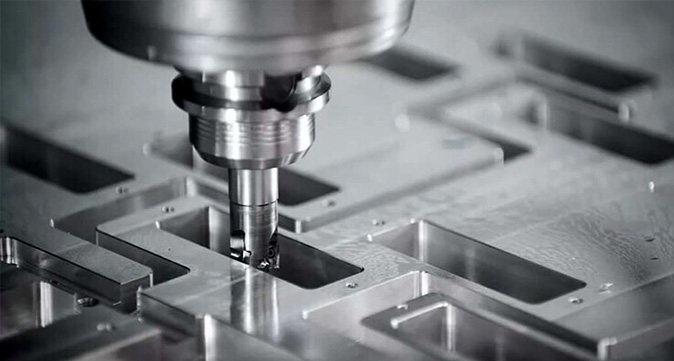
Most industrial components are not deployed immediately in their raw “as-cast” or “as-forged” condition. While casting and forging establish the primary near-net shape and bulk mechanical properties, critical functional features—such as tight-tolerance bearing journals, threaded bolt holes, precision O-ring sealing surfaces, and flat mating planes—must be completed through precision CNC machining.
Combining primary metal forming with secondary CNC machining represents an efficient manufacturing strategy. Forged or cast blanks provide superior material efficiency and bulk strength, while multi-axis CNC milling and turning guarantee micron-level precision.
To explore specialized capabilities, review our dedicated engineering resources:
- CNC Milling for complex contouring and pocketing.
- CNC Turning for symmetrical shafts, rings, and cylindrical forged blanks.
- Aluminum Machining for lightweight cast and forged aerospace components.
- Steel Machining for high-hardness alloy steel forgings.
Why Choose JTR Machine for Cast and Forged Parts?
Selecting an experienced manufacturing partner ensures a seamless transition from initial design to final production. JTR Machine provides comprehensive end-to-end manufacturing solutions tailored to global industrial procurement standards:
- Expert Material Recommendation: Metallurgical guidance on selecting optimal cast iron, carbon steel, stainless steel, or aluminum alloys.
- Design for Manufacturability (DFM): Rigorous engineering review of draft angles, wall thicknesses, fillet radii, and machining allowances.
- Rapid Prototyping: Fast-turnaround casting patterns and CNC machined prototypes for validation.
- CNC Finishing: State-of-the-art 3-axis, 4-axis, and 5-axis CNC machining centers for final precision tolerances.
- Surface Treatments: Comprehensive plating, anodizing, heat treatment, shot blasting, and powder coating.
- Rigorous Quality Inspection: CMM dimensional measurement, ultrasonic testing, X-ray flaw detection, and material spectrometry certification.
- Flexible Production Scale: Seamless scalability from low-batch custom tooling to high-volume mass production.
Frequently Asked Questions
Is forging stronger than casting?
Yes. Forging produces a continuous grain flow that aligns with the external geometry of the part, delivering superior tensile strength, impact resistance, and fatigue life compared to the random dendritic structure of castings.
Why are forged parts more expensive?
Forging requires heavy capital equipment (large hydraulic presses or hammers), high-temperature furnaces, expensive tool steel dies, and greater labor skill, which elevates initial tooling and setup costs.
Is casting cheaper than forging?
For complex geometries and low-to-medium production volumes, casting is generally more cost-effective due to lower initial tooling investments and near-net shape material efficiency.
Which process is better for stainless steel?
It depends on the application. Investment casting is ideal for intricate stainless steel pump impellers and valves, whereas hot forging is preferred for high-strength stainless steel fasteners and structural fittings.
Can aluminum be forged?
Yes. Wrought aluminum alloys (such as 6061, 7075, and 2014) are widely hot-forged for high-performance aerospace structures, automotive wheels, and sports equipment.
What defects occur in casting?
Common casting defects include gas porosity, shrinkage cavities, sand inclusions, cold shuts, and hot tearing, which require rigorous non-destructive testing to identify.
When should I choose forging?
Choose forging when your component is subjected to severe mechanical stress, cyclic fatigue, heavy impact loads, or high-pressure operating conditions where structural failure is unacceptable.
Can forged parts still require CNC machining?
Yes. While forging forms the bulk shape, precision mating surfaces, bearing bores, and threaded fastening holes almost always require secondary CNC machining to achieve strict dimensional tolerances.