
Walk into any die casting facility in Asia, and ADC12 dominates the conversation. In North America, it’s all about A380. Both alloys are workhorses of the die casting industry, but choosing between them affects not just how well the molten metal fills your mold—it also determines how easily the finished casting can be CNC machined to final dimensions.
After producing die castings and performing secondary CNC operations on thousands of parts from both materials, we’ve learned that the “best” alloy depends on the entire manufacturing chain, from mold filling to final cut. Here’s what really matters.
The Real Differences That Affect Both Casting and Machining
Yes, ADC12 has more silicon (9.6-12.0% vs 7.5-9.5%), and A380 packs more copper (3.0-4.0% vs 1.5-3.5%). These differences impact both the die casting process and the subsequent CNC machining:
| Factor | ADC12 | A380 | What It Means for You |
| Die Casting Fluidity | Excellent | Good | ADC12 fills thin walls and complex details more easily, reducing casting defects |
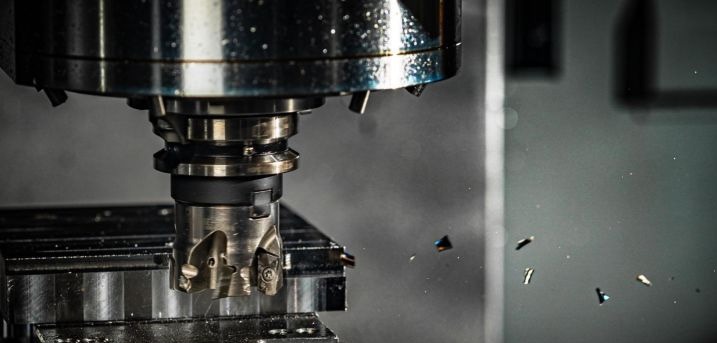
| CNC Tool Wear | 10-15% faster wear | Better tool life | ADC12’s hard silicon particles accelerate tool wear during secondary machining |
| Chip Formation (CNC) | Short, brittle chips | Long, continuous chips | ADC12 evacuates easier; A380 needs chip-breaking strategies |
| Surface Finish (after CNC) | Ra 1.6 μm or better | Ra 1.6 μm or better | Both achieve excellent finishes with proper machining parameters |
| Casting Defects | Gas porosity risk | Shrinkage porosity in thick sections | ADC12 traps air more easily; A380 has more predictable defect locations |
The bottom line? ADC12 casts better but machines slightly tougher. A380 requires more careful die casting parameters but gives you better tool life during CNC operations. Neither is inherently superior—you just need to optimize both processes.
What We’ve Learned About Casting Defects and Machining
Here’s an uncomfortable truth: die castings aren’t perfect, and defects only become apparent during CNC machining. ADC12’s superior fluidity means it fills thin walls and complex geometries more reliably during casting, reducing cold shuts and misruns. But that same fluidity can trap air, creating gas porosity that only shows up when you start cutting.
A380 tends toward shrinkage porosity in thick sections, but these defects are more predictable based on part geometry and gating design.
Our rule: Always machine a test cut on non-critical surfaces first to check for hidden porosity. For pressure-tight applications requiring leak-free performance, we recommend impregnation treatment before final CNC machining—it’s far cheaper than a field failure.
Making the Decision: A Practical Framework
Stop looking for the “better” alloy. Instead, consider your entire manufacturing process:
Choose ADC12 when:
- Your design has thin walls or complex details. The extra silicon improves flow during die casting, filling features that might challenge A380.
- You need extensive CNC machining. While tool wear is higher, the better as-cast surface quality and fewer casting defects mean less rework and scrap.
- Cost matters at high volumes. ADC12 typically runs 5-10% cheaper in Asian markets, and the superior castability reduces die casting scrap rates.
- You’re manufacturing in Asia. Supply chains are established, lead times are shorter, and material certifications are readily available.
Choose A380 when:
- Mechanical strength is critical. Automotive structural parts and safety-critical components need A380’s higher tensile strength (320-380 MPa vs 210-320 MPa).
- You’re supplying North American OEMs. Many specify A380 in their drawings. Matching their spec from the start avoids costly requalification.
- Your parts have thick sections. A380 handles shrinkage better in heavy castings, and the predictable porosity locations make CNC planning easier.
- High-temperature performance is required. A380 retains strength better at elevated temperatures—think engine components and transmission housings.
The Total Cost Picture
Material cost is just the beginning. Here’s what actually drives your bottom line across both processes:
For a 500-gram part, the material cost difference is roughly $0.08-0.15 per piece. But consider the hidden factors:
Die casting side: ADC12’s better fluidity typically reduces casting scrap rates by 1-3%, which adds up quickly at high volumes.
CNC machining side: ADC12’s shorter tool life might cost you an extra $500-2,000 in tooling over a production run, but its better as-cast quality often means less machining time to remove defects.
The formula we use: Total Cost = (Material + Die Casting Scrap) + (CNC Tooling + Machining Time) + (Final Scrap + Quality Risk)
For thin-wall, complex parts requiring significant CNC work, ADC12 usually wins despite higher tooling costs. For thick, simple parts with minimal machining, A380 often proves more economical.
Quick Answers to Common Questions
Can I substitute one for the other? Sometimes, but validate through testing. Check strength requirements, corrosion resistance, and get customer approval for regulated industries. Remember: changing alloys may require die casting tooling adjustments.
Which is better for anodizing? Neither is ideal for cosmetic anodizing. High silicon content creates grayish, uneven finishes. If anodized appearance is critical, consider switching to a wrought alloy like 6061 for CNC-machined parts.
How do I minimize tool wear when CNC machining ADC12? Use carbide tools with TiAlN coatings, maintain cutting speeds of 200-350 m/min, employ climb milling, ensure adequate coolant flow for chip evacuation, and monitor tool wear closely.
Let’s Optimize Your Project
Choosing between ADC12 and A380 isn’t about finding a universally superior material—it’s about matching properties to your application, optimizing both die casting and CNC processes, and balancing total manufacturing cost.
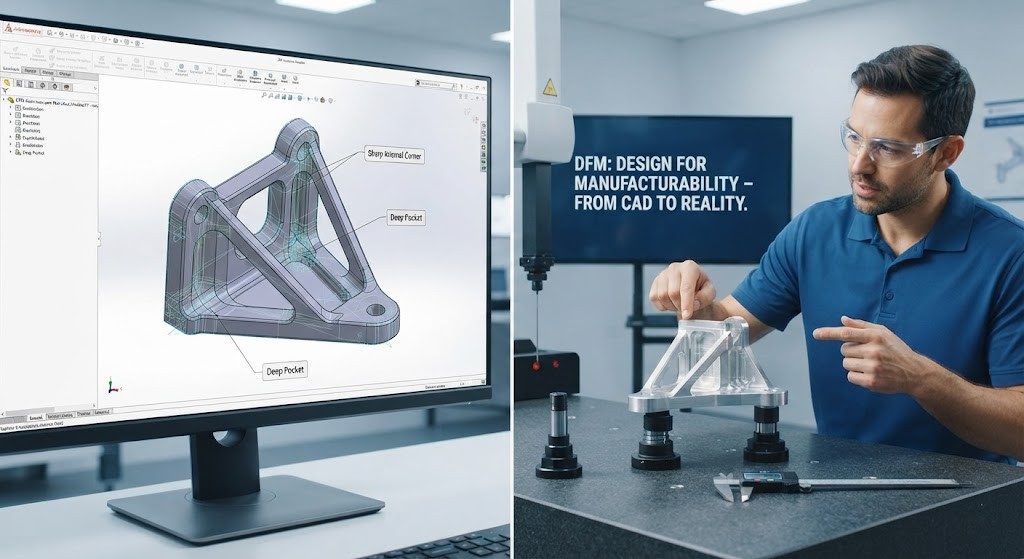
At JTR, we provide integrated manufacturing solutions that span die casting, precision CNC machining, and quality assurance under one roof. Our team offers DFM analysis to help you optimize part design for both casting and machining, ensuring the best balance of performance, quality, and cost.
Ready to make an informed decision? Upload your drawings today, and our engineers will provide expert material recommendations, die casting feasibility analysis, CNC machining strategies, detailed cost breakdowns, and a no-obligation quote within 24 hours.