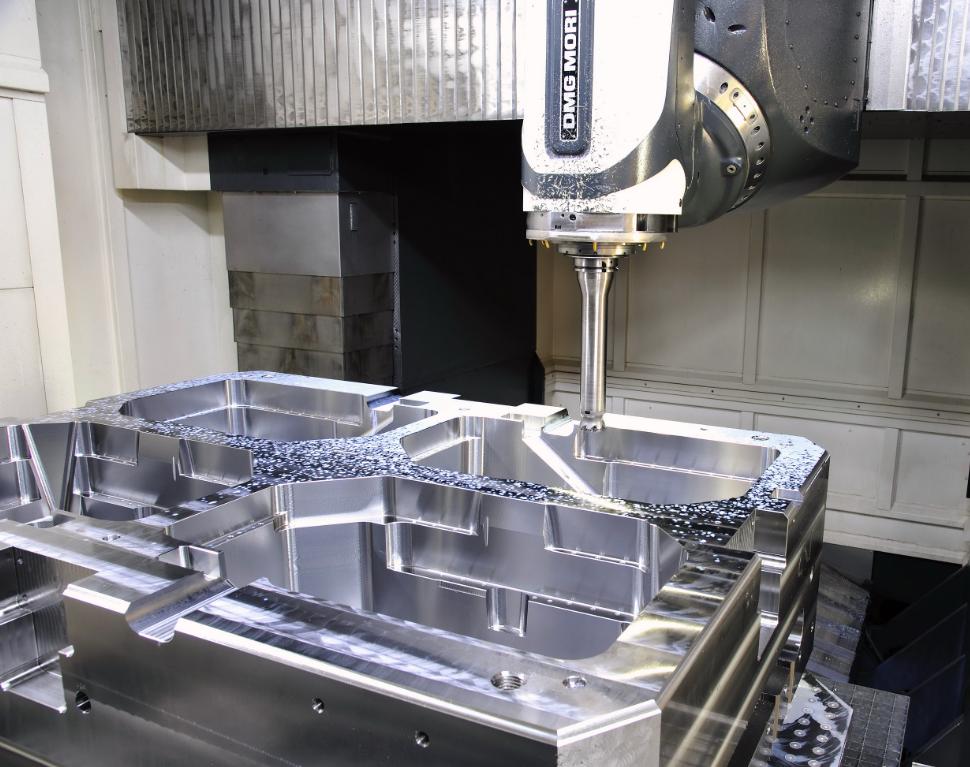


In 2026, even though times have changed, and titanium is still the dominant material, especially Ti-6Al-4V, it is used in the central parts and engines of aircraft. Among the few pros that can be cons of using titanium are the deficient thermal conductivity, the heightened chemical activity, and very low funds for titanium. A lot of these challenges can be associated with aggressive CNC milling, such as rapid tool wear, superficial integrity, and high scrap. These challenges have, therefore, necessitated the adoption of AI-driven CNC machining capabilities so machines can not only run at superior efficiency levels, but also cope with the numerous in-process variations of titanium.
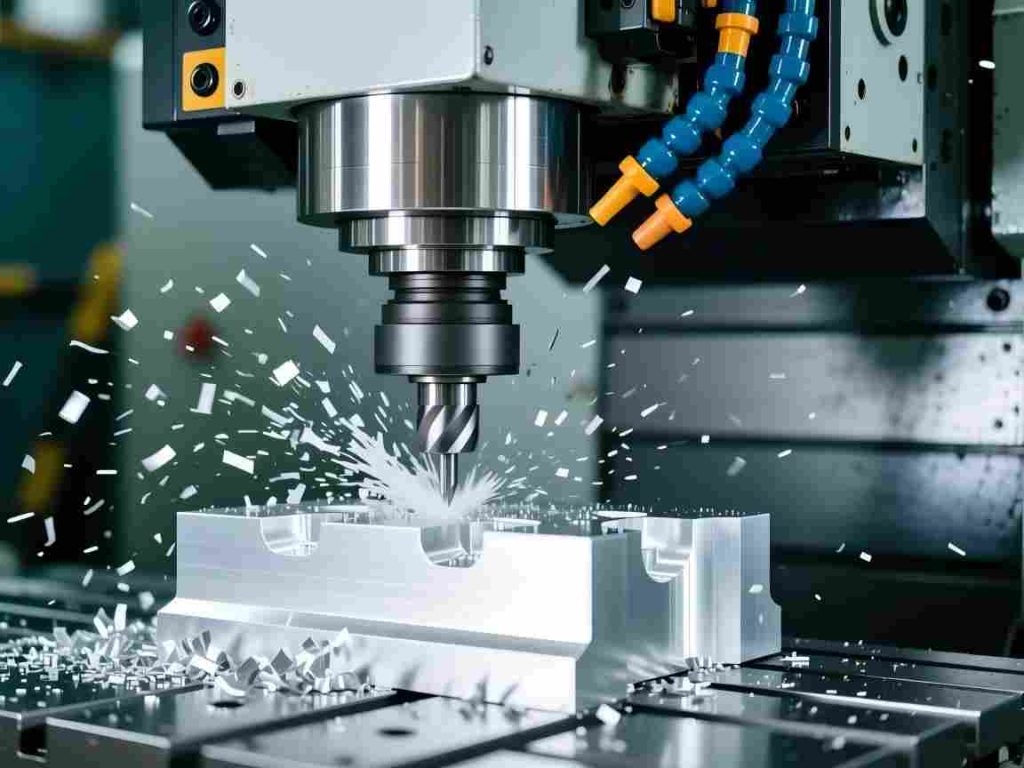
The Architecture of AI-Native CNC Systems
The shift from traditional automation to AI-native systems is defined by the transition from static G-code execution to dynamic, sensor-driven adaptation.
1. Hardware Sensing and Data Acquisition
The foundation of the system is a high-fidelity sensor network. Modern 5-axis machining centers are equipped with:
- Intelligent Tool Holders: With a minimum of 100 kHz wireless transmission frequency, these devices can easily determine cutting forces (Fx, Fy, Fz) and torque (Mz) through integrated strain gauge technology.
- Acoustic Emission (AE) Sensors: These sensors are able to detect the deformative forces and frequency elastic waves that come with the deformation of a tool or a material due to cracking.
- In-situ Thermal Imaging: Infrared sensors monitor the temperature at the tool-chip interface. Since titanium does not dissipate heat effectively through the workpiece, the AI monitors these sensors to prevent thermal softening of the cutting edge.
2. Neural Network Control and Logic
The control layer is built on a deep multimodal architecture. In the context of predictive tool wear monitoring, convolutional neural networks (CNNs) and bidirectional recurrent long short-term memory networks (BiLSTMs) are employed to process sensor-based time-series data. Such architectures offer the self-helping feature as they detect not just the steady wear progress but also the wear failures. The response time of the system is quite short, within 1 millisecond, allowing for real-time modifications to the feed or spindle speeds in order to prevent tool damage from occurring.
Core Applications in Aerospace Manufacturing
1. Adaptive Chatter Suppression AI
Chatter, otherwise known as self-excited vibration, is a leading cause of flaws on thin aerospace section surfaces. Titanium components like the turbine blades have many thin-walled sections, which are as thin as 1.5mm. Chatter in dynamic suppressions of AD takes vibration frequencies that are likely to drive the system, i.e., into instability, into account. In case the system throws out these frequencies, it adjusts the spindle speed to “stable lobe” or modifies the feed rate in order to change the thickness of the chip. This is a real-time process that will prevent dimension tolerance from being exceeded by ±0.01mm.
2. Digital Twin for 5-Axis Milling
The digital twin for 5-axis milling operates as a virtual representation of the actual machining operation. The digital twin in 2026 transforms from a basic visualization instrument into a forecasting system. The system models the material removal procedure while simulating tool and workpiece deflection during cutting operations. The AI system detects operational differences between actual machine sensor readings and digital twin predicted measurements because of material hardness changes and thermal expansion. The system then makes immediate adjustments to the tool path based on these deviations.
3. Hybrid Manufacturing Titanium Parts
The integration of additive manufacturing (3D printing) and subtractive CNC machining, known as hybrid manufacturing titanium parts, has become a standard for complex geometries. In this workflow, a titanium component is near-net-shaped using directed energy deposition (DED) and then finished using high-precision CNC. AI-native systems facilitate this by using 3D scanning to identify the exact geometry of the printed “blank.” The AI then generates a non-uniform tool path that accounts for the varying stock allowance of the 3D-printed part, optimizing the material removal rate while protecting the cutting tool from unexpected impacts.
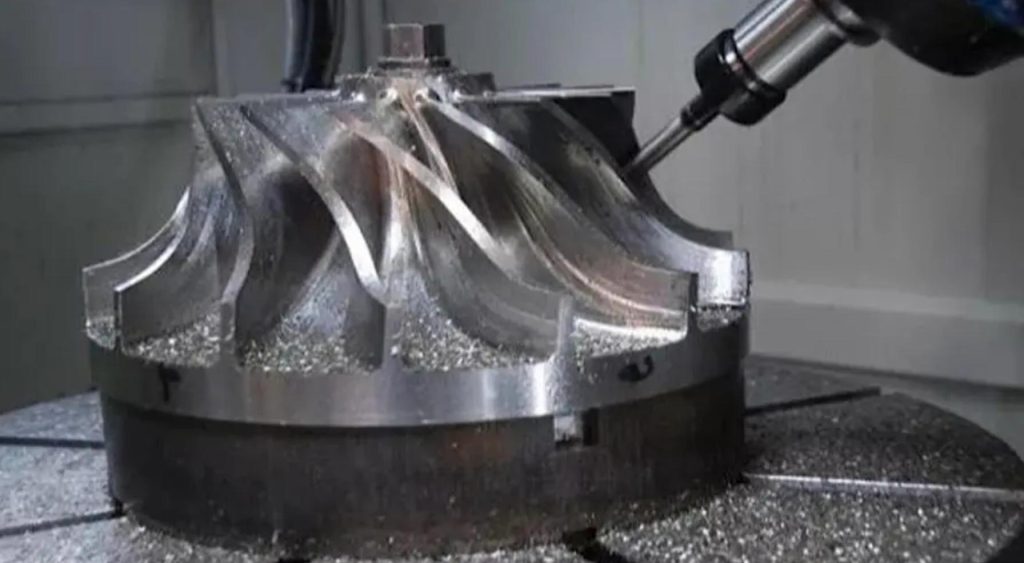
Aerospace Titanium Machining Optimization Strategies
Optimization in 2026 focuses on the synergy between tool geometry, cooling strategies, and AI-driven parameters.
1. Heat Management via AI-Driven MQL
Since titanium’s low thermal conductivity traps heat at the cutting edge, traditional flood cooling is often insufficient. AI-native systems now control Minimum Quantity Lubrication (MQL) systems. The AI calculates the optimal oil-to-air ratio based on the current cutting temperature and tool load. During roughing stages, the pressure is increased to maximize heat dissipation; during finishing stages, the lubricant film thickness is optimized to reduce friction and improve surface finish.
2. Generative Toolpath Logic
Unlike traditional CAM-generated paths, generative toolpath logic uses AI to create its paths, which depend on mechanical stress and thermal accumulation. The AI controls 5-axis operations by maintaining a fixed tool engagement angle throughout the entire process. The system achieves two benefits through its operational methods, which include extending tool life by 40% and creating even residual stress distribution on the titanium part surface.

Sustainability and Economic Impact
Aerospace Tier-1 suppliers must implement Sustainable Green Machining Solutions as their required operational standards. AI achieves sustainable development by decreasing energy usage and minimizing material waste.
1. Carbon Footprint and Energy Efficiency
AI-native systems minimize the carbon footprint of the machining process through:
- Path Optimization: Reducing non-cutting “air-cut” movements by 15-20%.
- Power Management: Regulating peripheral systems (coolant pumps, chip conveyors) so they only operate at the necessary capacity for the current cutting load.
2. Economic Performance Metrics
The following table illustrates the comparative performance of AI-native systems versus traditional CNC methods for a standard Ti-6Al-4V engine casing.
| Performance Metric | Traditional 5-Axis CNC | AI-Native CNC (2026) | Percentage Change |
| Machining Lead Time | 45 Hours | 32 Hours | -28.80% |
| Tool Consumption Cost | $1,200 | $780 | -35.00% |
| Right-First-Time (RFT) Rate | 82.00% | 99.40% | +17.4% |
| Surface Roughness (Ra) | 0.8 μm | 0.4 μm | -50.00% |
| Energy Consumption | 450 kWh | 360 kWh | -20.00% |
Conclusion and Future Technical Direction
The data confirms that aerospace titanium machining optimization is no longer achievable through mechanical improvements alone. The AI-Native CNC machining system provides essential control systems that allow operators to manage the unpredictable behavior of titanium alloys. The research of 2026 will examine autonomous factories that AI systems control to manage the complete manufacturing process from a 3D-printed blank to a certified aerospace component. The aerospace industry will achieve cost-per-part reductions through ongoing development of a digital twin system for 5-axis milling and a predictive tool wear monitoring system, which ensures compliance with strict safety requirements for flight-critical equipment.