

If you have ever been involved in product design that needs to be durable, lightweight, and economical, you have probably researched ABS (Acrylonitrile Butadiene Styrene) plastic. It’s a go-to material across a ton of industries, from automotive dashboards to consumer electronics housings to rapid functional prototypes. ABS is highly praised for its excellent mechanical properties and solid impact resistance, but cutting it on a CNC mill or lathe is not quite the same as cutting a block of aluminium or steel. Plastic behaves differently under cutting forces and thermal stress. If you don’t dial in your parameters correctly, you will quickly end up with warped parts, gummed-up tools, or a melted mess on your fixtures.
In this technical guide, we’ll walk through exactly how to approach CNC machining ABS plastic. We will discuss why this material is a staple in modern manufacturing, how to pick your cutting tools and machine parameters, and most importantly, how to troubleshoot the most common defects engineers and machinists face on the shop floor.

What is ABS Plastic & Why Use It for CNC Machining?
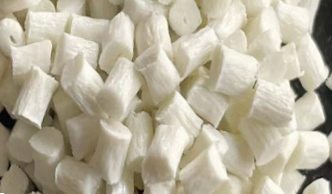
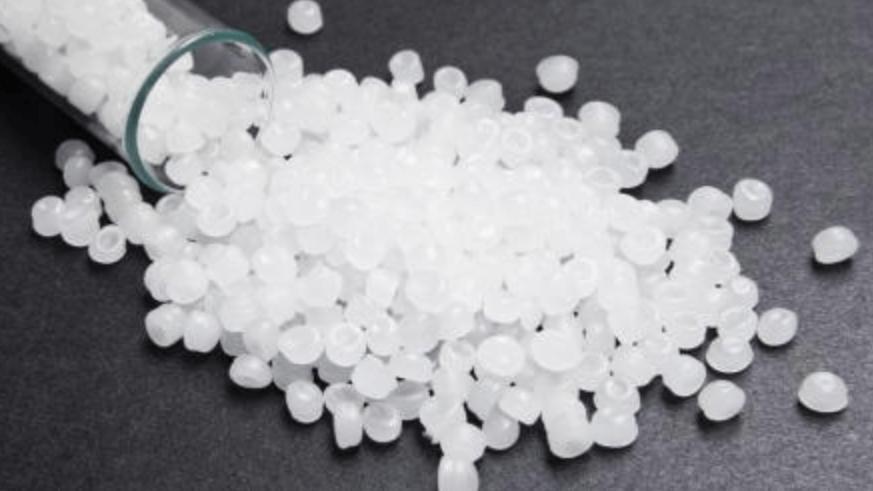
ABS is an amorphous thermoplastic polymer made up of three basic monomers: acrylonitrile, butadiene and styrene. Each of these elements has its strength. Acrylonitrile provides chemical and thermal stability, butadiene is responsible for the impact resistance and toughness, and styrene gives the final plastic a hard, glossy finish. When you combine them, you get a highly versatile engineering plastic that fills the gap between brittle commodity plastics and super-expensive aerospace-grade polymers.
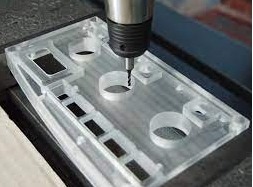
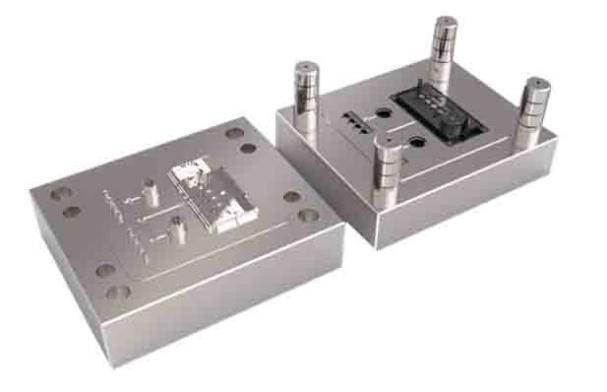
ABS is very popular in CNC machining because it is a subtractive manufacturing process that allows you to achieve extremely tight tolerances and flawless finishes that injection moulding simply cannot match for low to medium volume runs. It holds its shape pretty well under mechanical stress, and it does not chip or crack as readily as acrylics or polycarbonates when your cutting tool hits it.
| Material Type | Impact Strength | Max Operating Temp | Machinability Rating | Best Use Case |
| ABS (Extruded/Molded) | High | Around 80°C – 85°C | Excellent | Electronic enclosures, automotive trim, rugged prototypes |
| PLA | Low to Moderate | Around 50°C – 55°C | Poor (Low melting point) | Basic visual models, 3D printing concepts |
| Nylon (PA6) | Very High | Around 95°C – 120°C | Good (Prone to moisture warping) | Gears, bushings, high-friction mechanical parts |
Basic Considerations for CNC Machining ABS Plastic
To reliably produce clean cuts and exact dimensions from a block of ABS, you have to manage your setup deliberately. You’re not going to just load a standard metal cutting program and hit cycle start. Here’s a breakdown of what you need to look out for before the tool ever touches the material.
1. Selection of Material Grade
Not all ABS blocks are equal. Depending on what your final part is going to be used for, you need to select the correct grade:
- General Purpose ABS: This is your regular stock material. Overall, it offers a good balance of cost, impact toughness and ease of machining. If you are not under extreme thermal or physical stress, this is what you should use.
- High Heat ABS: Regular ABS gets soft fairly quickly when it heats up. High-heat grades are chemically modified to tolerate higher thermal thresholds without losing structural integrity or deforming under load.
- High-Impact ABS: If your part is going to take a beating—like a protective housing for industrial tools or automotive bumper components—this grade maximizes structural durability and absorbs shocks.
Always purchase your raw stock from reputable suppliers that guarantee material consistency. Poorly extruded plastic blocks often have internal residual stresses from the cooling process, which will cause the part to warp as soon as you start removing material.
2. Tool Selection & Coating
Plastics require sharp cutting edges to shear the material clean, not to plough through it. Dull tools create friction, and friction generates heat, which is the ultimate enemy of ABS.
- Tool Material: Uncoated carbide tools are the industry standard for CNC machining ABS. Carbide holds a much sharper edge than High Speed Steel (HSS) for a lot longer. HSS is good for quick, low-demand jobs, but it dulls quickly when faced with the abbrasive nature of some plastic additives.
- Tool Geometry: Use single-flute or two-flute end mills specially designed for plastics. The tools have large flute valleys to allow the large plastic chips to escape immediately and prevent them from wrapping around the tool.
- Coatings: Titanium Nitride (TiN) or Diamond-Like Carbon (DLC) coatings do wonders for ABS. They reduce the coefficient of friction on the cutting face and allow chips to slide right off the tool, dropping heat levels significantly.
3. Optimal CNC Machine Parameters
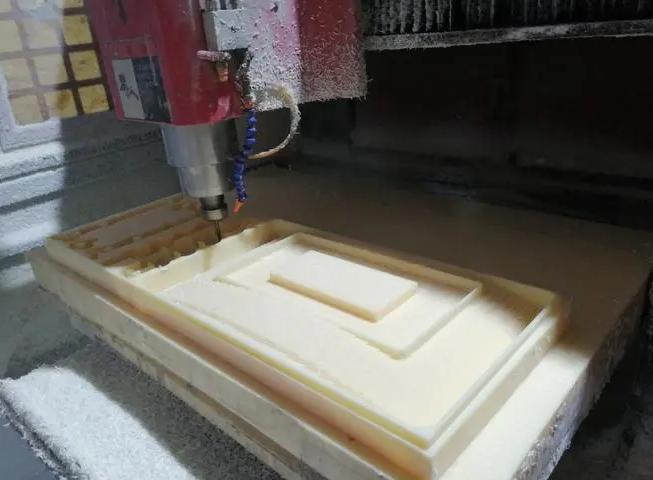
Finding the right speeds and feeds keeps the plastic below its glass transition temperature. Here are some baseline parameters to shoot for:
- Spindle Speed: Don’t over-speed. If you run your spindle too fast, you will melt the ABS. Try to stay in the range of 2,000 to 5,000 RPM, depending upon the size of your tool. Higher running speeds can be used with smaller tools, and lower running speeds should be used with larger tools.
- Feed Rate: Keep the tool moving so it does not dwell in one spot and heat up the material. A balanced feed rate of 50 to 200 inches per minute (IPM) works extremely well. Go too slow, and you melt the part; go too fast, and you risk chipping the edges.
- Depth of Cut (DoC): Perform shallow, controlled passes. The depth of cut is kept between 0.010 and 0.050 in. to maintain low cutting forces so the tool will not deflect, and internal stress buildup in the workpiece is stopped.
4. Cooling and Lubricating Strategy
Even with optimized parameters, you still need a way to clear chips and keep temperatures down. Water-soluble coolants are especially effective for flood cooling in high-speed operations because they wash away chips immediately. If a liquid coolant setup is messy or a limitation of your machine, a continuous blast of compressed air directed right at the cutting zone is your next best option. It keeps the tool cool and pushes chips out of deep pockets so you don’t recut them. Another option is mist cooling, which is a happy medium, providing sufficient lubrication without flooding the enclosure.
5. Methods of Workholding & Fixturing
ABS isn’t as stiff as metal. If you clamp it too hard in a standard vise, you will crush or deform the material, and when you release it, your finished part will be out of tolerance. For thin-walled parts or large sheets, vacuum fixtures are recommended, as they provide completely uniform holding pressure over the entire surface. If you must use a vise, use custom soft jaws machined to match the contour of your raw stock to distribute the clamping force evenly.
Troubleshooting Common Issues in ABS CNC Machining
Even machinists who are experienced run into hiccups when running plastic parts. Let’s look at the four most common defects and how to fix them on your shop floor.
Problem 1: Surface Finish and Tool Marks
Root Cause: This is usually the result of a dull tool, a feed rate that is not matched, or chips that get stuck in the cut zone and scratch the walls.
The Fix: Inspect your tool edge under magnification. Switch to a new, sharp carbide bit. If the tool is rubbing the plastic instead of cutting, increase your feed rate slightly to ensure you are cutting clean chips. Also, make sure your air blast or coolant line is aimed directly at the cutting edge to evacuate chips immediately.
Problem 2: Melting of ABS and Burrs
Root Cause: The cutting edge is producing way too much thermal energy. This is due to excessive spindle speeds (RPM), tool dwelling or a complete lack of cooling.
The Fix: Lower your spindle speed and raise your feed rate so that the tool moves away from the generated heat quickly. Never allow a tool to stop or slow down within a cut path. Make sure your coolant or air blast is turned up all the way.
Problem 3: Dimension Not Accurate (Out of Tolerance)
Root Cause: Plastics expand at a much higher rate than metals when heated. If the block gets warm while machining, it expands, you cut it to size, and it shrinks back down once it cools on the bench, leaving your part undersized.
The Fix: Use proper flood or mist cooling to keep the part cold. Make sure to calibrate your CNC machine regularly, and always let your raw ABS stock acclimatize to the ambient temperature of your machine shop for at least 24 hours before you start cutting.
Problem 4: Warping and Distortion of the Materials
Root Cause: Attributable to residual internal stresses in the plastic block, uneven thermal dissipation or excessively aggressive deep cuts on one side of the part.
The Fix: Think about annealing your raw ABS stock before machining. This is done by heating the plastic slowly in a controlled oven and allowing it to cool very slowly to relieve any internal stress in the manufacturing process. When machining, don’t try to remove all the material at once. Use multiple shallow passes and spread your toolpaths evenly over both sides of the part so the material tension stays balanced.
Frequently Asked Questions
Q1: Can I use normal 3D printing ABS filament blocks for CNC machining?
A1: Highly recommend you don’t. 3D printed blocks often contain micro voids, layer lines and pockets of air that render them unstable and susceptible to cracking or tearing during CNC cutting. Always buy solid ABS stock blocks that are extruded or injection moulded for precise machining.
Q2: What is the absolute best way to avoid burrs when cutting ABS?
A2: The best way to eliminate burrs is to keep your cutting tools razor-sharp and maintain an aggressive enough feed rate so that the tool continuously shears crisp chips rather than rubbing the material. If the tool rubs, it heats up the edges and causes the plastic to roll over into a burr.
Q3: Is liquid coolant absolutely required for machining ABS plastic?
A3: No, you don’t absolutely need liquid coolant, but you do need some way to control temperature and clear chips. A high-pressure blast of compressed air is typically more than adequate to blow chips out of the way and keep the tool cool as long as your spindle speed and feed rates are properly set.