

The industrial manufacturing industry in 2026 still relies heavily on precision CNC machining as the key technology when developing high-performing parts for the aerospace, medical, and semiconductor industries. The biggest problem faced by project managers is the massive cost difference between small batch prototyping and mass manufacturing. It is important to understand the technical factors that make up the cost differences. This article analyzes the mechanical and economic factors of CNC cost estimation and provides actionable strategies for cost reduction.
The Engineering Cost Model of Precision CNC Machining
The total cost of a CNC machined part is the sum of fixed preparation expenses and variable execution costs. To manage a project effectively, one must break down these figures into three primary categories.
1. Fixed Pre-Production Costs (Setup)
Before a machine cuts any material, significant engineering hours are invested.
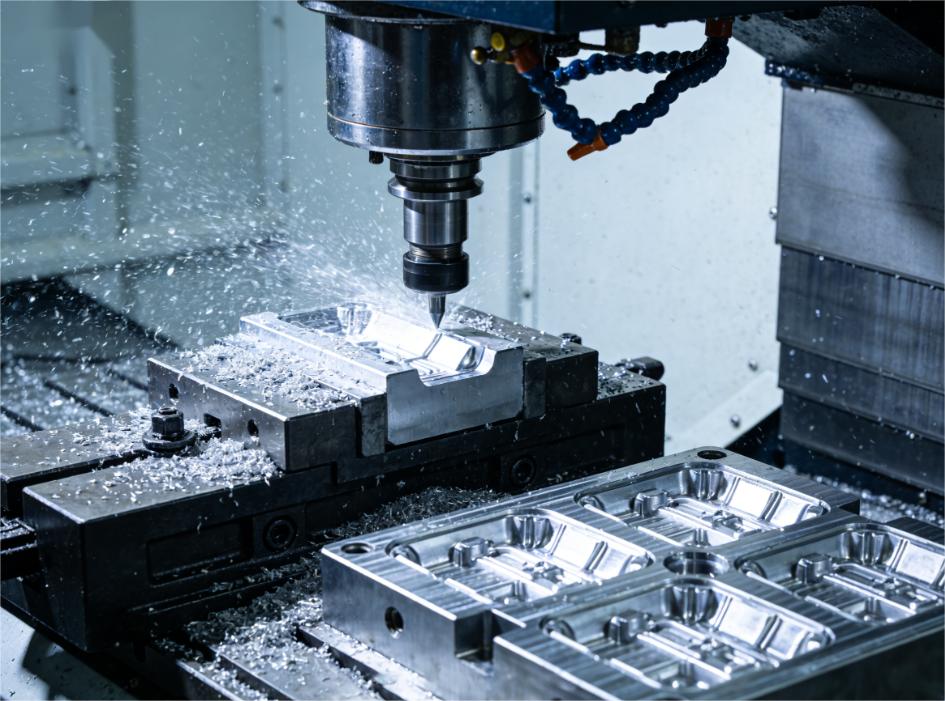
- CAM Programming: A manufacturing engineer must use Computer-Aided Manufacturing (CAM) software to define toolpaths, spindle speeds, and feed rates based on the 3D CAD model. Complex geometries require more hours of programming, which is billed as a flat professional fee.
- Machine Setup and Calibration: This involves the physical installation of work-holding devices (vises, fixtures) and the loading of specific cutting tools into the machine’s carousel. For high-precision parts, the technician must perform “dialing in” to ensure the workpiece coordinate system is aligned within microns.
2. Variable Production Costs (Run Time)
Once the “Cycle Start” button is pressed, costs accrue based on time and consumption.
- Machine Hourly Rates: Different machines command different rates. A standard 3-axis vertical machining center (VMC) may cost between $40 and $70 per hour, whereas a 5-axis simultaneous machine or a Swiss-type lathe can exceed $120 per hour due to higher capital depreciation and maintenance requirements.
- Material Removal Rate (MRR): Machinability is also an important factor in defining a cycle time. For example, machining Grade 5 Titanium (Ti-6Al-4V), cutting speeds and feeds, are far less than those of 6061-T6 Aluminum, and hence, the machine standstill time is longer, and the costs are increased.
3. Quality Assurance and Inspection
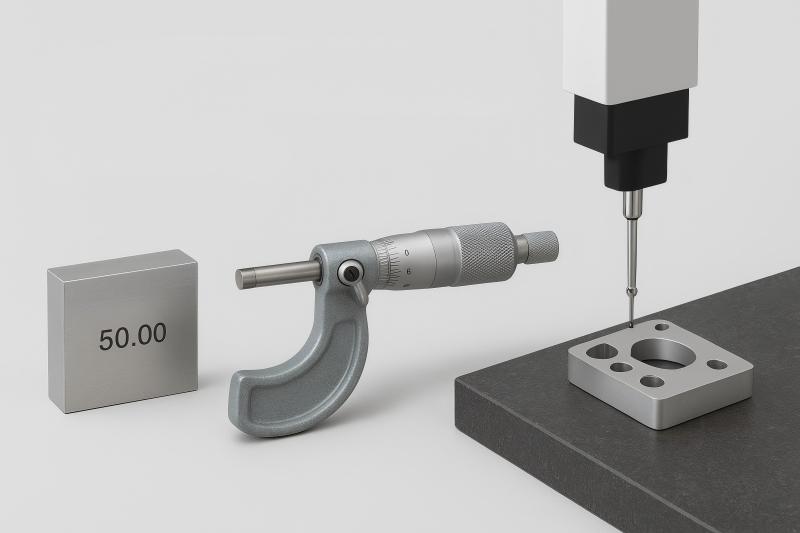
Precision machining is characterized by its tolerance level. To reach a tolerance of ±0.005 mm, there is a need for inspection equipment like CMM. The metrology laboratory process takes up billing hours in the project’s cost structure.
Why Low-Volume Orders Command High Unit Prices
Project managers often observe that the unit price for 5 prototype parts is exponentially higher than the unit price for 1000 pieces. This is a result of the Amortization Gap.
1. The Setup Amortization Effect
Consider a project with a fixed setup and programming cost of $600 and a variable machining cost of $20 per unit.
- For 1 unit: The unit price is $620
- For 100 units: The unit price is $26
- For 1000 units: The unit price is $20.6
In low-volume production, the fixed engineering costs dominate the total invoice. As volume increases, the impact of the setup fee approaches zero, and the price converges toward the raw material and machine time cost.
2. Changeover Efficiency and Opportunity Cost
For a CNC shop, the most profitable state is “spindle-on time.” Small batches require frequent machine stoppages for retooling and recalibration. These “changeovers” represent lost production capacity. To maintain profitability, shops must apply a premium to small batches to compensate for the machine downtime.
3. Prototyping Risk and Yield
The first unit produced (the First Article) carries the highest risk of non-conformance. Errors in programming or tool offset calibration are usually identified during the initial run. In high-volume orders, the cost of one or two scrapped parts during setup is negligible. In a five-piece order, a single scrapped part represents 20% of the inventory, necessitating a higher risk-adjusted price.
Practical Strategies for Project Managers to Reduce Costs
Project managers can utilize the following Design for Manufacturing (DFM) and strategic sourcing guidelines to simplify the procurement of CNC precision machining services.
Rule 1: Minimize Setups through Design
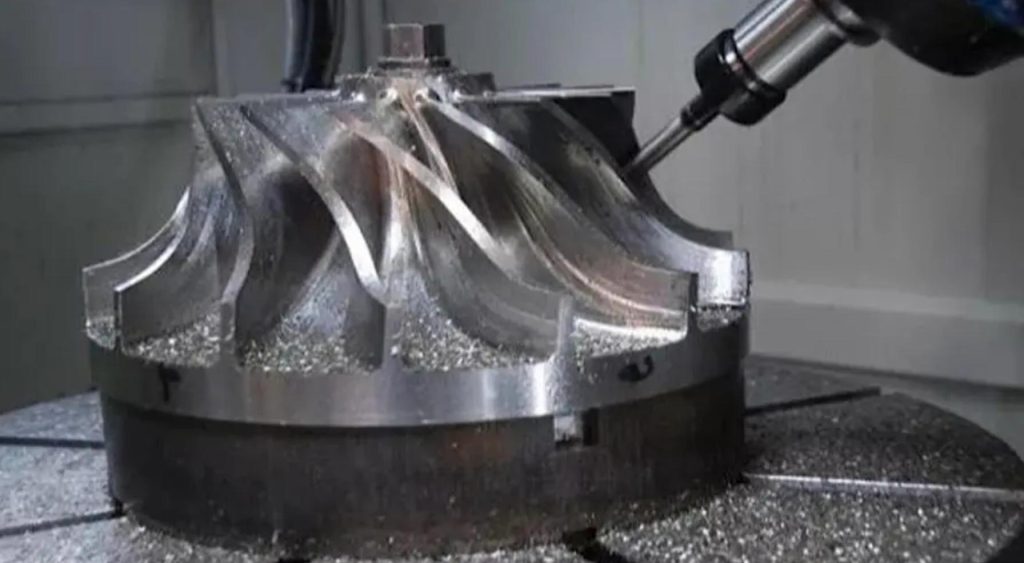
The more times the piece has to be turned around or transferred to another machine, the higher the cost. The designer should look for shapes that can be manufactured in one setup only. When a part is supposed to be machined on six faces, it needs six set-ups. Using 5-axis machining can consolidate these setups, but the higher hourly rate of the machine must be weighed against the labor savings.
Rule 2: Implement Differential Tolerancing
A common error in engineering is applying a “blanket tolerance” (e.g., all dimensions ±0.01 mm) to an entire drawing. Project managers should ensure that high precision is reserved only for critical mating surfaces or bearing fits. Non-functional features should use standard tolerances (e.g., ±0.1 mm), which allows for faster cutting speeds and reduced inspection time.
Rule 3: Optimize Internal Geometry
CNC tools are round. Designing internal square corners requires specialized secondary processes like EDM (Electrical Discharge Machining) or the use of extremely small diameter end mills at slow speeds. Increasing internal corner radii allows for larger, more rigid tools to be used, which increases the material removal rate and lowers cost.
Rule 4: Leverage Blanket Purchase Orders
Whereas, if there were a requirement for 1,200 units of the component annually, however, the project demands delivery on a monthly basis at the rate of 100 units, the project manager would give the “Blanket Order.” In this way, the company can produce the entire lot of 1,200 units in one lot while dispatching monthly.
Future Trends in CNC Cost Models (2026–2027)
The economic landscape of CNC precision machining is undergoing a transition driven by hardware automation and software integration. Between 2026 and 2027, three primary factors are expected to redefine how manufacturers calculate costs for both prototyping and mass production.
1. AI-Driven Automated Quoting and CAM
The traditional cost of “Programming” is decreasing as AI-integrated CAM (Computer-Aided Manufacturing) software becomes standard. These systems automatically recognize geometric features and assign optimal toolpaths without manual intervention. For project managers, this means the “Fixed Setup Cost” for complex geometries will stabilize or decline, making low-volume production more financially viable.
2. Expansion of Lights-Out Manufacturing
The implementation of robotic pallet changing technology and automation for tool handling is what enables plants to run “lights-out” at times of low demand. The reduced need for manual labor during the time that the machine runs means shops will incur lower machine-hour charges for larger batches. This trend shifts the cost weight further toward material and energy consumption rather than manual oversight.
3. Digital Twin Integration and Risk Mitigation
Advanced simulation through Digital Twin technology allows manufacturers to verify the entire machining process in a virtual environment before the first cut. This significantly reduces the “Risk Premium” associated with expensive materials like titanium or specialized alloys. Through removes the high cost of physical “trial and error” and First Article failures. Manufacturers can offer more aggressive pricing on high-precision high-risk projects.
FAQ: Frequently Asked Questions
Q1: How does the choice of material specifically affect the hourly machine rate?
A1: The material does not change the base hourly rate of the machine, but it changes the “consumables” and “time” components. However, materials that are harder, such as Stainless Steel 316 or Inconel, have higher tool-wearing rates compared to carbide, necessitating that the cost of changing tools be included in the quotation. In addition, owing to their slower cutting rates, such materials will take longer processing time, hence more billed hours.
Q2: What is the standard lead time for small batch CNC precision machining?
A2: The time between placing an order and the dispatch of a batch of 1 to 10 parts is around 2 to 4 weeks. These need 2-3 working days for material preparation, 1-2 days for programming, and the rest is devoted to planning the machine operation. If referred to as “express” and may cut down this duration to 3-5 days through an additional fee of 50-100% over the standard one.
Q3: Does 5-axis machining always cost more than 3-axis machining?
A3: Yes, when it comes to hourly costs. However, if you have to run a workpiece five or six times on a 3-axis machine because of its complexity, then 5-axis machining is going to save you money since you won’t have to pay for the labor costs associated with setup and fixture-making.