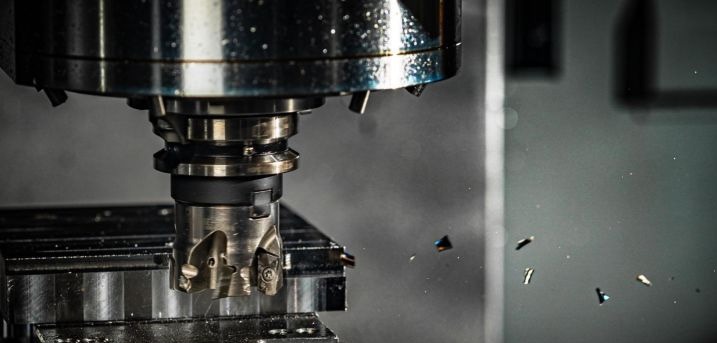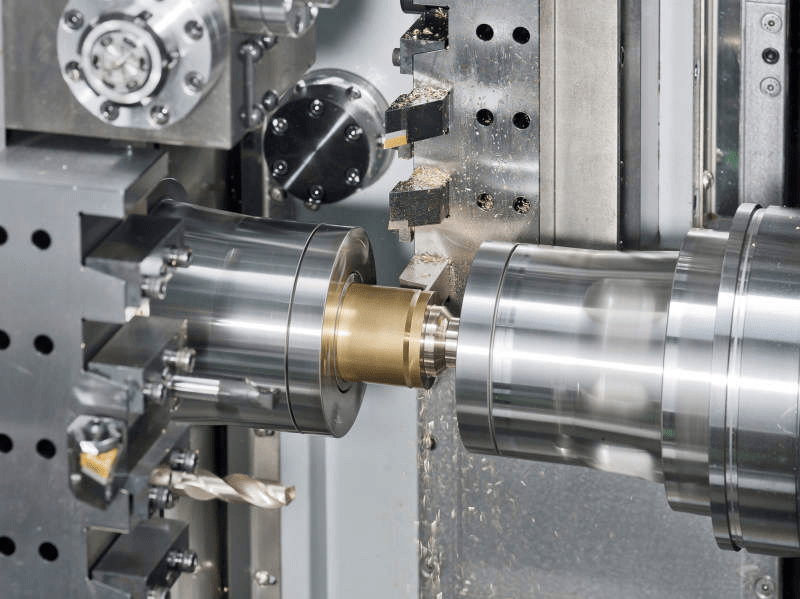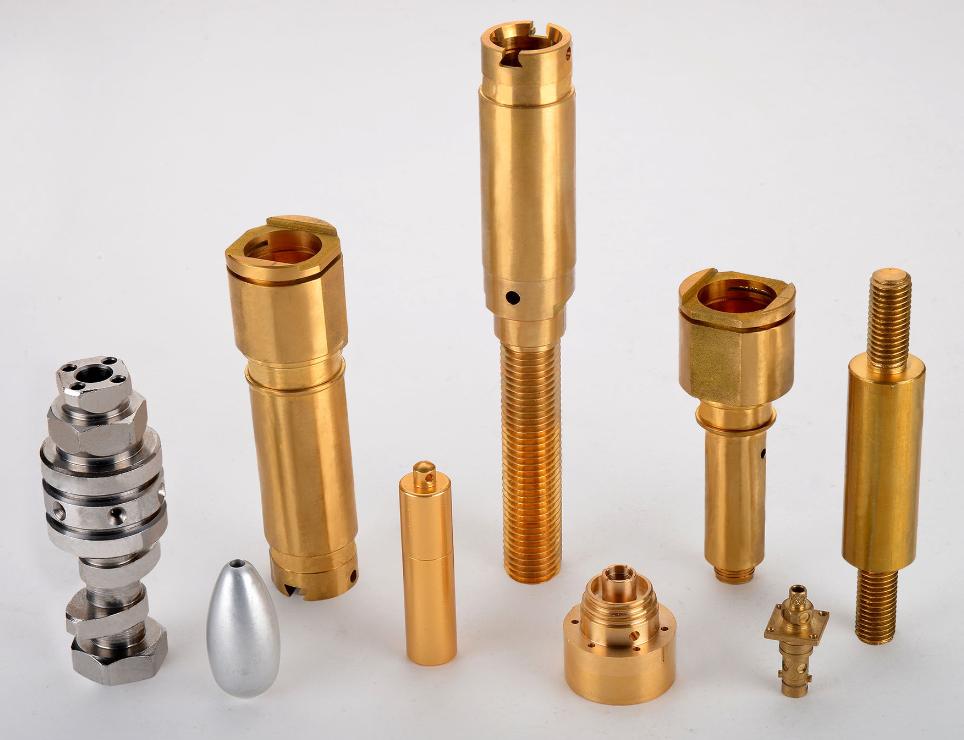

Mill-Turn CNC machines, which combine turning and milling in one setup, have become a key part of modern manufacturing in a world that is changing quickly. With these high-tech devices, you may configure them to do several tasks without moving the workpiece. CNC programming is at the heart of this new idea. Specifically, it is the combination of G-Code programming for controlling motion and M-Code programming for managing machine state. As manufacturers look for ways to be more efficient, accurate, and automated, it is more important than ever to know the difference and how G codes and M codes work together.
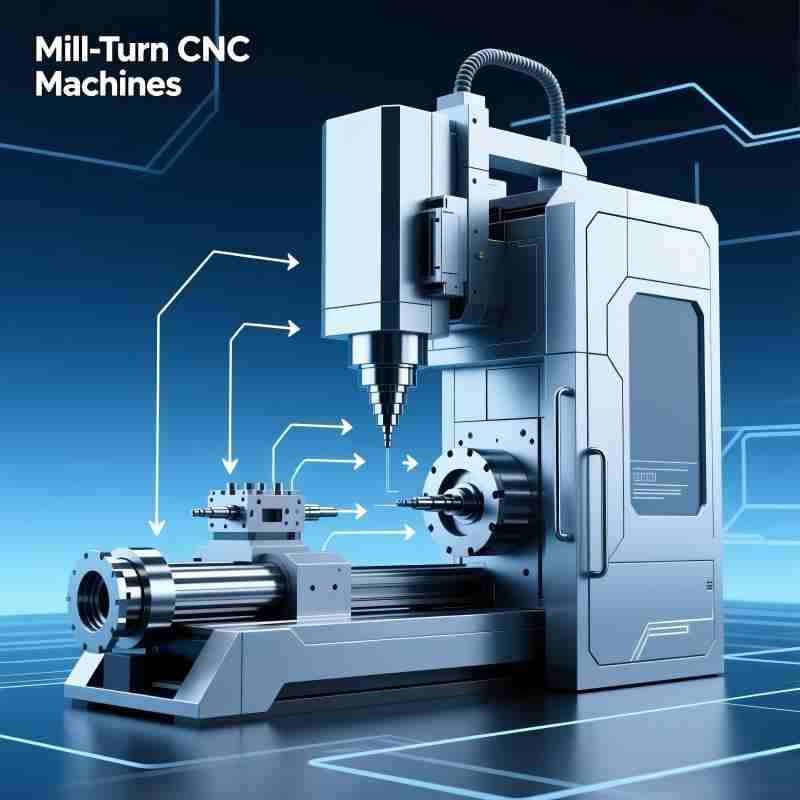
What is Mill-Turn CNC and Why It Matters
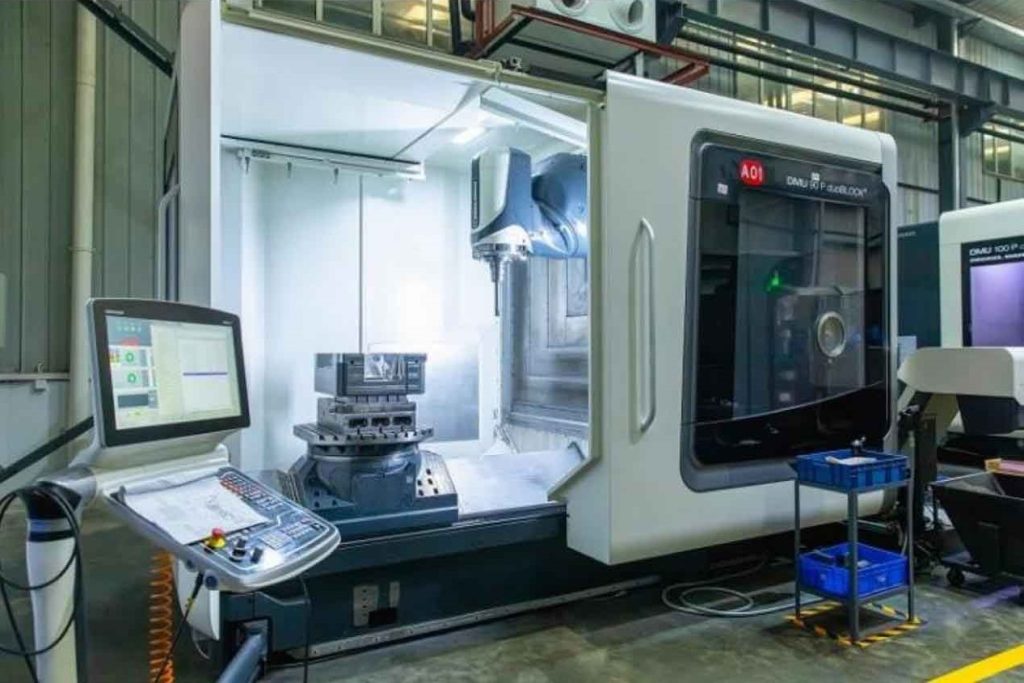
A Mill-Turn CNC machine has both a lathe and a milling center built into one platform. With typical setups, a workpiece has to be transported between various machines for turning and milling. Mill-Turn machines, on the other hand, allow for single-setup programming, which means that several operations can be done without having to re-clamp.
The advantages are substantial:
- Reduced cycle time: Eliminates the downtime between separate machine setups.
- Improved precision: Maintaining a single alignment throughout all operations minimizes cumulative errors.
- Greater complexity: Capable of machining intricate components that would be difficult or impossible on conventional equipment.
Modern Mill-Turn machines work perfectly with CNC programming systems, so it’s important to be able to quickly and easily produce G/M code. Engineers now use CAM software and AI optimization tools together to automate code development, which makes sure that tool paths and machine control are always accurate.
Understanding G-Code and M-Code
To fully leverage Mill-Turn CNC capabilities, one must understand the core programming languages that drive these machines: G-code and M-code.
G-Code Programming (Geometric Control)
G-codes are the backbone of CNC motion control. They dictate:
- Tool path direction
- Feed rates
- Spindle speed
- Precise coordinates for each cut
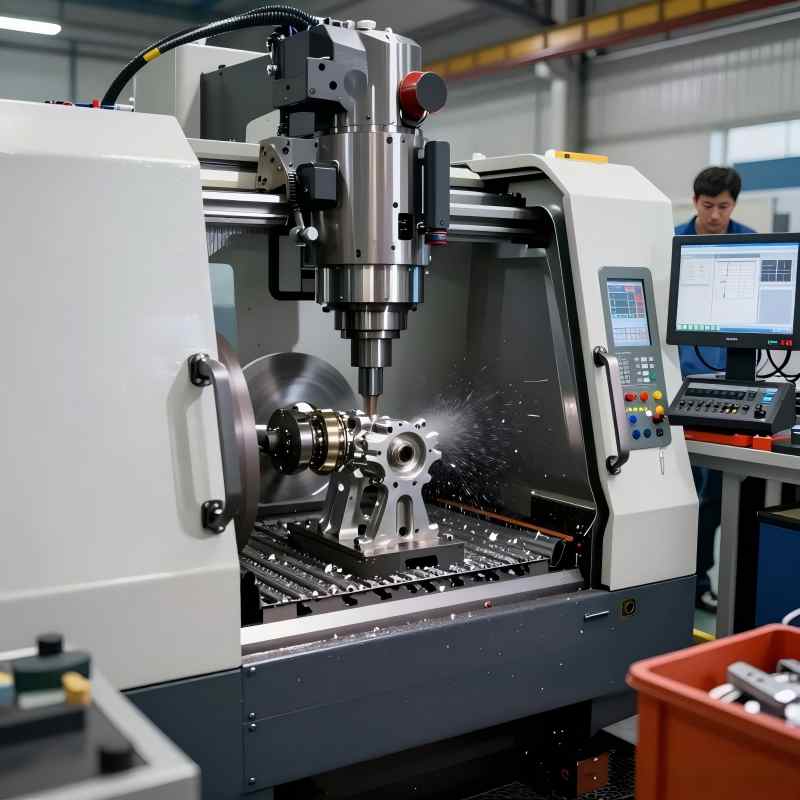
In real life, G-code is like the machine’s “steering and accelerator,” guiding the cutting tool along very specific paths. Recent improvements in AI have made it possible to automate G-code optimization. This finds the best tool routes, cuts down on wear and tear on cutting tools, and speeds up cycle times without sacrificing accuracy.
For instance, AI-assisted G-code may now be used to program a complicated aeronautical part with pockets, holes, and exterior profiles. The AI will automatically identify the best entrance and exit points, cutting speeds, and feed rates.
M-Code Programming (Machine State Control)
While G-codes handle geometry, M-codes manage machine functions, including:
- Spindle start/stop
- Coolant activation
- Tool changes
- Auxiliary devices such as laser cutters or robotic arms
Think of M-codes as the “car lights, air conditioning, and windshield wipers” of a CNC machine: they don’t move the tool but ensure the environment and machine state are correct for operation.
Modern Mill-Turn systems expand M-code functionality to integrate with industrial IoT devices. Sensors, robotic tool changers, and laser systems can all be controlled via M-codes, allowing a seamless multi-process workflow within a single setup.
G-Code vs M-Code: Key Differences
| Feature | G-Code (Geometric) | M-Code (Miscellaneous) |
| Primary Function | Controls motion: paths, speed, coordinates | Controls machine state: spindle, coolant, auxiliary functions |
| Analogy | Driver’s steering wheel and accelerator | Driver’s lights, air conditioning, and windshield wipers |
| Modern Evolution | AI-optimized tool paths, collision avoidance | Integration with sensors, robots, and laser cutting systems |
| Programming Focus | Motion accuracy, feed rate, tool trajectory | Safety, state control, auxiliary devices |
In fact, effective Mill-Turn programming depends on a precise interaction between G-codes and M-codes. The integration has become more complicated in 2026 because of larger automation needs, multi-axis operations, and programming help from AI.
Single-Setup Programming and Multi-Process Automation
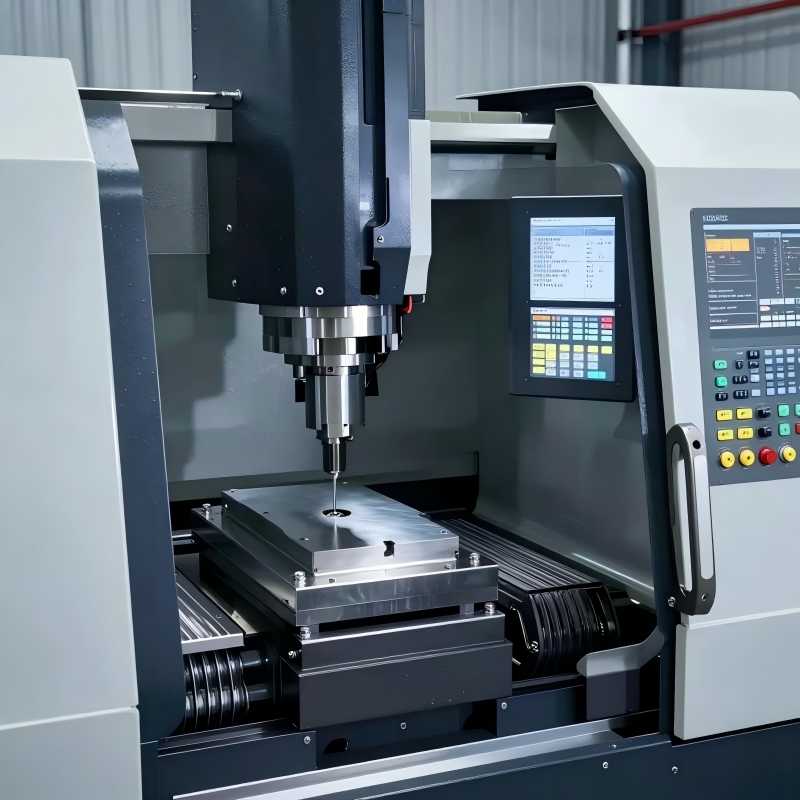
One of the most significant advancements in Mill-Turn CNC technology is the single-setup programming approach. By consolidating all machining operations into a single workpiece setup:
- Errors due to multiple clamping steps are eliminated
- Cycle times are significantly reduced
- Complex geometries can be machined efficiently
AI plays a crucial role here. Using intelligent CAM software, engineers can automatically generate both G-code and M-code sequences for a complete machining operation. The software can:
- Determine optimal tool paths and cutting sequences
- Schedule spindle speeds and feed rates dynamically
- Integrate M-code operations for coolant, tool changes, and auxiliary functions
- Simulate the entire process to identify collisions or inefficiencies
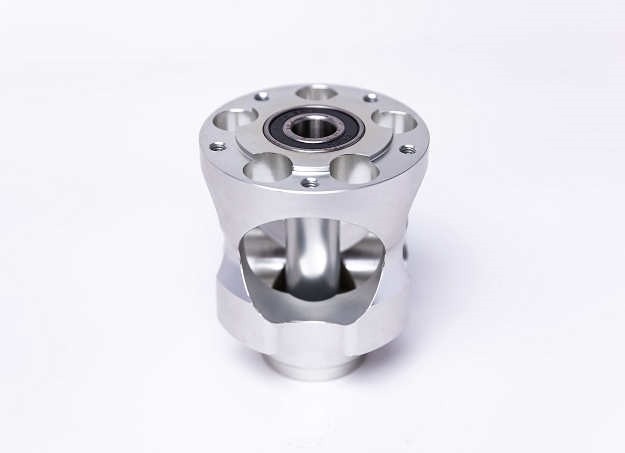
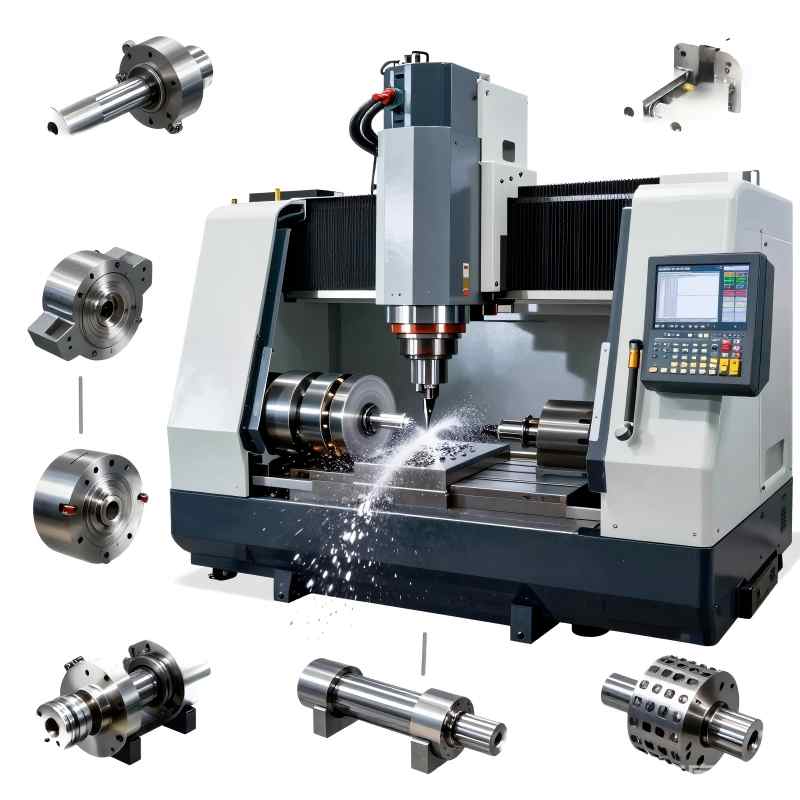
Industries that benefit most include aerospace, medical devices, and automotive, where precision and reliability are critical. Components like turbine blades, orthopedic implants, and engine parts are now routinely machined in a single Mill-Turn setup.
Emerging Trends in Mill-Turn CNC Programming
The CNC programming landscape continues to evolve. Key trends include:
- AI-driven G-code optimization: Reduces cutting time, predicts tool wear, and improves energy efficiency.
- Expanded M-code integration: Controls IoT-connected devices like sensors, automated tool changers, and robotic arms.
- Multi-axis machining: Advanced 4-axis and 5-axis Mill-Turn operations are increasingly common, requiring more complex G/M code programming.
- Data-driven decision support: Real-time monitoring and adaptive controls are incorporated into the programming workflow, making the system smarter and more responsive.
These trends underscore a shift from traditional manual programming to intelligent, automated CNC processes, aligning with Industry 4.0 principles.
Best Practices for Efficient CNC Programming
For manufacturers seeking to implement Mill-Turn CNC systems effectively:
- Plan G/M code sequences carefully: Ensure that motion commands (G-code) and state commands (M-code) are correctly synchronized to avoid collisions or process errors.
- Leverage CAM and AI tools: Automated code generation saves time and reduces human error.
- Validate single-setup programs: Use simulation software to verify tool paths and machine states before actual production.
- Monitor machine and tool performance: Integrate sensors and feedback loops controlled via M-codes to ensure optimal cutting conditions.
- Invest in training: Skilled operators familiar with both G-code and M-code programming principles are essential for high-efficiency production.
By following these best practices, manufacturers can achieve higher throughput, reduced waste, and improved part quality.
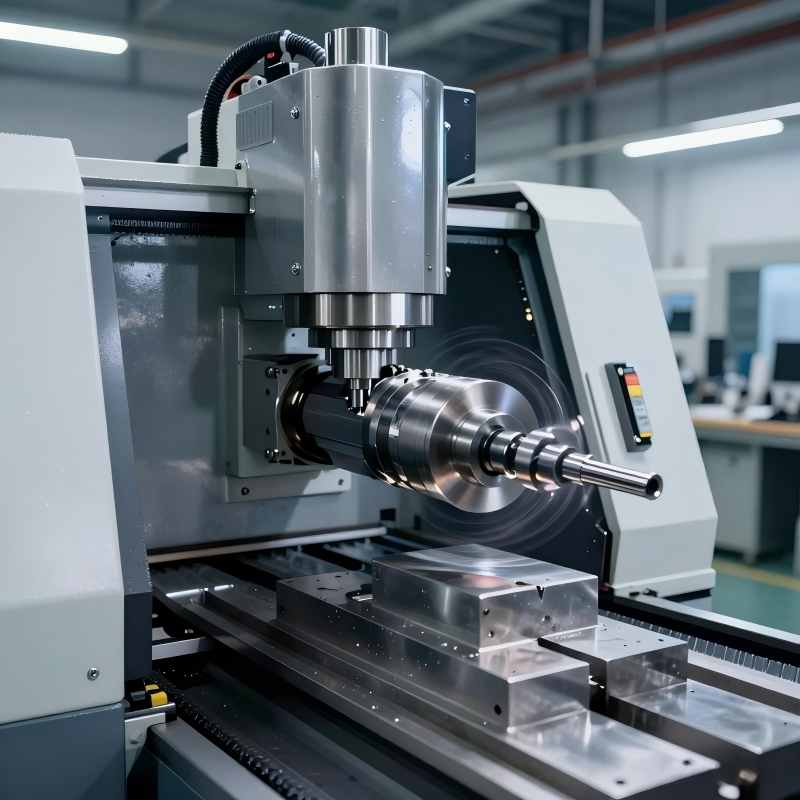
Mill-Turn CNC machines represent the future of precision manufacturing. The machines achieve their exceptional efficiency, accuracy, and automation capabilities through their ability to perform turning and milling operations within a single setup using advanced G-code and M-code programming.
As IMTS 2026 shows, AI-driven code optimization, single-setup programming, and IoT-connected M-code operations work together to change CNC operations. Manufacturers who follow these trends will achieve a competitive edge because they can produce intricate parts with greater speed, safety, and improved accuracy.
FAQs
Q1: What is the difference between G-code and M-code?
G-code controls geometric motion while M-code manages machine states and auxiliary functions. Both are essential for Mill-Turn CNC efficiency.
Q2: How does single-setup programming improve Mill-Turn CNC efficiency?
It eliminates multiple clamping steps, reduces errors, and allows complex multi-process operations in a single setup.
Q3: Can AI automatically generate G-code for complex parts?
Yes. AI-assisted CAM software can generate optimized tool paths and feed rates for multi-axis operations, saving time and improving accuracy.
Q4: What industries benefit most from Mill-Turn CNC machines?
Aerospace, automotive, medical devices, and high-precision industrial manufacturing.
Q5: How do M-codes control additional machine functions?
- codes operate auxiliary functions such as spindle control, coolant, tool changes, robotic arms, and sensors, ensuring safe and efficient machining.