

You’ve just finished a production run of aluminum die castings, only to find the same familiar defects during inspection: tiny internal voids or irregular cavities concentrated in thick-wall sections. For engineers and production teams working with aluminum die casting, porosity and shrinkage are the two defects that silently eat away at yield rates, inflate costs, and delay product launches.
These defects are far more than cosmetic issues. Internal cavities in structural or pressure tight components can cause field part failure—a risk no manufacturer can afford. The difference between a stable die casting process and one constantly fighting defects lies in understanding how these flaws form and how to control them.
This guide walks through fundamental causes of die casting porosity and shrinkage in aluminum die casting, practical avoidance measures and a rapid troubleshooting reference table—everything you need to turn detect fire-drills into controlled, systematic improvements.
The Hidden Enemies: Revealing Porosity and Shrinkage in Casting
You have to tell the difference before you can remedy the problem. Both are internal holes, but they are created in totally different ways—and that means they respond to different corrective methods.
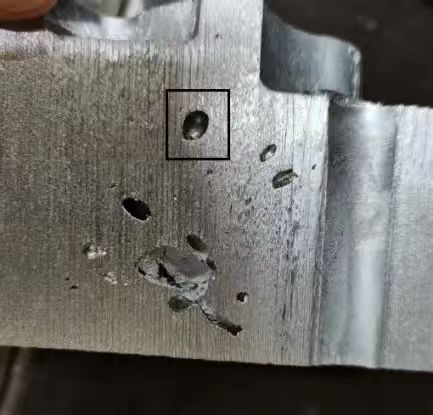
Identifying Gas Porosity in Die Castings
Gas porosity refers to voids caused by trapped gas rather than solidification shrinkage.
- Appearance: Smooth, rounded voids that are often nearly spherical. In cross section they appear like bubbles.
- Typical locations: Scattered throughout the portion, or at places where gas is likely to build.
- Root cause: Turbulent filling and trapped air during high-speed injection. Also, incompletely vaporized die lubricants can also release gas at the melt front, causing die casting porosity that is almost impossible to remove by adjustments of downstream processes alone.
Understanding Shrinkage in Aluminium Die Casting
Shrinkage occurs naturally as aluminum contracts during solidification.
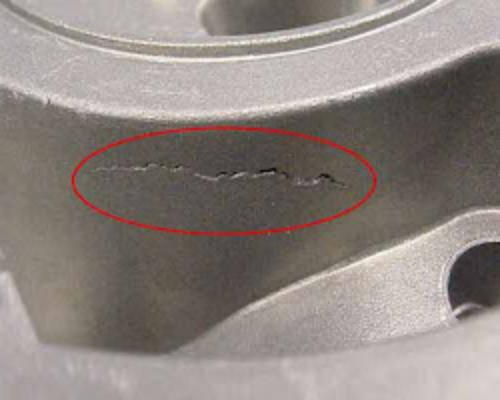
- Appearance: Not smooth, rough, with irregular, jagged-walled voids. Often described as “spongy” under microscope.
- Typical locations: Thick sections and thermal hot spots where solidification occurs last.
- Root cause: When the outer shell solidifies first and seals off the interior, there’s no more liquid metal to feed the shrinking core. The result is shrinkage porosity—internal voids formed when the solidifying metal can no longer be properly fed.
Proven Strategies to Prevent Trapped Gas and Die Casting Porosity
Once gas porosity has been identified as the problem, the corrective levers are clear:
1. Optimize Venting and Overflow Systems
Sufficient vent channels are a must. The vents allow displaced gas to escape from the chamber in advance of the advancing melt front. Overflow wells are located at the end of fill routes. They have a dual purpose, they gather the coldest, most gas-saturated metal, and also act as additional venting locations.
2. Control Injection Speed
The injection velocity profile is among the most powerful variables in die casting defect troubleshooting. A sluggish first stage fills the runner and gate without turbulence. A fast second stage fills the cavity swiftly to prevent premature solidification. Modern high-tonnage cold chamber machines allow precise multi-stage injection control, which considerably decreases the quantity of entrapped air during the initial fill phase.
3. Vacuum Die Casting Application
When parts require zero tolerance on internal porosity (like automotive hydraulic bodies or aerospace brackets), vacuum-assisted die casting is often the most effective solution. You evacuate the cavity to near-zero pressure before injection to greatly reduce trapped gas and internal porosity.
4. Proper Die Lubrication
Excess lubricant on die surface contributes moisture and organic material that evaporate on contact with molten aluminum. Reduce spray volume, extend blow-off time, and maintain die temperatures above 180°C before injection to ensure complete volatilization.
Tackling Aluminum Casting Shrinkage Head-On
Shrinkage flaws need another set of solutions—methods designed to govern the way the part solidifies, not just the way it fills.
Optimizing Solidification Control in Aluminum Die Casting
- Strategic Cooling Lines: Cooling line placement is just as important as the cooling capacity itself. The water lines are placed in the thick-wall area to improve local solidification, promoting directional solidification toward the gate, so that the gate may provide liquid metal to the shrinking core until it is completely solid.
- Optimize Gate Design: Gates that are too small may solidify too early and do not allow feeding until the core of the part has formed. Thicker gates and longer intensification pressure time keep the feeding route open longer. Proper gate dimensions help in feeding during solidification and increase the effective time of intensification pressure—directly lowering shrinkage in casting.
- Choose the Correct Alloy: Not all aluminum alloys shrink the same. ADC12 and A380.0 are good choices for intricate and thin wall geometries that flow nicely. If hot tearing or solidification cracking is an issue, a modified or higher silicon alloy may be a preferable option in areas of the casting. Matching alloy to part geometry is one of the most under-utilized levers for decreasing aluminum casting shrinkage at the design stage. The JTR material library includes the complete set of aluminum, zinc and magnesium alloys, so engineers can optimize material selection together with the geometry.
A Quick Guide to Die Casting Defects Troubleshooting
The reference table below summarizes several common die casting defects, their likely causes, and immediate corrective actions that can help stabilize part quality quickly.
Quick Defect Troubleshooting Reference
| Defect Observed | Potential Root Cause | Immediate Floor Action |
| Smooth, round voids or surface blisters | Trapped air/gas; excessive lube; blocked vents | Reduce die lube; clean vents/valves; adjust slow-shot speed |
| Spongy, irregular holes in thick sections | Cooling contraction; poor metal feeding; local hot spots | Increase local cooling; raise intensification pressure; extend holding time |
| Bumps or blisters appearing after heat treatment or baking | Expanding trapped gas under heat (Hidden Gas Porosity); moisture residue | Reduce water-based lube; increase vacuum extraction; extend die blow-off time |
| Shallow “dents” or depressions on flat exterior surfaces | Internal contraction pulling the skin (Surface Shrinkage / Sink Marks); localized hot spots | Spot-cool the hot area; increase injection pressure; reduce cycle time slightly |
The table above summarizes quick corrective actions commonly used on the production floor. But if you find that parameter modifications aren’t making the faults go away—or the problem keeps coming back—the actual cause may be deeper. A broader process review may be necessary:
1. Evaluate Melt Quality
A major control on subsurface porosity is the solubility of the hydrogen gas in the melt. Regular rotary degassing and proper flux treatment help maintain melt cleanliness and reduce hydrogen-related porosity. Poor furnace maintenance can undermine other process improvements.
2. Check Die Temperature Distribution
Before and after production, use an IR thermal imaging camera to map the die face. Hot places mean that the cooling is not good enough, cold zones mean that the cooling is too much or that the water circuits are obstructed. The temperature of the die is not uniform, causing gas and shrinkage faults directly.
3. Review Part Geometry With Your Engineers
Some defects originate from part design rather than process settings. Thermal nodes are inevitable due to abrupt change in wall thickness, blind pockets and sharp internal corners. Design changes such as adding draft angles, smoothing wall transitions, or repositioning ribs can often eliminate persistent defects that machine parameter adjustments alone cannot solve.
Turn Your Aluminum Casting Problems into Production Success
If you are battling casting shrinkage or nagging gas porosity, these problems do not have to be a permanent expense of doing business. The answer is a combination of three things: precise mold design, equipment capability and disciplined heat management. Line them all up together and your defect rates go down.
Choosing the right manufacturing partner is critical for controlling die casting defects consistently. JTR Machine provides a complete range of die casting services, including both hot chamber and cold chamber die casting processes.
If you want to learn more about other common defects of aluminum die casting and their solutions, please read our guide: 9 Perfect Solutions for the Defects of Aluminum Die Casting. If you’re looking for a manufacturing partner that can optimize your present design for castability, or just produce consistent high quality aluminum die castings, contact JTR for a free manufacturability review and quote.