

Look around any industrial sector, and you’ll see that surface finishing is a massive deal—it’s what gives products their vital protection, sharp looks, and functional edge. Chrome plating and nickel plating are two of the biggest heavy hitters in this space. Both do a great job of enhancing the look, durability and overall performance of a material, but they behave very differently under the hood. If you are an engineer, material scientist or sourcing professional, you really need to understand the chemical, mechanical and compliance differences to make the right decision on the shop floor.
What is Chrome Plating?
Chrome plating—or chromium plating, if you want to be formal—is an electrochemical process where we deposit a super-thin layer of chromium onto a metal part. It all kicks off with some incredibly meticulous cleaning and prep work on the base metal to make sure everything sticks perfectly. Next, the part takes a dip in an electrolytic bath loaded with chromium ions, and we run an electric current through it to get those ions to bond to the surface.
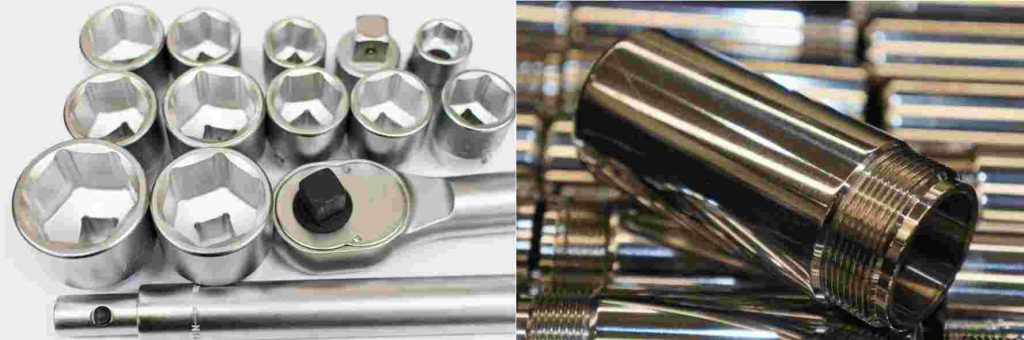
What you get is a seriously hard, shiny metal layer that offers stellar corrosion resistance and bumps up the part’s surface hardness. Engineering-wise, the big win here is a remarkably low coefficient of friction along with world-class resistance to scratches, wear, and abrasion. End result? A slick, mirror-like finish that looks gorgeous and stands up to brutal wear and corrosion.
Where Do We Use It?
- Automotive Industry: Think bumpers and front grilles—it gives rides that premium, high-end look while shielding them from the elements.
- Around the House: Your faucets, handles, and kitchen gear often get the chrome treatment to add a sleek, elegant touch to everyday items.
- Industrial Machinery: We throw chrome onto specific moving parts to jack up their durability and cut down friction.
- Aerospace: It’s trusted on critical aircraft components to help them survive incredibly harsh operational environments.
What is Nickel Plating?
Nickel Plating (Nickel Electroplating) is the process of applying a layer of nickel on your metal substrate with a water-based electrolyte solution. It’s almost like chrome plating, where you dip the part into a bath, in this case, one of nickel salts, then apply an electric current to plate the nickel ions onto the surface. Nickel is an extremely versatile metal that has the best corrosion resistance and good wear properties.
Nickel is a great conductor of electricity; it’s so ductile, and you end up with such a uniform coating thickness that we love it from an engineering point of view. The new nickel coating provides tough wear and corrosion protection for dozens of industries. Not only does it present a bright, warm, silver-like finish that mimics stainless steel, but it’s also a favourite for looks and high-performance function.
Where Do We Use It?
- Electronics: Electrical connectors, switches, and board components rely heavily on nickel to keep conductivity high and corrosion at bay.
- Automotive Industry: You’ll find it deep inside the engine on parts like pistons and cylinders because it handles wear like a champ.
- Household Goods: Faucets and doorknobs use nickel to strike that perfect balance between style and long-term durability.
- Aerospace: Aircraft parts use nickel plating to fight off brutal corrosion and handle intense, high-temperature environments.
Head-to-Head Technical Breakdown: Chrome Plating vs. Nickel Plating
To make an objective call on these surface finishes, you’ve got to look closely at the mechanical properties, costs, and real-world performance metrics of both coatings. Here’s a direct, side-by-side comparison:
| Technical Property | Chrome Plating | Nickel Plating |
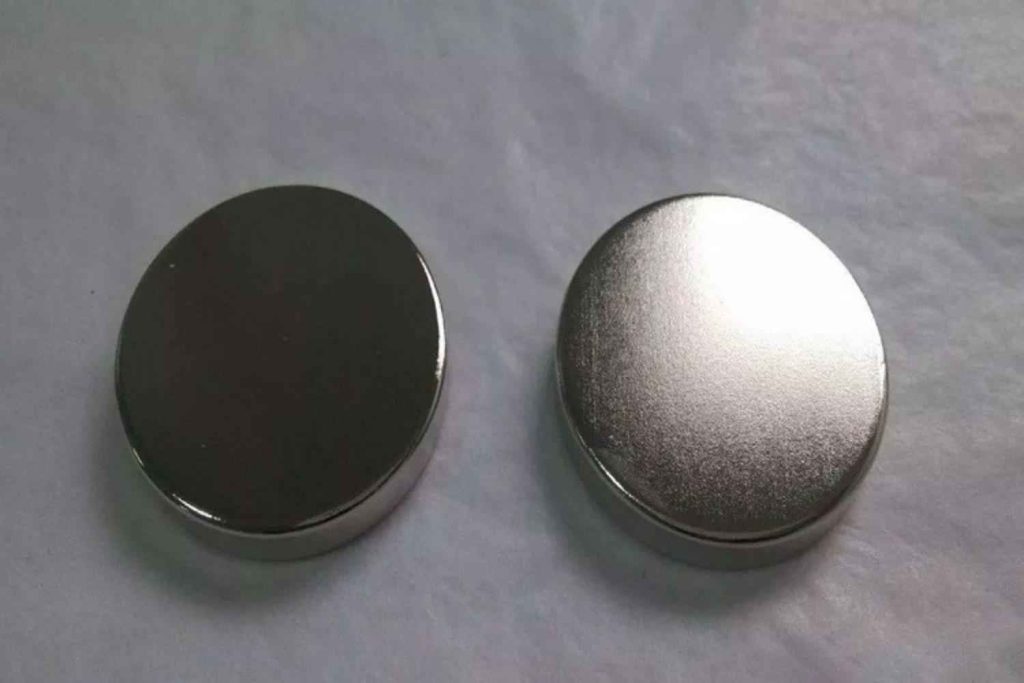
| Look & Feel | Mirror-like, ultra-reflective, with a cool blue-white hue | Subdued, warm, silver-like tone (very close to stainless steel) |
| Hardness & Wear | Massive surface hardness; unmatched scratch and friction resistance | Moderate-to-high hardness; handles heavy-duty abrasion incredibly well |
| Ductility & Stress | Low ductility; can snap or crack if the base metal flexes or bends | Highly ductile; holds its ground perfectly under stress and bending |
| Electrical Conductivity | Fairly decent/moderate conductivity | Excellent electrical conductivity—perfect for flawless signal transfer |
| Thickness Capabilities | Thickness bottlenecks make it tough to build up heavy, thick layers | Easily builds up thick, uniform, and structurally consistent layers |
The Real-World Challenges & Environmental Hurdles
Let’s get real for a second: comparing industrial plating isn’t just about performance—it’s also about dealing with shop-floor bottlenecks and strict regulatory compliance.
The Hard Truth About Chrome
- The Regulatory Headache: Old-school chrome plating relies heavily on hexavalent chromium, which brings major health and environmental risks to the table. It’s highly toxic and carcinogenic, meaning you need serious safety gear, dedicated treatment setups, and airtight disposal protocols to avoid contamination.
- Thickness Limits: Trying to lay down a thick chrome layer is a massive uphill battle, which can rule it out for extreme, heavy-wear industrial environments.
- Cost Factor: Because of the specialized chemistry and heavy-duty gear required, chrome can get pretty pricey, especially when scaling up production.
The Downsides of Nickel
- The Allergy Issue: Quite a few people are sensitive to nickel and break out in allergic reactions from direct skin contact, which can completely sideline its use for certain consumer-facing products.
- Waste Management: Nickel processes spin off waste and liquid effluents that require proper chemical treatment so you don’t pollute the local environment.
- Geometry Bottlenecks: Getting a perfectly uniform finish with nickel can be surprisingly tough compared to chrome, especially if you’re working with complex part geometries that have deep recesses or tight corners.
How to Make the Final Call
Choosing between chrome and nickel really comes down to balancing your mechanical needs, your budget, and environmental rules. Here’s a quick checklist to guide your decision:
- Form vs. Function: Look closely at what this part actually does. If it’s a high-visibility, decorative piece that needs serious scratch resistance and a glossy mirror look, chrome is your best bet. But if it’s a hard-working component that needs top-notch electrical conductivity, high ductility, or a thick defensive barrier, go with nickel.
- The Aesthetic Vibe: What look are you going for? Chrome serves up a brilliantly bright, ultra-reflective flash, while nickel delivers a much softer, classy, silver-like tone.
- Compliance & Green Rules: Don’t overlook the environmental footprint. Because regulations on hexavalent chromium are so tight, you’ll need to look into alternative eco-friendlier plating methods or find suppliers who have their compliance completely locked down.
- The Bottom Line: Check your project budget. Chrome plating almost always costs more than nickel because the process chemistry is highly complex and waste management is a heavy lift.

Frequently Asked Questions
Q1: Does chrome plating cost more than nickel?
A1: Yeah, chrome is typically going to cost you more than nickel plating. That higher price tag comes down to a few major operational factors: wrestling with complex hexavalent chromium chemistry, investing in hardcore environmental and health safety setups for compliance, dealing with lower deposition efficiency, and spending more time prepping the substrate.
Q2: Which one actually wins on corrosion resistance?
A2: Honestly, both do an awesome job protecting parts against corrosion, but they handle it in completely different ways. Chrome provides phenomenal protection against raw weather and oxidation because it creates an ultra-hard, chemically non-reactive outer shell. On the flip side, nickel gives you incredibly dependable, long-term corrosion protection for heavy-duty engineering applications—especially when parts are bending, flexing, or dealing with thermal expansion, because nickel’s high ductility stops the protective layer from cracking.