

How do you know if a batch of gravity castings you have received are any good? It’s not always easy to tell, especially if you’re not on the manufacturing floor monitoring every pour. A single missed defect can mean downstream machining issues, assembly failures, or worse, field returns from customers.
This article walks you through six practical quality indicators you can use when evaluating gravity castings, along with a quick overview of what visual inspection can and cannot tell you. These principles should offer you a clearer sense of what to look for whether you are sourcing castings for the first time, or trying to improve your incoming quality check procedure.
Why Visual Inspection Still Matters
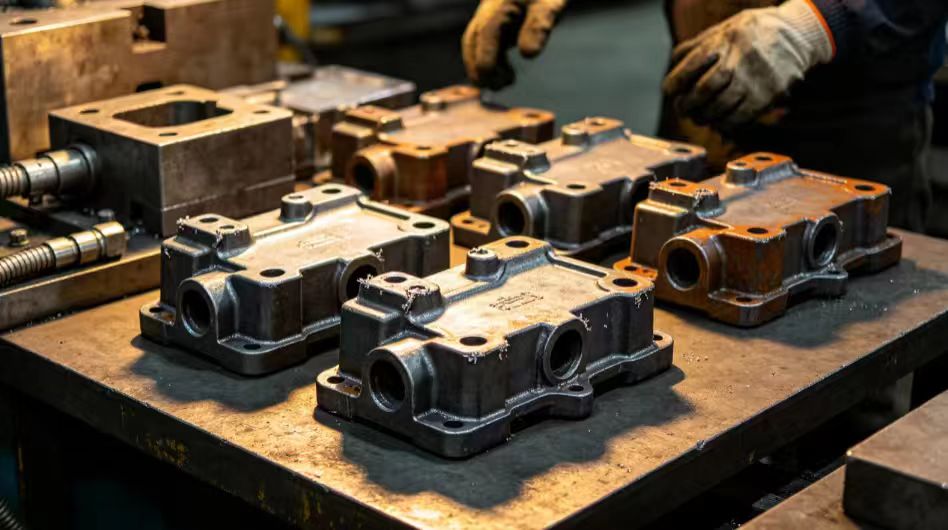
Visual inspection is usually the first thing anyone does when a casting lands on the table, and there is a good reason for that. It is rapid, requires no special equipment and can immediately reveal evident manufacturing defects, such as too much flash, surface fissures or rough surfaces that indicate process faults. It’s like a short filter before anything else can occur.
That said, gravity casting visual inspection has its limits. It cannot reveal internal porosity, mechanical strength, or dimensional accuracy. It should always be used in conjunction with more formal testing methods for critical applications. But the trained eye sees a lot more than people give it credit for as a first step.
6 Signs of a Well-Made Gravity Casting
Before jumping in, it is worth noting that no single indicator tells the full story. These six signs work best together. If you see several of them in combination across a batch, that is usually a good sign of solid process control.
1. A Smooth and Consistent Surface Finish
A well-made gravity casting should have a uniform surface appearance and texture. That means a uniform texture throughout the part and no patches of too much roughness and grinding marks that are minimal and uniformly spread out where they do show up. Variations in surface finish or unusually rough areas may indicate inconsistencies in the casting process and deserve closer inspection.
2. Clean Parting Lines and Minimal Flash
Parting lines are unavoidable in any casting process, but in a quality casting, they should be thin and even. Flash (the thin layer of metal that sometimes bleeds out along the mold seam) should be limited in extent and easy to remove without leaving a noticeable mark. Heavy or inconsistent flash often indicates mold misalignment or worn tooling. It is not just a cosmetic problem — it can also affect downstream machining and assembly fit.
3. No Visible Porosity or Surface Defects
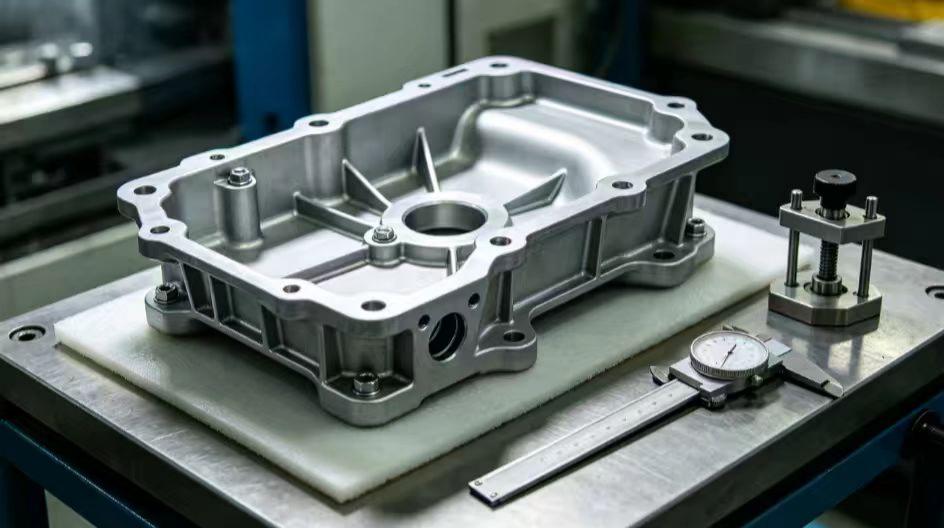
This area frequently gets the greatest attention from purchasers, and for good reason. Casting defects like porosity, shrinkage cavities, cold shuts, and surface cracks are among the most common issues in gravity casting. Here is a quick review of the most obvious:
- Gas porosity: Small round holes on or near the surface, caused by trapped gas during solidification
- Shrinkage cavities: Depressions or sunken areas resulting from improper feeding during cooling
- Cold shuts: A thin seam-like line where two metal flows failed to fuse properly, usually a sign of poor metal flow
- Surface cracks: Fine linear cracks typically caused by thermal stress during cooling
It is worth keeping in mind that not every tiny surface mark is a cause for alarm. A small isolated pit in a non-critical area may have no impact on part performance. What deserves closer attention are larger defects, defects near functional or critical features, or patterns that repeat across multiple parts.
| Defect | What It Looks Like | Possible Cause | Should You Be Concerned? |
| Gas porosity | Small round holes | Trapped gas | Depends on size/location |
| Shrinkage | Depressions or cavities | Improper feeding | Usually yes |
| Cold shut | Thin visible seam | Poor metal flow | Yes |
| Surface crack | Fine linear crack | Thermal stress | Yes |
4. Sharp, Well-Defined Features
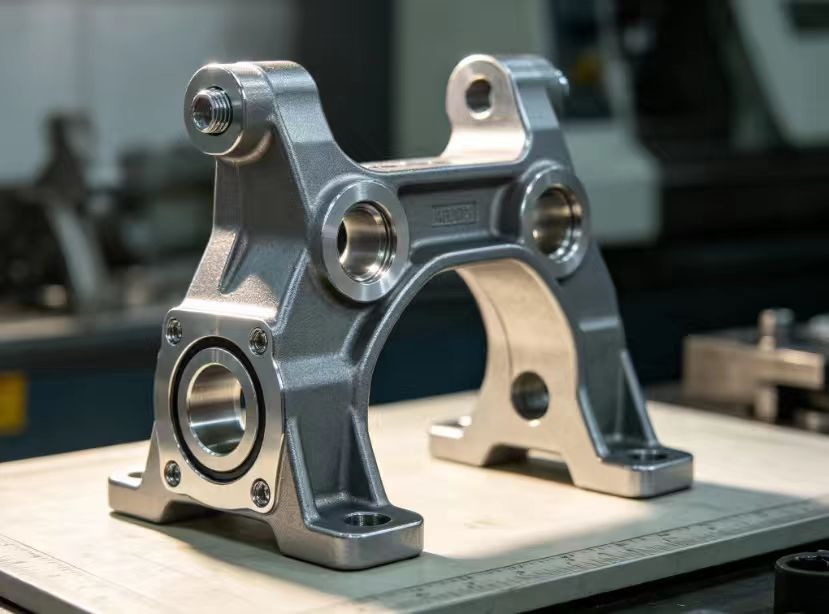
In a well-filled gravity casting, details come out cleanly. Edges should remain sharp without rounding off. Holes, bosses, and any functional geometry should be properly formed and positioned. If there are logos or text markings on the part they should be readable and distinct. Fine features are often among the first areas affected by incomplete mold filling. If the details are sharp, it’s a good sign that the metal flowed well and the mold was kept in good shape.
5. No Visible Warping or Distortion
Run your eye along the walls of the casting. Transitions between sections should be smooth, without any obvious bowing or bending. Parts with significantly varying wall thicknesses can be prone to warping if cooling is not well controlled. A casting that looks geometrically balanced and flat where it should be flat is a reliable indicator that the cooling process was stable throughout.
6. Consistent Quality Across Multiple Parts
This one is arguably the most telling indicator of all. A single good-looking part can be a coincidence. A batch of parts that all look the same — with consistent surface finish, stable dimensions, similar machining allowances, and matching overall appearance — is a much stronger signal. Such consistency across a production run almost always reflects good process control. And that is what you actually want from a supplier: not one perfect part, but reliable output batch after batch.
What Visual Inspection Cannot Tell You
Visual checks are a useful starting point, but they do not show everything. Internal porosity can exist well below the surface with no outward sign. Mechanical properties like tensile strength or hardness are invisible to the naked eye. Chemical composition, dimensional accuracy to tight tolerances, and pressure tightness all require dedicated testing methods.
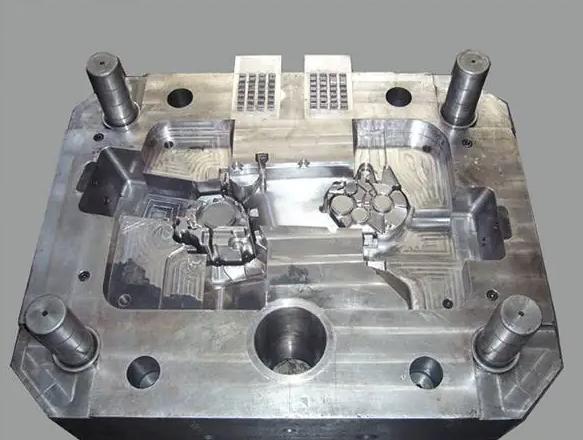
For castings used in demanding applications, complementary testing is typically required. Common methods include X-ray inspection for internal defects, CMM measurement for dimensional accuracy, pressure testing for leak-sensitive parts, and material testing for property verification. Permanent mold casting — the broader process category that gravity casting falls under — is well-documented in terms of typical defect modes and applicable inspection approaches, and it is worth familiarizing yourself with these if you are sourcing castings for safety-critical use.
Quality Starts Long Before the Final Inspection
Here is something we have seen consistently in practice: the visual characteristics described above are almost never the result of luck. They come from stable, well-controlled manufacturing processes. A few factors that make the biggest difference:
- Stable mold design: A well-designed mold fills predictably and cools evenly, reducing the chance of defects forming in the first place
- Controlled pouring temperature: Temperature swings lead to inconsistent fill and increased defect rates
- Proper gating and feeding: These determine how metal enters and feeds the mold cavity, directly affecting porosity and shrinkage outcomes
- Consistent process parameters: Holding pouring speed, cycle time, and mold temperature within tight ranges reduces part-to-part variation
- Inspection throughout production: Catching issues mid-run prevents entire batches from being affected
A casting that passes inspection is usually the result of a well-controlled manufacturing process, not extensive post-processing or selective sampling.
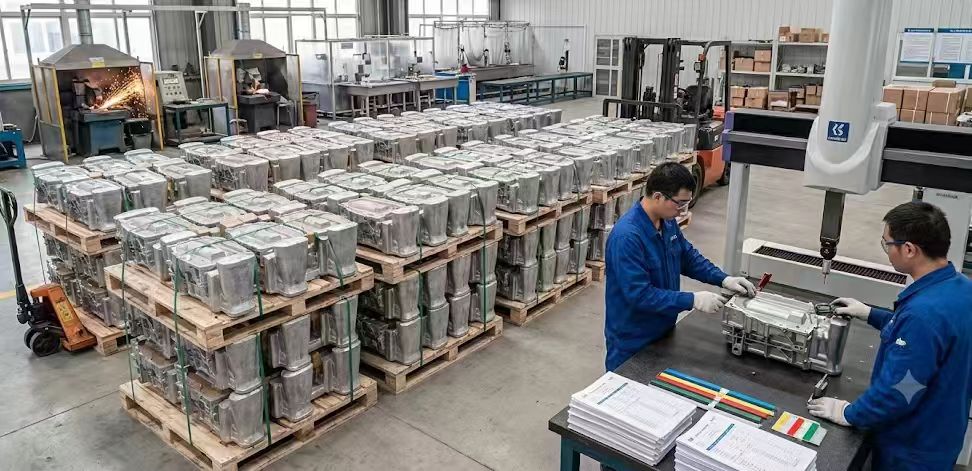
Choosing a Supplier That Delivers Consistent Casting Quality
When evaluating a gravity casting supplier, a few things are worth checking beyond the initial sample:
- Ask about inspection methods. What do they check, at what frequency, and with what equipment? A supplier who cannot answer this clearly is worth approaching with caution.
- Review sample consistency instead of one perfect part. Ask to see samples from different production runs to get a sense of real batch variation.
- Check experience with similar components. A supplier who regularly casts similar geometry and material will have fewer surprises along the way.
- Confirm machining and quality control capabilities. If you need finished parts, make sure they can handle the full scope, not just the raw casting.
Final Thoughts
Evaluating gravity casting quality does not require an engineering degree, but it does help to know what to look for. The six indicators covered here give you a practical starting point for assessing castings on receipt, before problems reach your production line.
At JTR Machine, gravity casting is part of a broader manufacturing, and our process control, in-house inspection, and machining capabilities help ensure consistent casting quality from raw casting to finished part. If you are sourcing gravity castings and want a clearer sense of what consistent casting quality looks like in practice, contact our team and we are happy to walk you through it.