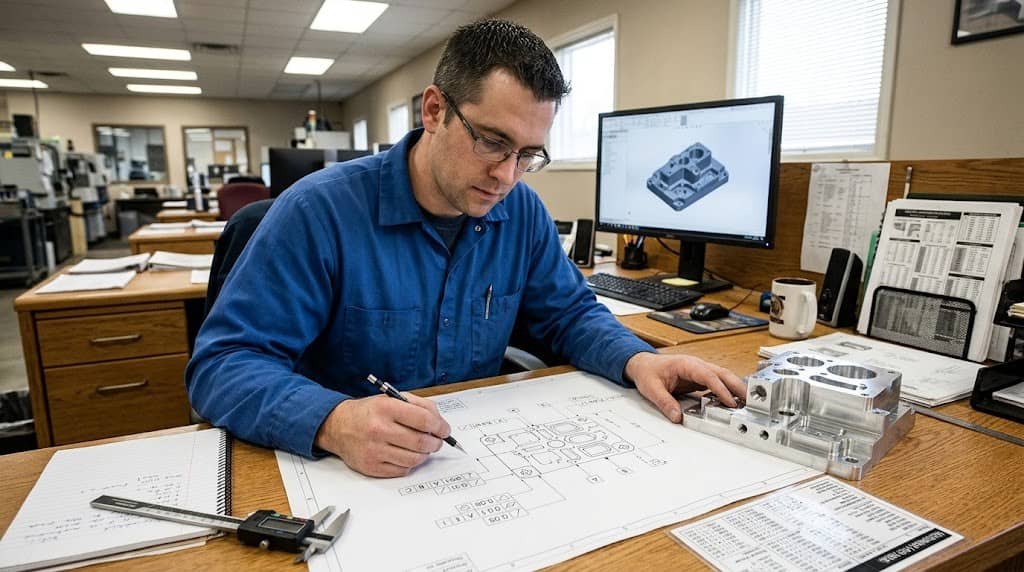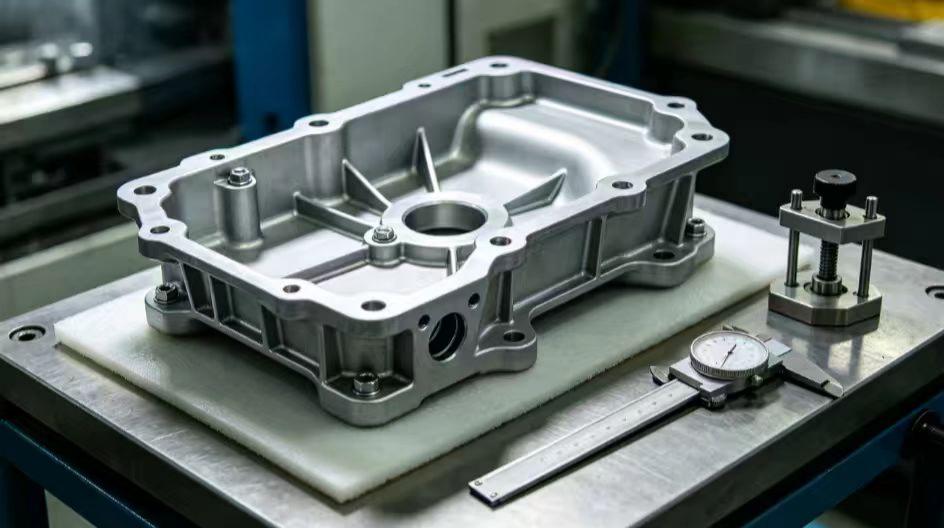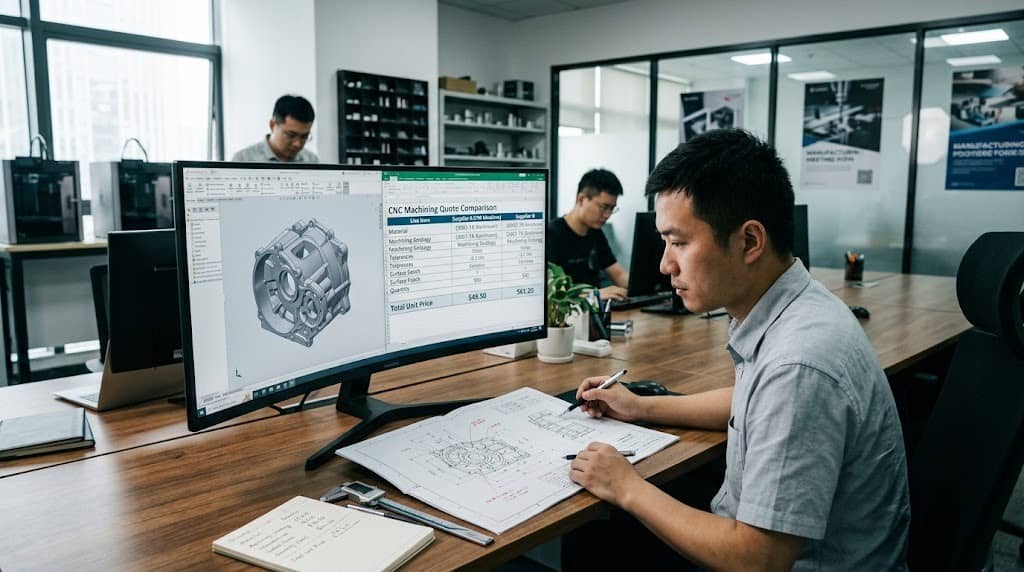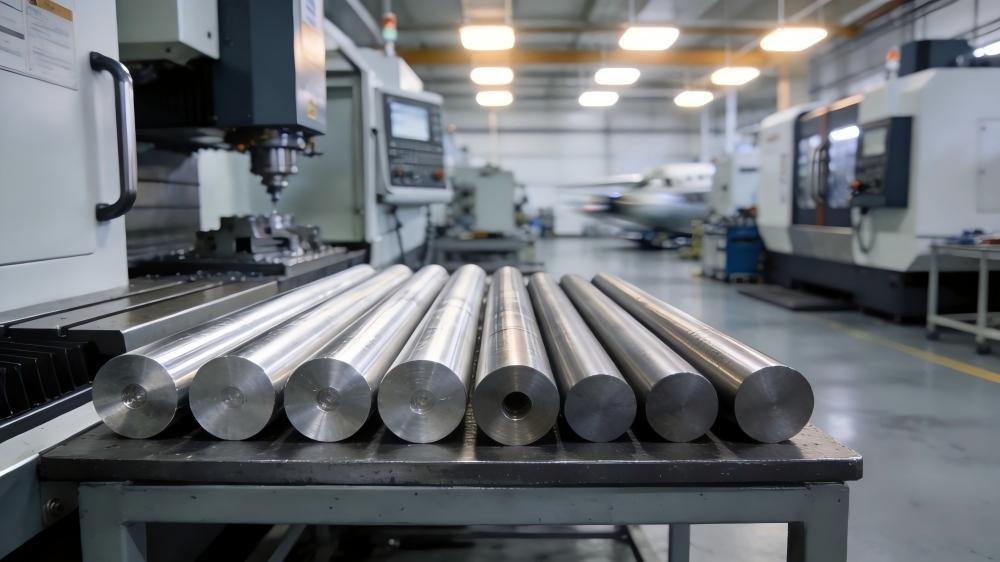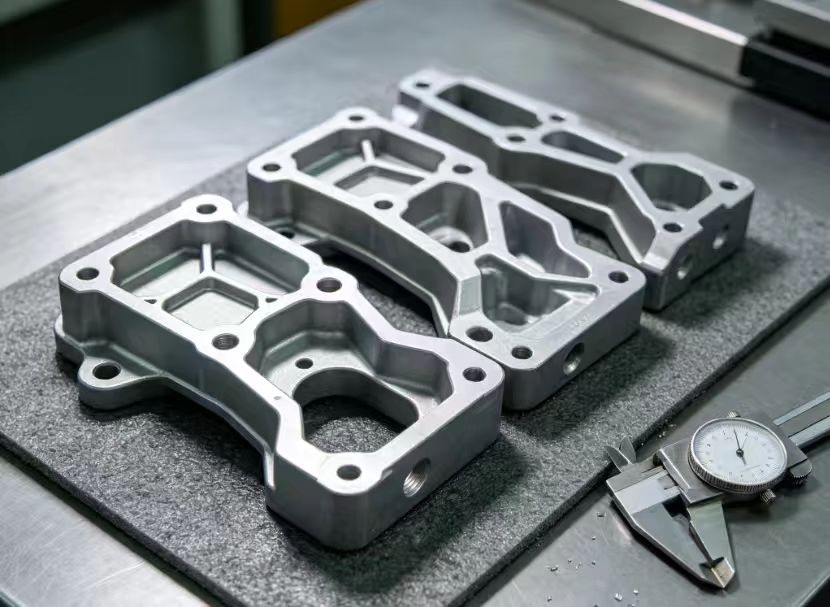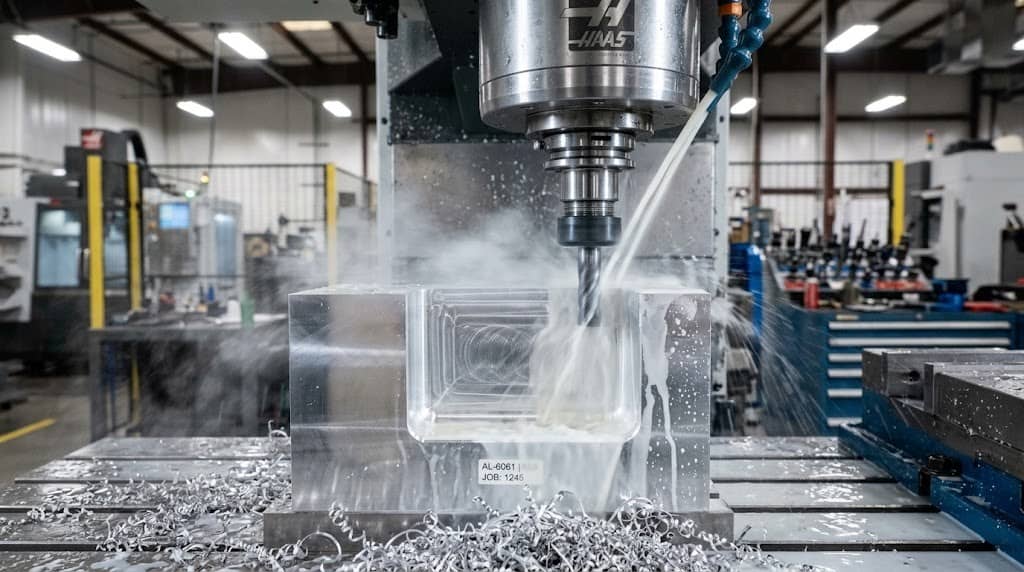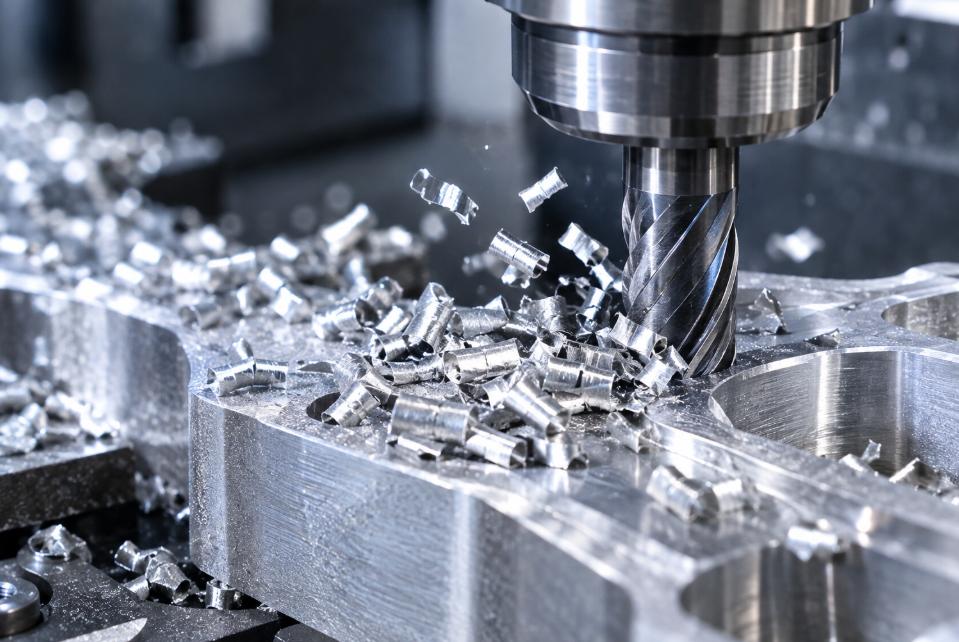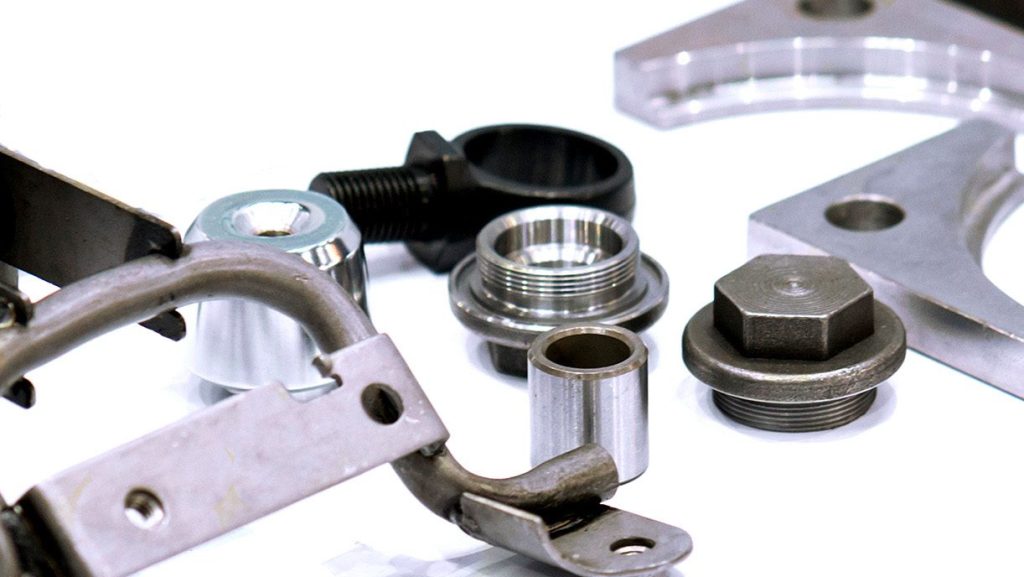


CNC machining should be combined with Wire EDM when a part contains features that are difficult, inefficient, or impractical to produce with conventional cutting tools alone. CNC machining is generally used for bulk material removal, holes, pockets, threads, and 3D geometry, while Wire EDM machining is better suited to narrow slots, intricate profiles, small internal radii, and precision features in electrically conductive materials.
The most efficient approach is usually not to use Wire EDM for the entire component. Instead, CNC machining handles the majority of the part, while Wire EDM is applied only to features where its capabilities provide a clear technical or economic advantage.
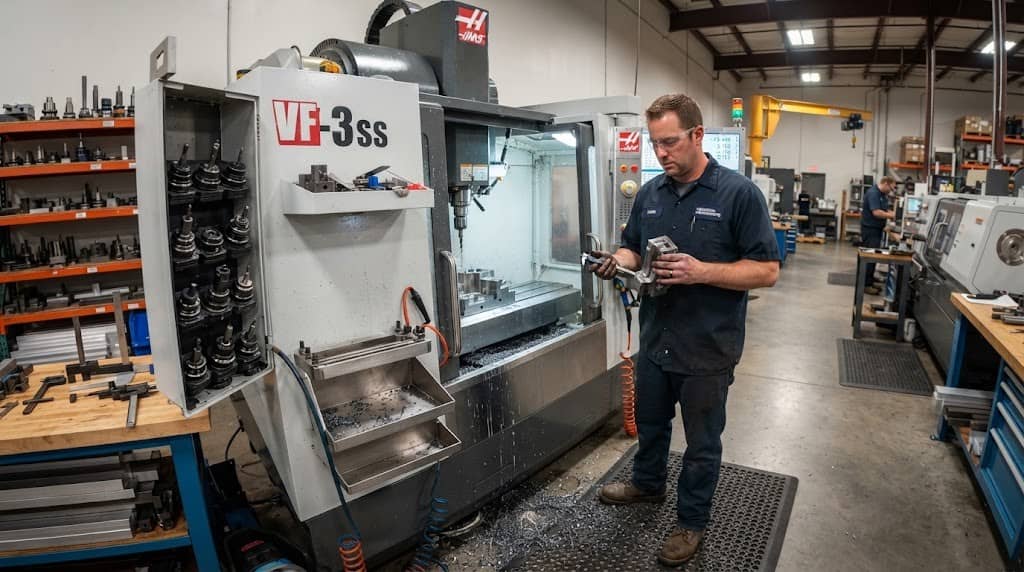
When Should You Combine CNC Machining and Wire EDM?
The CNC + Wire EDM combination is most appropriate when one or more of the following conditions apply:
- The part requires narrow slots or intricate profiles.
- The design contains small internal radii or sharp internal corners.
- The material is hardened and electrically conductive.
- A critical feature requires tighter dimensional or profile control than conventional CNC machining can economically provide.
- Small cutting tools would create excessive tool deflection, vibration, or breakage.
- Producing the feature entirely by CNC would require multiple setups or specialized tooling.
- The feature geometry is more efficiently produced by Wire EDM than by conventional milling.
In simple terms: use CNC machining service for efficient material removal and general geometry, and use Wire EDM for difficult precision features. This process allocation is the foundation of an effective multi-process manufacturing strategy.
CNC Machining vs Wire EDM: Which Process Is Better for Your Part?
Conventional CNC milling and turning and Wire EDM solve different manufacturing problems. The right choice depends on the geometry, material, tolerance, and production requirements of the part.
| Manufacturing Requirement | CNC Machining | Wire EDM | Recommended Approach |
| Large material removal | Excellent | Poor | CNC |
| Pockets and cavities | Excellent | Limited | CNC |
| 3D surfaces | Excellent | Limited | CNC |
| Holes and threads | Excellent | Limited | CNC |
| Narrow slots | Limited | Excellent | CNC + Wire EDM |
| Intricate 2D profiles | Good | Excellent | Wire EDM |
| Small internal radii | Limited | Excellent | Wire EDM |
| Hardened conductive materials | Challenging | Excellent | Wire EDM |
| General production machining | Excellent | Specialized | CNC |
| Critical precision profiles | Good | Excellent | CNC + Wire EDM |
The key decision is not which process is universally better. It is which process is better suited to each individual feature. For example, machining an entire steel component with Wire EDM would usually be inefficient if most of the material can be removed quickly by CNC machining. Conversely, forcing a very narrow precision slot to be milled with a tiny cutter may create unnecessary tooling and process risks.
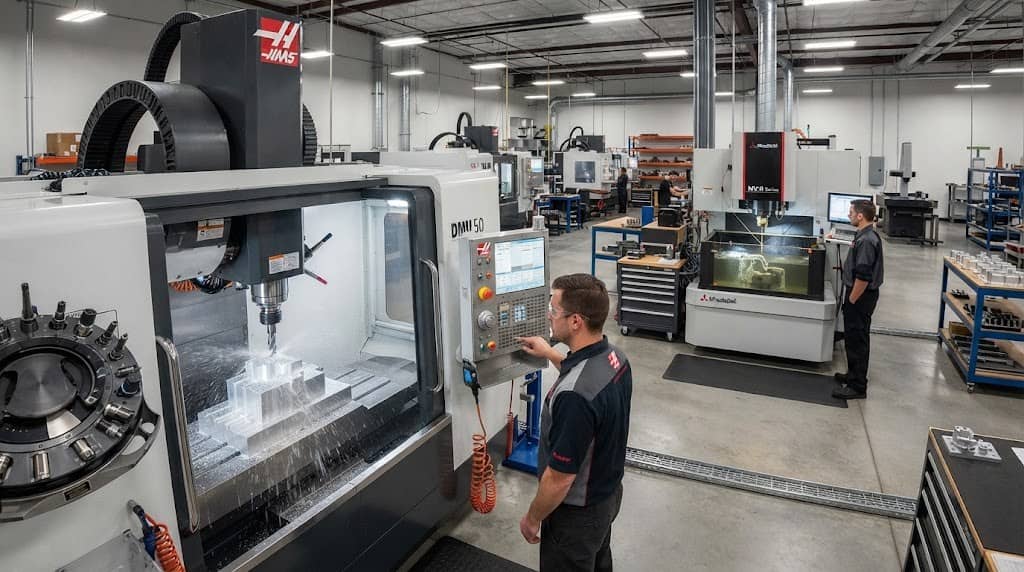
Why Is CNC Machining Used Before Wire EDM?
CNC machining is normally used first because it can remove material much faster and more economically than Wire EDM. The CNC operation establishes the basic component geometry and removes the majority of the material before EDM is used for selected precision features. A typical process is:
Raw Material → CNC Roughing → CNC Semi-Finishing → Datum Preparation → Wire EDM → Final Inspection
CNC machining may produce:
- External profiles
- Pockets
- Holes
- Threads
- Flat surfaces
- Angled surfaces
- General 3D geometry
Wire EDM can then produce:
- Precision slots
- Complex through-profiles
- Fine contours
- Small internal radii
- Critical profile features
This division of work prevents Wire EDM from being used for operations that CNC machining can perform more efficiently.
Which Part Features Are Better Suited to Wire EDM?
The most important reason to add Wire EDM is usually feature geometry, rather than simply the overall size or complexity of the part.
1. Narrow Slots
Narrow slots can become difficult to machine with conventional milling tools because tool diameter, rigidity, deflection, and cutting depth become limiting factors. Wire EDM can produce narrow profiles without relying on a small rotating cutting tool in the same way as milling.
2. Small Internal Radii
Conventional milling cutters are round, so the minimum internal corner radius is normally related to the cutter diameter. When a component requires a very small internal radius, Wire EDM may provide a more suitable manufacturing route.
3. Complex 2D Profiles
Wire EDM is particularly useful for precise through-cut profiles that would require multiple milling operations or very small tools.
Typical applications include:
- Precision tooling
- Dies
- Mold components
- Machine components
- Wear-resistant parts
- Specialized industrial components
4. Hardened Conductive Materials
Wire EDM can machine many electrically conductive hardened materials without depending on conventional mechanical cutting in the same way as milling. This makes it useful when a component has already been hardened but still requires a precise profile.
Important: Wire EDM requires an electrically conductive workpiece, so material suitability must be confirmed during process planning.
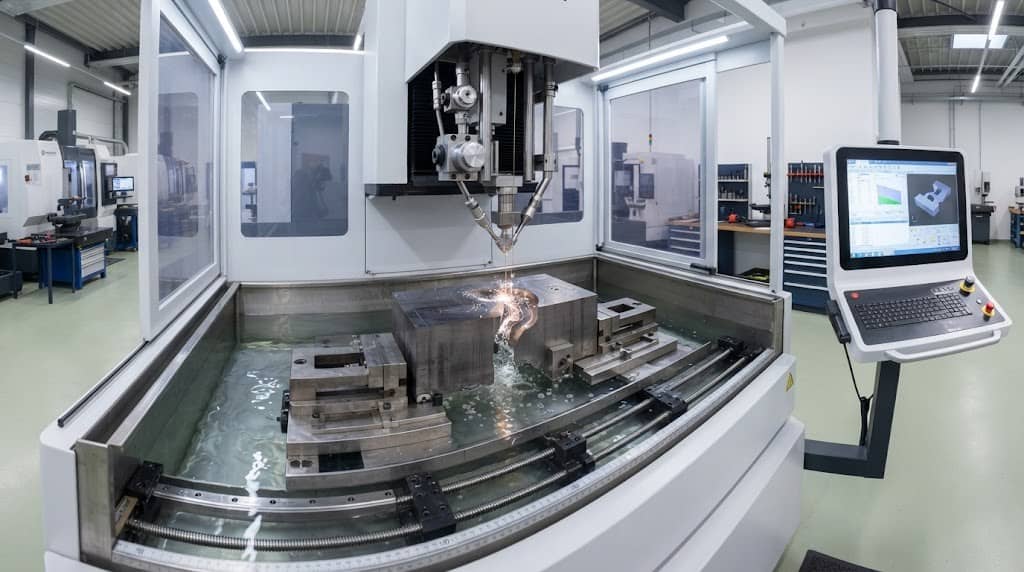
When Is CNC Machining Alone Not Enough?
CNC machining alone may become less practical when the required feature pushes conventional cutting tools beyond their efficient operating range. Four situations deserve particular attention.
1. The Tool Becomes Too Small
Very small tools are more susceptible to:
- Deflection
- Breakage
- Vibration
- Tool wear
The machining time can also increase significantly.
2. The Internal Corner Radius Is Too Small
A milling cutter cannot create a perfectly sharp internal corner because of its circular geometry. If the corner radius is functionally important, Wire EDM may be a better option.
3. The Material Is Hardened
As material hardness increases, tool wear and machining difficulty can increase. Wire EDM can be particularly useful for precision profiles in hardened conductive materials.
4. The Feature Requires Excessive CNC Setups
A feature that requires several fixtures, orientations, or specialized cutters may be more efficiently produced using a combination of CNC machining and Wire EDM. The objective is not to eliminate CNC operations, but to minimize unnecessary process complexity while protecting critical features.
How Does a CNC + Wire EDM Manufacturing Process Work?
A combined manufacturing process should be planned as one workflow rather than two unrelated operations.
Step 1: Review the Part Geometry
Identify:
- Critical dimensions
- Narrow slots
- Internal profiles
- Small radii
- Hardened areas
- Functional surfaces
The goal is to determine which features actually require Wire EDM.
Step 2: CNC Rough Machining
CNC machining removes the majority of the material and creates the general shape of the part. The process should leave controlled stock where additional machining is required.
Step 3: Establish Accurate Datums
Reference surfaces and locating features should be prepared so the workpiece can be positioned accurately during Wire EDM. Datum consistency is critical when dimensional relationships must be maintained between CNC-machined and EDM-machined features.
Step 4: Wire EDM Setup
The workpiece is aligned using the appropriate reference surfaces. The manufacturer should verify:
- Part orientation
- Datum location
- Cutting path
- Wire access
- Workpiece thickness
- Program requirements
Step 5: Wire EDM Precision Cutting
Wire EDM produces the designated precision features. Depending on the required result, the operation may involve rough and finish passes rather than a single cutting pass.
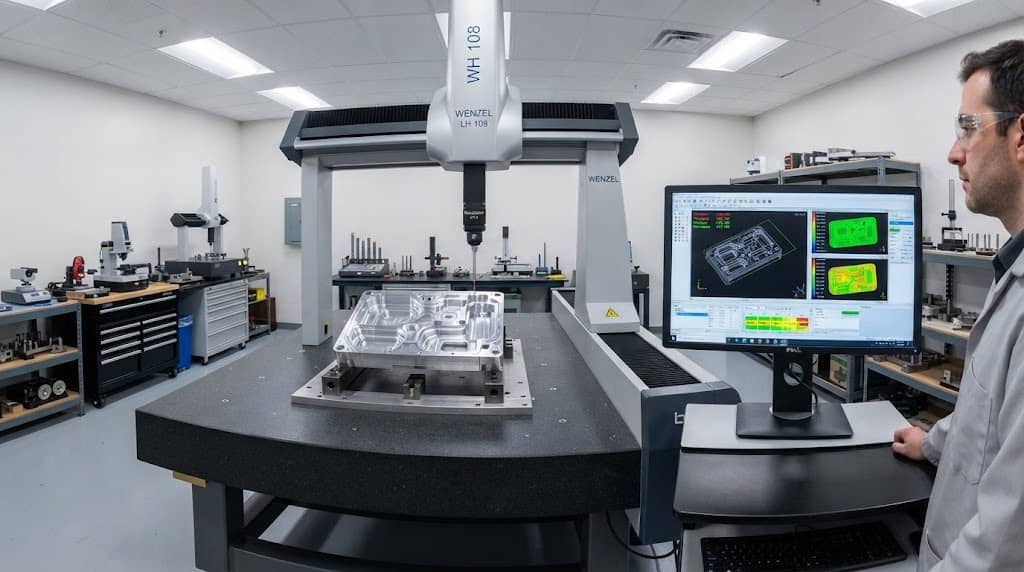
Step 6: Final Inspection
Critical dimensions should be inspected after all relevant machining operations are complete. Inspection may include:
- Dimensional measurement
- Profile measurement
- CMM inspection
- Surface roughness measurement
- Thread inspection
- Visual inspection
The final inspection should verify the relationship between features produced by different processes.
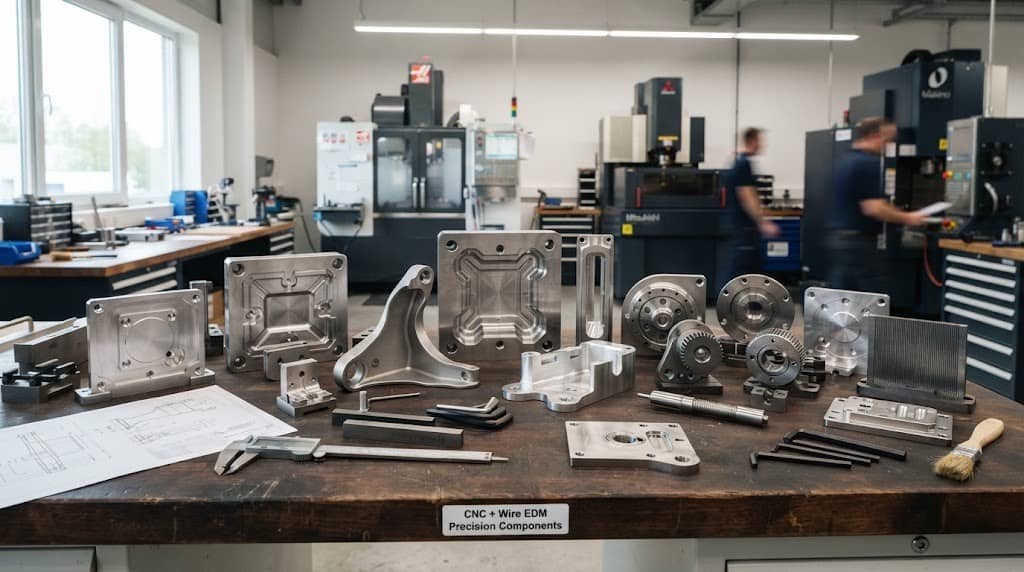
When Is CNC + Wire EDM More Cost-Effective?
CNC + Wire EDM is cost-effective when Wire EDM solves a specific machining problem that would otherwise require excessive tooling, setups, machining time, or quality-control effort. It is not automatically cheaper than CNC machining alone.
CNC Machining Alone Is Usually Better When:
- The geometry is straightforward.
- Standard cutting tools can reach the required features.
- Tolerances are achievable with conventional CNC machining.
- Large volumes of material must be removed.
- There are no particularly narrow or intricate features.
- The material is readily machinable.
CNC + Wire EDM May Be Better When:
- A narrow feature is difficult to mill.
- A critical profile requires high dimensional consistency.
- Hardened material causes excessive tool wear.
- Very small internal radii are required.
- Conventional machining requires multiple specialized setups.
- The cost of custom tooling is high.
- A precision feature is difficult to inspect or maintain using conventional machining alone.
A useful rule is: Do not ask whether Wire EDM is more expensive than CNC. Ask whether Wire EDM reduces the total manufacturing cost and risk of producing the required feature.
This includes tooling, setup, cycle time, scrap, inspection, and rework—not just machine time.
How Should You Design a Part for CNC + Wire EDM?
Design decisions made before manufacturing can significantly affect the efficiency of the combined process. For broader CNC design considerations, see our CNC machining design guidelines.
1. Identify Critical Features
Only specify extremely tight tolerances where they are functionally necessary. Over-tolerancing increases machining and inspection requirements without necessarily improving performance.
2. Use Consistent Datums
CNC and Wire EDM operations should reference a logical and consistent datum structure. This helps maintain positional relationships between features produced by different processes.
3. Consider Wire Access
Designers should consider:
- Wire entry
- Through-cut requirements
- Internal openings
- Workpiece thickness
- Fixturing
- Cutting path
A feature that looks simple in CAD may require a different manufacturing approach if the Wire EDM wire cannot access it efficiently.
4. Separate General and Precision Features
A practical design strategy is to classify features into two groups:
- General features → CNC machining
- Critical precision features → Wire EDM
This approach keeps the manufacturing process efficient while applying higher-cost precision processes only where they add measurable value.
CNC + Wire EDM vs CNC Machining Alone: A Quick Decision Guide
Use the following decision logic when selecting a manufacturing route:
Does the part require significant material removal?
→ Yes: Start with CNC machining.
Does the part contain narrow slots, intricate profiles, or very small internal radii?
→ Yes: Evaluate Wire EDM.
Is the difficult feature made from electrically conductive material?
→ Yes: Wire EDM may be suitable.
Is the material hardened and difficult to machine conventionally?
→ Yes: Consider Wire EDM for the appropriate precision features.
Can CNC machining meet the required tolerance economically?
→ Yes: CNC alone may be sufficient.
Would CNC require excessive tooling, tool size, or multiple setups?
→ Yes: CNC + Wire EDM may provide a better manufacturing route.
This decision process helps prevent two common mistakes: using Wire EDM where CNC is more efficient and forcing CNC machining to produce features better suited to Wire EDM.
How to Choose a Supplier for CNC + Wire EDM Parts
When purchasing a component that requires multiple machining processes, evaluate the supplier’s integrated manufacturing capability, not just its individual machine list.
Ask the manufacturer:
- Can you perform both CNC machining and Wire EDM?
- Can both processes be managed under one production plan?
- How are CNC and EDM datums coordinated?
- How are critical dimensions inspected?
- Can you provide dimensional or CMM inspection reports?
- Can you handle prototype and production quantities?
- Can you provide DFM feedback before production?
- Can you manage secondary finishing and other post-machining requirements?
A supplier that can manage both processes can reduce communication, transportation, scheduling, and quality-control risks compared with coordinating two unrelated suppliers.
For procurement teams, the most important question is therefore not simply: “Do you offer Wire EDM?” A better question is: “Can you integrate CNC machining and Wire EDM into one controlled manufacturing process for my part?”
FAQs
Q1: Why combine CNC machining with Wire EDM?
The combination allows each process to perform the operations for which it is most efficient. CNC provides fast material removal and 3D machining, while Wire EDM is useful for precise profiles and difficult features that may be inefficient to produce with conventional cutting tools.
Q2: Is Wire EDM more accurate than CNC machining?
Wire EDM can provide excellent dimensional and profile accuracy for suitable features, but it should not automatically be considered more accurate for every application. Actual results depend on the machine, material, geometry, programming, setup, and inspection requirements.
Q3: Can Wire EDM machine hardened steel after CNC machining?
Yes. Wire EDM can machine many electrically conductive hardened materials. This makes the process useful for certain tooling, dies, molds, and precision components where conventional cutting becomes difficult after heat treatment.
Q4: What CNC features should be completed before Wire EDM?
CNC machining is commonly used to remove bulk material, create general geometry, and establish reference surfaces before Wire EDM. The exact sequence depends on the part design, but the CNC process should provide reliable datums and appropriate access for the EDM operation.
Q5: Is CNC + Wire EDM more expensive than CNC machining alone?
The combined process can cost more because it adds an additional operation. However, it can reduce total manufacturing cost when conventional CNC machining would require specialized tools, multiple setups, excessive tool wear, or complex machining strategies.
Q6: How do I know if my CNC part requires Wire EDM?
Evaluate the part’s geometry, material, tolerance, surface requirements, and production volume. Wire EDM is worth considering when the part contains narrow slots, intricate profiles, small internal radii, hardened conductive material, or critical features that are difficult to produce efficiently with conventional CNC machining.