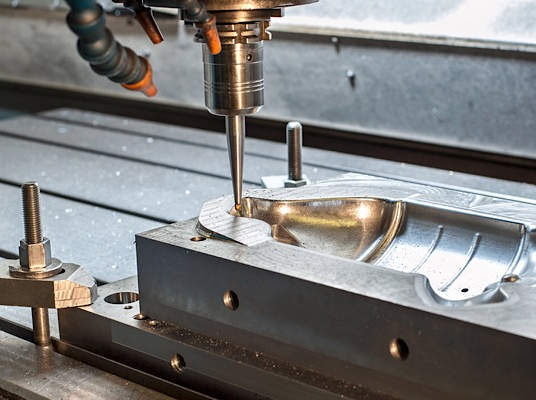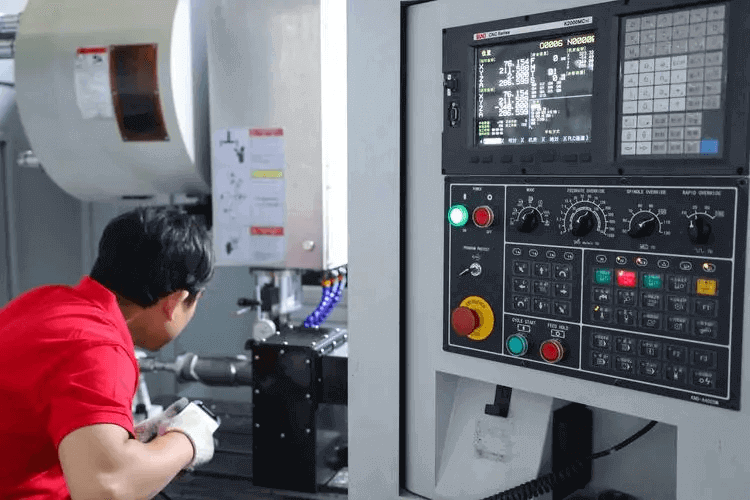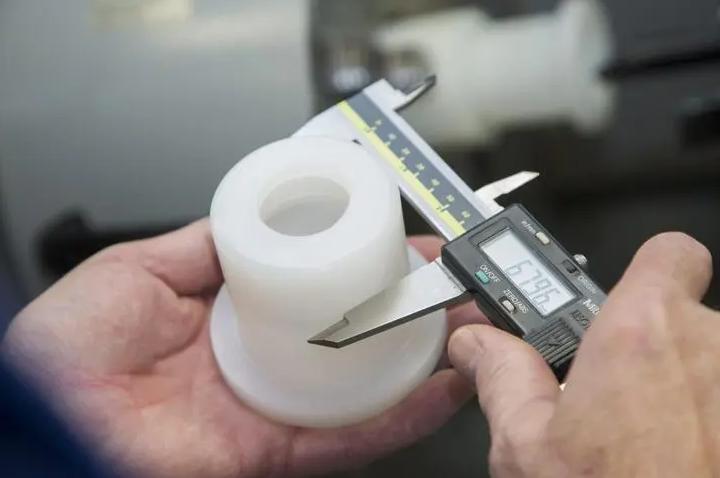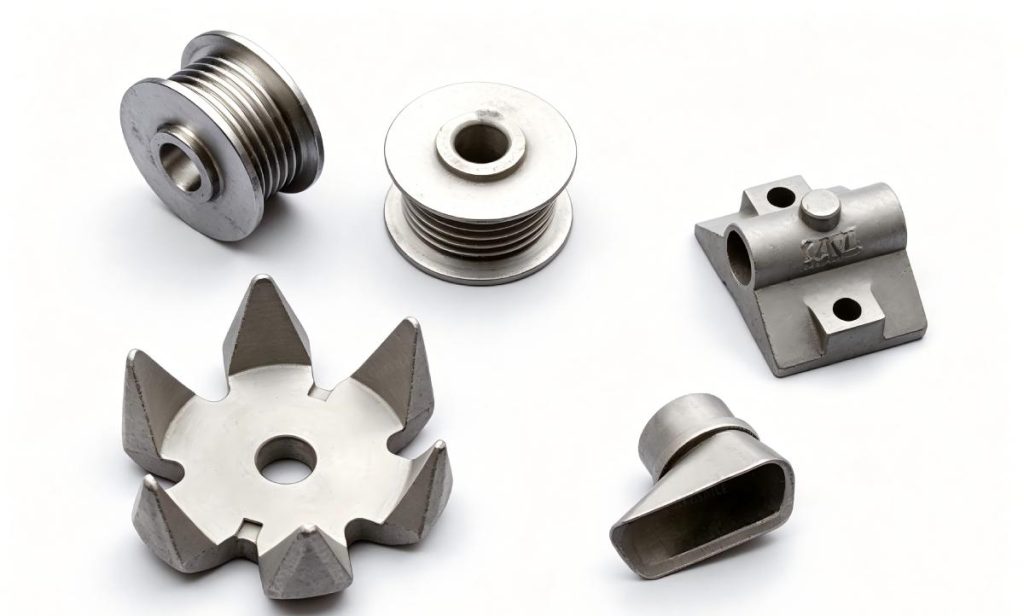

Most manufacturers care about the exact machining results, but very few think about the ramifications of eliminating more material than needed.
Over-machining is one of the more common aluminum extrusion problems we see in practice, yet it rarely gets the attention it deserves. A part may look excellent on the outside, but have walls that are too thin, drifting dimensions or a finish that will not hold up after anodizing. When those problems reach the manufacturing floor, the cost to fix the faults is far greater than it would have been to prevent them in the first place.
This article covers what over-machining actually means in the context of aluminum extrusion, the problems it creates, which features are most at risk, and practical ways to design smarter from the start.
What Does “Over-Machining” Mean in Aluminum Extrusion?
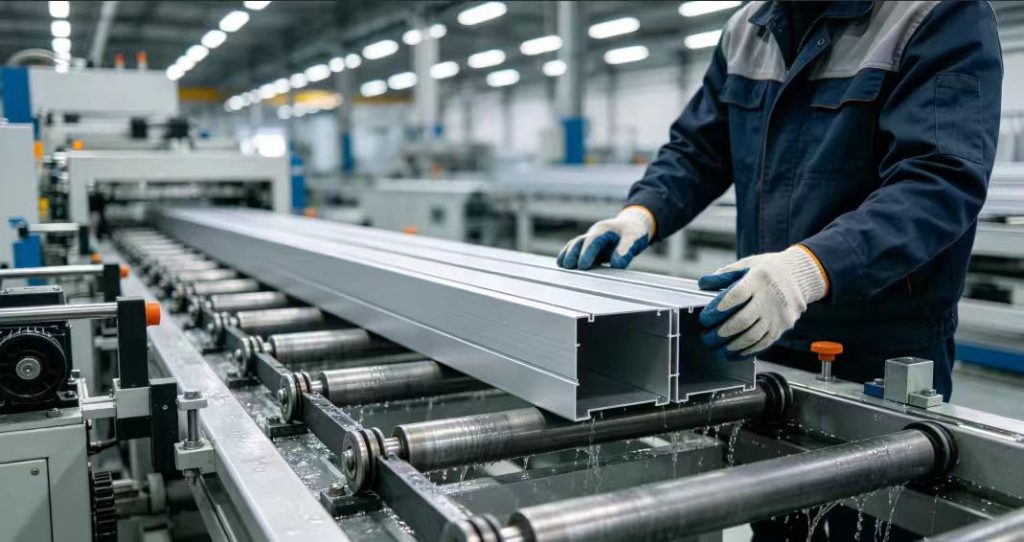
Over-machining occurs when you machine more material than is necessary to achieve the functional or dimensional requirements of the part, resulting in excessive cost or poor part performance.
That sounds simple yet it happens more in practice than you would think. It can be caused by stricter tolerances than needed for the application, extra machining steps added “just to be safe” or a profile design that didn’t consider how much stock will be cut away later.
Aluminum extrusions are already quite dimensionally consistent when they come out of the die. When machining goes beyond what the part truly needs, you’re not adding value — you’re adding risk.
Common Problems Caused by Over-Machining
Over machining isn’t just a matter of one dimension of an item. It tends to generate a chain of problems that feed into each other.
1. Reduced Structural Strength
If too much material is taken away, the walls become thin and lose their firmness. Aluminum is light, and strong for its weight, but thin sections are far less resistant to bending. Aggressive cutting can reduce the load-carrying capacity of a profile that seemed sound as an extrusion. This is a severe concern for structural or load bearing applications and is easily missed until parts are put into service.
2. Increased Risk of Distortion
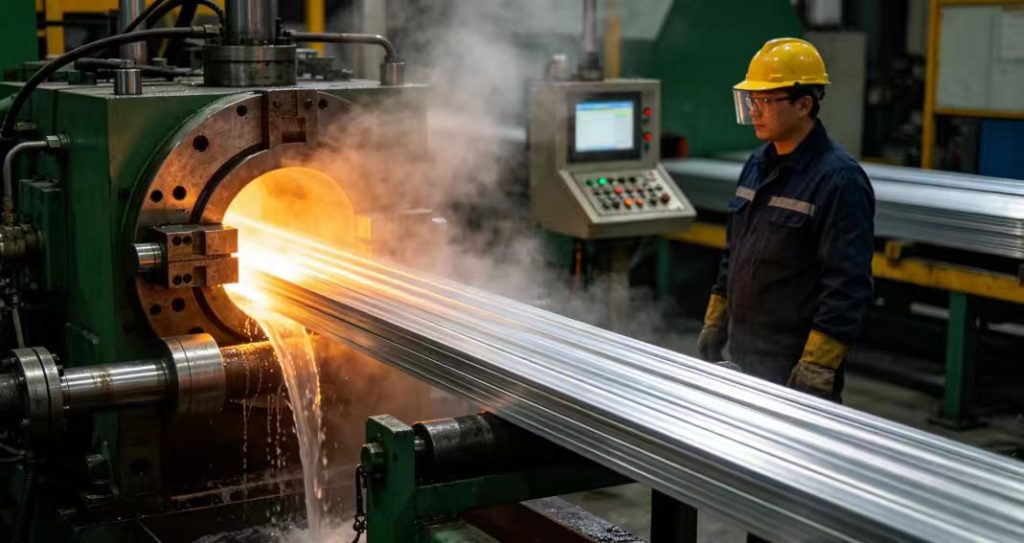
Residual stresses are introduced during the extrusion process. Those stresses may be released unevenly during machining. The part can distort in or after machining. Warping makes it much harder to hold consistent dimensions, which often leads to more corrective passes — making things worse rather than better. It’s one of those common aluminum machining mistakes where the fix creates a new problem.
3. Poor Surface Appearance
Unnecessary machining passes increase the chance of visible tool marks, inconsistent surface texture, and dimensional variation. When a profile is cut more times than necessary, the surface will have visible tool marks and uneven wall sections. This is particularly true for pieces to be anodized or similarly coated. Surface treatments tend to accentuate rather than hide faults. A small machining mistake in an early step could soon become a noticeable visible fault on the finished object.
4. Higher Manufacturing Cost
More machining equals more time on the machine, more tool wear, more material wasted. All of these factors slowly add up to higher production costs. The breakdown of cost can be wrong on over-machining, as every step is fair but the cumulative impact on lead time and efficiency can be large.
Here’s a quick summary of how these problems typically connect:
| Problem | Typical Cause | Possible Impact |
| Thin walls | Excessive material removal | Reduced strength |
| Distortion | Stress release from cutting | Dimensional variation |
| Surface defects | Multiple unnecessary passes | Poor cosmetic quality |
| High production cost | Unneeded machining steps | Longer lead time |
Which Features Are Most Likely to Be Over-Machined?
Certain sections of an aluminum extrusion are more vulnerable than others. Some geometrical features are inherently more susceptible to over-machining due to their response to cutting forces or the difficulty in holding them during machining.
- Thin-wall features: Small machining allowance leaves little room for error; even a modest deviation can remove too much in a single pass.
- Deep pockets: Multiple tool passes are required, and it’s harder to maintain workpiece rigidity throughout the operation.
- Long profiles: More difficult to fixture consistently, and vibration during cutting becomes an increasingly significant issue over length.
- Large unsupported areas: Without proper support, sections of the profile can flex under cutting forces, leading to uneven material removal across the surface.
Understanding where these risks concentrate helps teams make better decisions about fixturing, machining strategy, and, most importantly, the extrusion profile design itself.
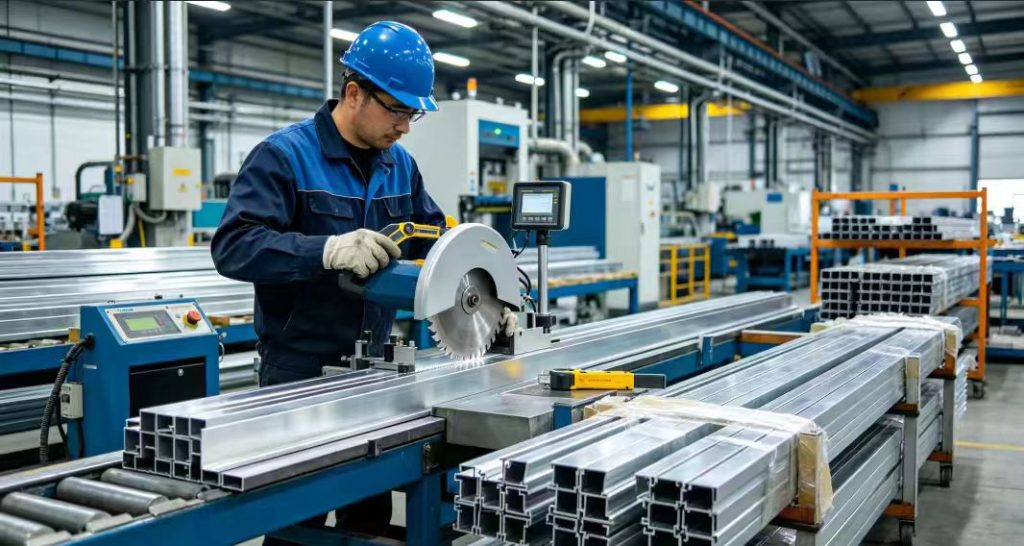
How to Avoid Over-Machining from the Start
The best way to prevent over-machining is to think about aluminum extrusion design for machining before the profile ever goes into production. Aligning the design with the machining process early on prevents a lot of unnecessary rework down the line.
Design the extrusion with machining in mind. When designing the profile, leave enough machining allowance to clean up the surface without requiring aggressive removal. Where possible, build functional shapes directly into the extrusion cross-section so they don’t need to be cut in later. It’s also worth reviewing tolerance specifications carefully — calling out tighter tolerances than the application actually needs is one of the most common reasons unnecessary machining passes get added to a job.
Choose the right machining strategy. Remove unnecessary machining operations whenever possible. Good fixturing matters too: stable workholding reduces vibration and keeps the part from shifting during cutting. Finally, think through the sequence of operations before starting — steps that release significant residual stress are better handled early, so they don’t cause dimensional drift that affects everything that follows.
Consider extrusion and machining together. Before finalizing a profile design, it’s worth reviewing whether the geometry can be optimized to reduce how much machining is actually needed. Balancing extrusion complexity against machining effort is a straightforward way to improve part quality and keep costs in check.
| Design Choice | Benefit |
| Leave proper machining allowance | Prevents excessive material removal |
| Optimize profile geometry | Reduces machining time and cost |
| Add support features where needed | Improves rigidity during machining |
| Define realistic tolerances | Avoids unnecessary extra passes |
When Is Additional Machining Actually Necessary?
None of this is about eliminating machining altogether. There are real situations where additional work genuinely adds value:
- Achieving tight tolerances that go beyond what the extrusion process can reliably deliver
- Creating precision holes, threads, or sealing surfaces that need controlled dimensions
- Improving assembly accuracy where mating parts require close fits
The goal is not to eliminate machining from the process, but rather to remove just those materials which actually contribute value to the final part. The result is a better product at a lower cost when machining decisions are based on functional requirements rather than habit or excessive caution.
Final Thoughts
Over-machining is the kind of problem that creeps in gradually. It rarely comes from a single bad decision — more often, it’s the result of designs and processes that weren’t fully coordinated from the start. Paying careful attention to how the extrusion profile is designed, how tolerances are specified, and where machining is genuinely necessary can make a real difference in both part quality and production efficiency.
At JTR, we work with customers at the design stage to review extrusion profiles and machining plans together, so these issues get caught before they become production problems. If you’re working on an aluminum extrusion project and want a second opinion on your design, contact us for a free DFM review.